SPY

SPDR S&P 500 ETF Trust

Last close
Loading...

Author price targets

Median target
USD 791.25

Where authors set their targets

Median1 dot = 1 author
Lowest
—
Highest
—

Authors and targets

Last 24 hours

Nov 13, 01:25 → Nov 14, 01:25

S&P 500 gains 2.5% this week as 400 stocks advance

David Cox's sector update said the S&P 500 rose 2.5% for the week, with 400 advancers against 103 decliners. Energy led with 100% participation, according to the same update. The figures covered the week to Friday, November 13. The update did not state a position or a forward forecast.

SPY slides from $760 to $748 as call selling dominates

Unusual Whales said SPY dropped from $760 to $748 at the open and had not reclaimed $752. Calls were sold all session, down about $300 million in net premium, while puts were bought, up about $120 million. The post described the tape as 'Market tide today is flashing red.'

October budget deficit hits record $404 billion

Ben Kizemchuk cited a $404 billion U.S. budget deficit for October 2026, up 42% and the largest October on record. On an adjusted basis the deficit was $285 billion, up 49% from a year earlier. He said deficit spending has accelerated since mid-summer and typically filters into equities with a lag.

BofA reports $98.3 billion weekly inflow into global equity funds

DeItaone reported that global equity funds attracted $98.3 billion last week, the largest inflow since June, citing Bank of America's Michael Hartnett. Hartnett also advised staying risk-off until Treasury yields fall below 4.5%. BofA's S&P 500 scenarios were above 8,000 in the bull case and below 7,000 in the bear case.

Large SPY put prints hit the tape

Notable flow posts flagged a $5.1 million purchase of SPY 728-strike puts expiring November 30 and a $2.4 million purchase of SPY 714-strike puts expiring December 18. The posts reported the option flow without stating the authors' own positions or a directional call. Both expirations and strikes were given in the posts.

Weekly brief

Nov 07, 01:25 → Nov 14, 01:25

Nvidia CEO Jensen Huang resigns amid scandal

Nvidia announced that Jensen Huang resigned as president, CEO and board member effective immediately, according to a report citing the announcement. CFO Colette Kress became interim CEO while the company searches for a permanent successor. The report said Nvidia shares fell as much as 14% to $148.80. Other coverage said Nvidia was still on track for its longest weekly losing streak since 2012 and had lost $1.6 trillion in market value.


Nvidia turmoil sparks chip rotation; AMD rises 30% this week

Market coverage said Nvidia's leadership turmoil prompted a rotation across chip stocks, with AMD trading 30% higher this week. Investors also moved into Broadcom and TSMC as they weighed whether competitors could catch up. The rotation occurred while Nvidia stabilized on Friday but remained on track for its longest weekly losing streak since 2012.

Hot CPI and weak 30-year auction push Treasury yields higher

A market summary said October core CPI rose 0.3% against 0.2% expected, while headline CPI rose 0.4%. The same report said Fed Governor Waller supported a 25bp December hike and that 50bp 'should be considered.' Separately, the Treasury sold $25 billion of 30-year bonds at a 5.441% high yield with softer demand, and the 30-year yield rose nearly 8bp to 5.44%. Market coverage later put the 10-year yield above 5.1% and the 30-year near 5.5%.

S&P 500 gains 2.5% this week with broad participation

David Cox's sector update said the S&P 500 rose 2.5% for the week, with 400 advancers against 103 decliners. Energy led with 100% participation, according to the same update. The figures covered the week to Friday, November 13. The update was presented as a factual market-breadth post.

SPY falls from $760 to $748 as calls are sold

Unusual Whales said SPY dropped from $760 to $748 at the open and had not reclaimed $752. Calls were sold all session, down about $300 million in net premium, while puts were bought, up about $120 million. The post described the market tide as 'flashing red.'

US equity ETFs draw $37.5 billion over five sessions

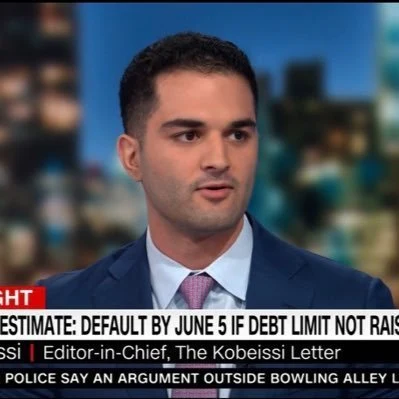
The Kobeissi Letter said 10 major US equity ETFs attracted a combined $37.5 billion over five trading days ending November 10. VOO led with $16.9 billion of inflows, followed by QQQ at $5.3 billion and VTI at $3.3 billion. SPYM and QQQM also drew $2.6 billion and $2.2 billion, respectively.
October budget deficit reaches record $404 billion

Ben Kizemchuk cited a $404 billion U.S. budget deficit for October 2026, up 42% and the largest October on record. On an adjusted basis the deficit was $285 billion, up 49% from a year earlier. He said deficit spending has accelerated since mid-summer and typically filters into equities with a lag.

Cboe launches AM-settled weekly SPX options

VolSignals said Cboe listed AM-settled weekly SPX options under the symbol SPXO, with first expirations on November 18 and December 16. The expirations coincide with VIX settlement mornings, which the post said should make hedges on expiring VIX positions easier to manage. The product settles at the SPX opening settlement price, aligning short-dated SPX hedges with VIX settlement.

Cisco beats Q1 estimates and raises full-year outlook

Cisco reported Q1 revenue of $18.5 billion, beating analyst expectations of $18.14 billion, and raised its full-year outlook. Its CEO said the industry was in the early stages of a networking supercycle, according to market coverage. The results landed during a week when Nvidia's leadership upheaval dominated chip-sector news.

Microsoft Outlook, Teams and Copilot suffer outages

Market coverage said Microsoft's workplace services, including Outlook, Teams and Copilot, experienced outages for several hours late Thursday and into Friday. Microsoft cited elevated server loads as the likely cause and worked to redistribute traffic. Its share price was set to fall 2% in premarket trading.

What to watch

Nvidia earnings Tuesday test AI leadership and S&P weight

Nvidia is scheduled to report earnings on Tuesday, November 17, after the market close, according to mr_derivatives. Market coverage also put Nvidia's results next week after the close. The open question is how the AI chipmaker performs without a permanent CEO after Jensen Huang's resignation and whether the print stabilizes the AI trade and the S&P 500.

Anthropic's planned November 19 IPO tests AI funding appetite

Kevinvestingyt said Anthropic is set for a planned November 19 Nasdaq debut alongside a $26 billion private placement and could raise as much as $90.4 billion across both. mr_derivatives said ANT was expected to begin trading next Thursday or Friday, November 19 or 20, and noted SPY chopped sideways for about six weeks after SPCX's June IPO. The open questions are the IPO's pricing, whether it drains liquidity from other AI holdings, and whether Nvidia's roughly $10 billion commitment survives its leadership transition.

Huang's congressional testimony and DOJ probes remain open risks

Kevinvestingyt said Huang will testify before Congress ahead of Thanksgiving, and Senate Banking Chairman Tim Scott asked Huang and Commerce Secretary Howard Lutnick to testify on December 3. The report also said multiple Justice Department probes threaten to sweep up Nvidia, though there was no indication the DOJ would seek criminal charges at that time. The open question is whether the legal and political overhang deepens or clears.

Fed minutes and speakers test market's hike pricing

MPS strategists said next week will focus on the Fed after October's strong inflation data, with the minutes of the last meeting and several voting Fed members' remarks in view. They said the market is working with a series of consecutive 25bp hikes from December through spring 2027, with three of the next four meetings almost fully priced. The open question is whether Fed communications validate or push back against that path.

Loading chart...
Chart data and price change

Window: 2026-10-16 – 2026-11-14 UTC

Price: 763.25 → 754.37 (-1.16%), from 2026-10-16 to 2026-11-13.

Unique authors discussing this ticker as a share of all author–ticker pairs across X, YouTube, Reddit and Substack. Each author counts once per ticker in the selected period. Mindshare as of 2026-11-13T03:18:52.593052+00:00; refreshed daily.

Daily chart values. Sentiment: average author score, −1 to +1. Mindshare: this ticker’s unique authors as a share of all author–ticker pairs that day. A dash means no observation for that date.
DatePriceSentimentMindshare
——1.836%
763.25+0.1042.130%
—-0.0582.567%
—+0.1572.552%
766.48+0.0623.001%
769.05+0.0871.500%
773.09+0.2261.211%
763.96-0.0332.595%
759.97+0.0881.940%
—+0.0191.844%
—+0.1491.548%
765.37+0.0431.664%
769.66+0.1062.062%
772.31+0.0121.445%
769.36-0.0771.292%
755.72-0.0043.021%
—+0.1281.684%
—+0.1082.317%
752.10+0.1392.490%
754.35+0.1921.519%
766.81+0.1661.542%
733.00-0.0971.827%
735.29+0.1011.864%
—-0.0632.634%
—-0.0172.102%
752.69+0.1642.564%
749.92-0.0182.348%
759.81+0.0932.126%
757.12+0.0621.780%
754.37-0.0630.909%
—+0.000—
Window: 2026-10-16 – 2026-11-14 UTC
Log in to see ideas

The bull thesis

Goldman Sachs sees S&P 500 up 14% over the next year

Bloomberg reported that Goldman Sachs strategists are bullish on US stocks for 2027 and predict the S&P 500 will advance 14% over the coming year. The report said a selloff in the biggest technology companies had left their valuations historically cheap. This is a forecast attributed to Goldman, not a reported trade.

Volatility signals point to peak fear and unwind fuel

Ben Kizemchuk said a VVIX study was tracking well, with SPX up 2.83% and VIX down 8.88 points by day six, and said last Thursday increasingly looked like an important low. He also argued an extreme VIX-SPX beta meant volatility was overpriced and that hedge unwinding could fuel further upside. OddStats cited a historical signal: after VIX fell 10 points under 18 within three sessions, SPX was positive six and 12 months later 100% of the time.

Earnings trajectory and financing backdrop remain supportive

Eric Freedman said the financing backdrop is still intact and earnings revisions are broadening from hyperscalers to second- and third-tier AI players, so the bias remains higher until proven otherwise. Michael Batnick said he remains bullish on the broad U.S. market after a sentiment washout, arguing the earnings trajectory is still supportive. Both views were expressed after the sharp selloff.

S&P 500 valuation sits near its 30-year average

Park Se-ik said the S&P 500 forward P/E had fallen to about 17.7x, close to the 30-year average of 17.2x. He argued U.S. corporate profitability and ROE have structurally improved, allowing investors to shift to a buying view on U.S. companies at average valuation. He cautioned that short-term rates, sentiment and geopolitics still dominate.

Institutions and ETF buyers stepped into the dip

Ren_stocks cited BofA client data showing institutions bought $6.1 billion while retail sold for a fourth straight week, with $5.3 billion going into equity ETFs. The Kobeissi Letter said 10 major US equity ETFs attracted $37.5 billion over five trading days ending November 10, led by VOO's $16.9 billion. DeItaone reported global equity funds drew $98.3 billion last week, the largest inflow since June, citing BofA.

Historical base rates after sharp drops favor a rebound

The Kobeissi Letter said that after the S&P 500's 4.4% drop, history showed an average gain of 1.0% over the next week and 6.7% over three months. Enrique Abeyta cited a Bespoke study saying SPY fell 4% on the day only 11 times before, and it was higher one year later every time. He also noted the move never happened during the internet bubble.

Pessimism and bad-news digestion create a buy setup

Jim Cramer argued the parade of horribles, including hot CPI, hawkish Fed talk, high oil, political conflict and Nvidia turmoil, had created the kind of pessimism where investors should buy rather than sell. CK Capital said buyers stepping in on a hot inflation print would show bad news is being bought, which it called the most bullish signal. Quinn Thompson said he was flipping from a short to a long risk bias into the Anthropic IPO.

Higher rates favor SPY over long-duration QQQ

Noel Smith expressed the value-over-growth macro view as a relative-value trade: short QQQ and long SPY. The argument is that higher rates punish long-duration growth and venture-style cash flows while favoring broader, more value-oriented large-cap exposure. The view is about relative performance rather than an absolute S&P 500 call.

Broad S&P 500 exposure remains a core holding

Park Se-ik recommended broad S&P 500 index vehicles such as SPY for U.S. exposure, arguing broad indices recover if investors wait and that 10% drawdowns occur two or three times a year, creating buying opportunities. Paul Gabrail said VOO's 0.03% expense ratio gives broad exposure to 500 large U.S. companies and that dollar-cost averaging it forever is a fantastic plan for most people, though top 10 holdings are about 39% of the fund.

Broad breadth made the bounce look sustainable

Enrique Abeyta said the prior day's rally showed impressive breadth and looked more like a sustainable bounce than a head fake lower. He pointed to a reading of 454 advancers within the S&P 500, which Scott Brown said would be the best since May 2025. The view is a breadth-based bull argument, not a target.

SPX holding 7300 implies 55% odds of year-end ATH

Glitch_trades said that with QQQ holding near 660 and SPX holding 7300, there was roughly a 55% chance of a new all-time high before year-end. He framed the view as data-driven rather than an emotional trade. The same post said he would not buy the dip at QQQ 660 because SPX 7300 was likely being acquired.

Bear thesis & objections

AI concentration makes the cap-weighted S&P vulnerable

Steve Hanke warned that if the AI bubble pops, collateral damage could spill into the general stock market and produce a broad decline of about 40%, followed by a long recovery rather than a V-shape. Anthony Scilipoti said cap-weighted S&P 500 exposure is roughly 46% telecom, communications and technology, and over 50% with Tesla and Netflix, making passive funds unable to adapt when the AI trade breaks. Enrique Abeyta said SPY is more concentrated and more technology-heavy than in December 1999.

Hawkish Fed and rising yields threaten equity valuations

Mark Minervini said he doubled an already profitable S&P 500 short, citing macro and policy risks, rising long-term rates, weak setups and incomplete sentiment capitulation. Diane Swonk warned sticky, broad inflation may force more Fed tightening. BofA's Michael Hartnett advised staying risk-off until Treasury yields fall below 4.5%, with BofA's S&P 500 bear case below 7,000. Luke Gromen said a Warsh rate hike would be negative for stocks.

Record leverage and thin liquidity leave the market exposed

Kevinvestingyt argued record margin debt, crowded positioning, thin liquidity and leveraged ETF rebalancing leave the broad market vulnerable. The post said margin debt hit $1.50 trillion in June, up 49% year over year, while net credit balances fell to a record negative $1.06 trillion. It warned that large caps are the last domino and that S&P 500 complacency usually appears right before it cracks.

AI buildout now runs on debt and circular financing

Kevinvestingyt said the AI buildout is increasingly debt-funded: the five major hyperscalers issued $296 billion in bonds in 2026, beating Goldman's full-year projection of $250 billion. He cited estimates that new debt rose from 9% of hyperscaler capex in fiscal 2024 to 32% by mid-2026. Diane Swonk warned that an AI debt and valuation bubble plus opaque private credit could produce a significant bear market and recession.

Nvidia leadership crisis removes the AI trade's anchor

Kevinvestingyt argued Nvidia's leadership crisis, DOJ probes and export-control headlines cloud its role as AI's lender, investor and backstop. Michael Kramer said he could not envision a sustained S&P 500 rally without Nvidia participating and flagged critical support around $165. The bear case is that Nvidia's troubles can feed through the largest index weights and the most crowded long.

Chartists flag head-and-shoulders and bearish engulfing patterns

Peter Brandt said the early stages of a head-and-shoulders top in ES and MES futures could not look much better, while noting the chart could morph into something else. Jbulltard flagged a bearish engulfing pattern forming on SPY and said the whole market has to die to purge the AI names. Thuhkang said a double top was confirmed on the SPX 30-minute chart.

Breadth and leadership are not confirming a durable bottom

ohiain said November's pullback was shallower and less washed out than March, with damage concentrated in AI and semiconductors, and that confirmation requires tech stabilizing and breadth broadening. tedhzhang said SPY was rejected at its declining 10-week moving average and there was a lack of liquid leaders to buy. ohiain said he was treating the move as a potential interim bottom, not a confirmed new uptrend.

Historical bounce patterns often failed inside corrections

everytimeicash said none of eight historical bounces marked the low of the correction or bear market it sat inside, and 30-day forward returns were negative seven of eight times, averaging minus 10%. The post said price was returning to the SPX 7,610–7,620 area where the waterfall began before the downside impulse resumes. It also warned that durable bottoms usually come with fewer than 30 of 100 SPX names above their 200-day average, versus 58 at the time.

US equity outperformance may be ending as AI funding tightens

Mark Cudmore argued the U.S. AI trade has become more complicated and funding has gone too far, requiring greater selectivity. He expected the last eight months of U.S. equity outperformance to have ended, with U.S. stocks underperforming as the next trade rotates toward heavily discounted markets such as China and Korea. He said the AI trade itself is not over, just more difficult.

Dollar strength is weighing on stocks

Adriano7aleo argued the S&P 500's flat price masks real gains for foreign investors because the dollar has strengthened about 5% while the index is up about 11% this year. He reasoned that if the index stabilizes at this level and dollar strength continues, more decline could come soon. Incomesharks said a stronger dollar continues to hurt crypto, precious metals and stocks.

Anthropic IPO could drain liquidity from the AI trade

Kevinvestingyt said Anthropic is set for a planned November 19 Nasdaq debut alongside a $26 billion private placement and could raise as much as $90.4 billion across both. He argued funds that want Anthropic shares will sell other AI holdings to pay for them, pulling liquidity out of Nvidia, hyperscalers and semis. He also noted Nvidia committed roughly $10 billion to buy Anthropic shares in the private placement, and a leadership transition could prompt a reassessment.

Top Calls

Price change since each call, adjusted for long/short direction. Results calculated:

Feed
Loading...
Loading...
Loading...
Loading...
Loading...
Loading...
All Content✓
Source feeds
Buzzberg Top 50 ✓
All market capsNo capitalization filter✓
200 B and aboveMega✓
10 B to 200 BLarge✓
2 B to 10 BMid✓
0 to 2 BSmall✓
Custom
Enter market cap range in B USD
Time Author Thesis Company / ticker Signal Since call Position Source
23:08
Nov 13
Market low likely as VVIX signal tracks
Sees last Thursday's low holding as the VVIX signal tracks; notes SPX up 2.83% and historical S&P 500 positive rates with average 3.6% gain by day 10.
SPY SPDR S&P 500 ETF Trust Long 1ST — —
20:36
Nov 13
Bought SPY puts expecting Monday crash
Bought as many $740 strike SPY puts expiring Nov. 18 as possible, after expecting a dead-cat recovery into the close and a market crash Monday.
SPY SPDR S&P 500 ETF Trust Short — —
19:07
Nov 13
ES_F long; targets 7600 then 7687
Trades the daily ES_F elevator-down/reclaim routine long after the 7535-40 reclaim; 7572 target hit, with 7600 then 7687 projected and runner to be ridden.
ES=F E-mini S&P 500 futures continuous Long — —

About SPY Investor Commentary

Across the available history and selected sources, Buzzberg tracks SPY (SPDR S&P 500 ETF Trust) across 344 sources: 3974 bullish vs 919 bearish calls from 2173 authors. Historical directional balance: 25% = 100 × (bullish − bearish) / all deduplicated idea records, including other directions. This is neither a probability of a price rise nor the share of bullish authors. 12282 total trade ideas tracked. Past 7 days, before deduplication: 113 bullish, 37 bearish, 725 other directions. Latest voices: benkizemchuk, ichiro1992, Adam Mancini.