Ideas
Blue Owl is selling a $1.4 billion portfolio of private loans to four buyers (including its own insurance pool) to generate cash to pay out exiting investors. Private credit has pitched itself as a steady, illiquid asset class immune to daily volatility. If a major player like Blue Owl has to sell assets to meet redemptions, it indicates a liquidity mismatch and potential stress in the "retailization" of private credit. SHORT. The "invincibility" narrative of private credit is cracking; liquidity concerns could trigger a negative feedback loop. The sale was done "close to par," suggesting asset values are holding up for now.
Walmart shares fell every day this week, on track for their "worst week on record." HSBC downgraded the stock citing a "cautious consumer outlook." Walmart is the barometer for the US consumer. If they are signaling caution and the stock is breaking down historically, it confirms the "softer growth" data seen in the GDP print (1.4%). SHORT. The consumer is running out of gas. Walmart is often a counter-cyclical defensive play; if the economy crashes hard, money might rotate back into staples.
Netflix is acquiring Warner Bros Discovery. Sarandos states this will be "better for theaters" as Netflix will use WB's distribution arm. Netflix admits it lacks the "100-year history" and theatrical infrastructure. Acquiring WBD solves the distribution bottleneck and acquires massive IP libraries. WATCH. The deal logic is sound (Tech + IP/Distribution), but regulatory hurdles and integration risks remain high. Deal blocked by regulators; debt load of the combined entity.
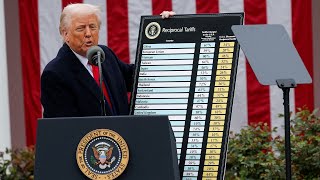
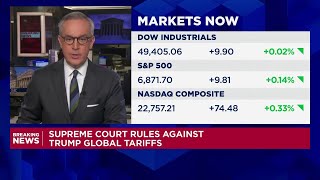
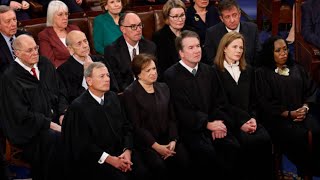
The Supreme Court struck down Trump's IEEPA tariffs. Consumer Discretionary stocks (Lululemon, Williams-Sonoma, Nike) immediately popped 3-4%. These companies are heavy importers. The removal of tariffs (even temporarily) instantly improves margin outlooks and removes a massive cost overhang. LONG (Tactical). The market is repricing the removal of immediate duty costs. Trump has "Plan B" (Section 122, 232, 301). Tariffs will likely return in a different legal form within months, making this a short-lived relief rally.
Mike McGlone
Senior Commodity Strategist, Bloomberg Intelligence
Gold is trading above $5,000. The Gold/Oil ratio is 76 (100-year mean is 20). McGlone says gold is "way too expensive" and "has run most of its bull market rally." Gold is priced for maximum geopolitical disaster. If there is *any* easing of global tensions (e.g., Middle East de-escalation), the risk premium will evaporate, sending Gold back down toward $4,000. WATCH (Bearish Bias). The risk/reward is skewed to the downside at these historic valuations relative to energy. Geopolitical escalation (Iran conflict) could push prices even higher regardless of "value."
Citi downgraded Technology to Neutral and recommended allocating to US Small Caps. The "broadening out" trade is gaining traction. With the Supreme Court ruling potentially lowering input costs (tariffs) and the economy slowing but growing, valuation gaps between Big Tech and Small Caps look attractive. LONG. Rotation trade is active. Small caps are interest-rate sensitive; if yields rise (10Y up 2.5 bps today) or inflation remains sticky (Core PCE 3%), small caps will suffer.
Nimrit Kang
CIO, North American Equities, Santander Asset Management
The market has been "indiscriminately selling" software stocks due to fears that AI will disrupt them. Not all software is doomed. Companies with "proprietary data sets" (e.g., insurance analytics) have a moat and will become AI enablers, not victims. The market has prematurely discounted these "AI survivors." LONG. Look for software companies with unique data that have been thrown out with the bathwater. AI disruption accelerates faster than expected, rendering legacy SaaS obsolete before they can pivot.
This Bloomberg Markets video, published February 20, 2026,
features Silas Brown, Dani Burger, Ed Ludlow, Annmarie Hordern, Mike McGlone, Nimrit Kang
discussing OWL, WMT, NFLX, WBD, WSM, NKE, LULU, XLY, SILVER, GLD, IWM, IGV.
7 trade ideas extracted by AI with direction and confidence scoring.
Speakers:
Silas Brown,
Dani Burger,
Ed Ludlow,
Annmarie Hordern,
Mike McGlone,
Nimrit Kang
· Tickers:
OWL,
WMT,
NFLX,
WBD,
WSM,
NKE,
LULU,
XLY,
SILVER,
GLD,
IWM,
IGV