Bloomberg Surveillance 2/20/2026
Speakers
**Jonathan Ferro, Lisa Abramowicz, Annmarie Hordern**
— Anchors, Bloomberg Surveillance
**George Goncalves**
— Head of US Macro Strategy, MUFG
**Stephen Cook**
— Senior Fellow, Council on Foreign Relations
**George Pollack**
— Signal and the Global
**Jon Hill**
— US Rates Strategist, Barclays
**Greg Boutle**
— Head of US Equity & Derivative Strategy, BNP Paribas
**Kate Kalutkiewicz**
— Former White House Trade Official
**Alicia Reese**
— VP Equity Research, Wedbush Securities
**Collin Martin**
— Fixed Income Strategist, Charles Schwab
**Jitania Kandhari**
— Deputy CIO, Morgan Stanley Investment Management
**Dana Telsey**
— CEO, Telsey Advisory Group
**Kathy Bostjancic**
— Chief Economist, Nationwide
**Tony Wong**
— Portfolio Manager, T. Rowe Price
Summary
- Geopolitical Risk Premium: Tensions with Iran are at a boiling point with a 10-15 day deadline set by the administration for a nuclear deal, accompanied by a massive military buildup. Crude oil is trading near six-month highs, threatening the "affordability" narrative and potentially complicating the Fed's ability to cut rates if inflation spikes via energy.
- Private Credit Cracks: Blue Owl (OWL) is restricting withdrawals from a retail-focused fund and selling loans to its own insurance arm to generate liquidity. This is raising systemic concerns ("cockroach theory") about the opacity and liquidity of the private credit market, specifically regarding retail exposure.
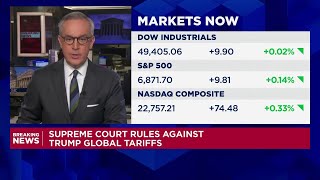
- Macro & Fed Disconnect: Despite a "soft" GDP print (1.4% vs 2.8% exp) attributed to a government shutdown, consumption remains resilient. However, Core PCE ticking up to 3.0% YoY complicates the rate cut narrative. The market is pricing in fewer cuts, while some strategists (Goncalves) still see 3 cuts due to housing deflation.
- Tech Bifurcation: The "Agentic AI" wave is identified as the next necessary catalyst for NVDA and the broader AI trade. Meanwhile, a rotation is occurring out of software and into cyclical/industrial names, though high-quality retail (WMT, COST) continues to perform.
Ideas
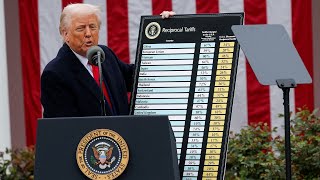
Blue Owl is restricting withdrawals from one of its retail-focused private credit funds and sold a $1.4B portfolio of loans to four buyers, including its own insurance arm, to meet liquidity needs. Selling assets to your own balance sheet (insurance arm) to pay off exiting investors is a classic sign of liquidity stress. This validates the "cockroach theory"—if one major player is engineering liquidity this aggressively, the stress is likely systemic or at least deeper within the firm than admitted. Retail confidence in the asset class is fragile. SHORT / AVOID. The stock is already down ~4-5%, but the reputational damage and potential regulatory scrutiny (Sen. Warren mentioned) suggest further downside. The firm claims this is "accelerating return of capital," and if the loans were sold at par, it proves asset value stability. NVDA / OPENAI - LONG Speaker: Tony Wong / Market Reporting Thesis: Nvidia is finalizing a $30B investment in OpenAI (replacing a previous structure) and Wong notes that "Agentic AI" (AI agents doing work) is the next demand leg. The investment cements NVDA's position not just as a hardware vendor but as a structural owner of the AI ecosystem. The shift to "Agentic AI" drives ROI for enterprise customers, which justifies continued massive CapEx on GPUs. LONG. The "first wave" is priced in, but the "second wave" (Agentic) provides the fundamental support for the next breakout. If Agentic AI fails to deliver tangible ROI for enterprises, CapEx will collapse. NFLX - LONG / PARA - AVOID Speaker: Alicia Reese Thesis: Netflix is in talks regarding a deal with Warner Bros (WBD), but Reese explicitly states Netflix "doesn't need it" while Paramount (PARA) is struggling to reach profitability and needs a deal. Netflix has dominant pricing power, ad-tier growth, and global scale. Any M&A activity is a "nice to have" for them but a lifeline for legacy media. Regulatory headwinds make a WBD/NFLX deal difficult, but NFLX's organic path remains superior. LONG NFLX (Organic growth + Ad tier). AVOID PARA (Desperation makes them a value trap unless a buyout occurs). Regulatory intervention blocks NFLX's expansion into theatrical distribution windows. WMT / COST / TJX / RL - LONG Speaker: Dana Telsey Thesis: Walmart delivered strong earnings driven by high-income consumers. Ralph Lauren is successfully "enhancing the core" with higher average unit retail (AUR) and brand elevation. The retail consumer is bifurcated. Winners are those offering extreme value (WMT, COST, TJX) or strong brand equity/luxury adjacency (RL). These companies are managing tariff headwinds effectively through pricing power and supply chain adjustments. LONG the "Winners" basket. Tariffs (Supreme Court ruling pending) could spike costs faster than pricing power can adjust. TGT - AVOID Speaker: Dana Telsey Thesis: Target has a new CEO and is in a transition period compared to the stability of Walmart. Unlike WMT, which is firing on all cylinders (grocery + high income), Target is discretionary-heavy and undergoing leadership changes. Uncertainty warrants a discount. AVOID until the new CEO outlines a clear game plan (earnings March 3). New CEO could announce a massive positive strategic shift immediately. KOREA / JAPANESE EQUITIES / LATAM - LONG Speaker: Jitania Kandhari Thesis: The US market is concentrated. The "AI Trade" requires a physical supply chain (robotics, memory chips, critical minerals) that the US cannot fully onshore. To capture the next leg of AI alpha, investors must look upstream. Korea and Japan dominate the robotics and memory chip sectors essential for AI hardware. Latin America dominates the critical minerals (copper/lithium) needed for the power/electrification infrastructure. LONG these regions as a derivative play on AI CapEx and "De-Americanization" of supply chains. A strong US Dollar (due to Fed holding rates) usually hurts Emerging Markets and Asian equities. US TREASURIES (BONDS) - LONG Speaker: George Goncalves Thesis: Housing market is stalled; if it opens up, prices will likely drop first. Goods inflation is a small part of the basket. The market is overreacting to "no landing" narratives. The economy is coiling/stalling. Disinflation in housing is still in the pipeline. The Fed will likely cut 3 times (contrarian view vs. market pricing out cuts). LONG Bonds (expecting yields to fall). Inflation re-accelerates due to a geopolitical oil spike (Iran conflict). CRUDE OIL / ENERGY - HEDGE (WATCH) Speaker: Stephen Cook / Annmarie Hordern Thesis: US has amassed the largest military buildup in the Middle East since 2003. Trump set a 10-15 day deadline for an Iran deal. The probability of a kinetic strike is high. Iran's likely retaliation would be against regional energy infrastructure or the Strait of Hormuz. WATCH / LONG ENERGY as a geopolitical hedge. A diplomatic deal is reached suddenly, causing the risk premium to evaporate.
Up Next


This Bloomberg Markets video, published February 20, 2026, features Jonathan Ferro discussing OWL. 1 trade idea extracted by AI with direction and confidence scoring.
Speakers: Jonathan Ferro · Tickers: OWL