Supreme Court Tariffs Ruling Is Victory for Constitution, Hillman Says
Speakers
Jennifer Hillman
— Trade Expert / Legal Analyst
Interviewer
— Bloomberg Anchor
Summary
- The Supreme Court ruled that the President cannot use the International Emergency Economic Powers Act (IEEPA) to impose tariffs, affirming that this power belongs exclusively to Congress.
- This decision is framed as a significant victory for the U.S. Constitution and American consumers, removing the threat of executive-ordered tariffs under this specific statute.
- A potential second-order risk exists: if trading partners renege on agreements due to the removal of the IEEPA threat, the President may pivot to Section 122 (Balance of Payments authority), which allows for broad tariffs on all goods from all countries, though this is seen as a "wait and see" scenario.
Ideas
Jennifer Hillman
Trade Expert / Legal Analyst
"I would agree with Senator Schumer that this is a big victory for American consumers... the court is acknowledging that the Constitution gives to the Congress, not to the president, the power to impose tariffs." The ruling removes the immediate threat of the President unilaterally imposing broad tariffs via IEEPA. Tariffs act as a tax on imports; their removal or prevention lowers input costs for retailers and preserves purchasing power for consumers. This regulatory clarity is bullish for consumer discretionary sectors and import-heavy retailers. LONG (Relief rally on reduced policy uncertainty and cost pressures). The President finds alternative legal avenues (like Section 122) to impose tariffs, negating the benefit.
Up Next




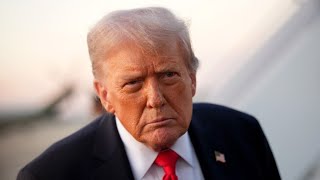
This Bloomberg Markets video, published February 20, 2026, features Jennifer Hillman discussing XRT, XLY. 1 trade idea extracted by AI with direction and confidence scoring.
Speakers: Jennifer Hillman · Tickers: XRT, XLY