Is the US About to Attack Iran?
Speakers
Interviewer
— Host
Dina Esfandiary
— Middle East Economic Lead, Bloomberg News
Summary
- The US military buildup in the Middle East is described as "consequential," "significant," and "unlike anything seen in the past," suggesting preparations for a major conflict rather than a minor skirmish.
- Iran views the current situation as existential, meaning they have no incentive to de-escalate. Their strategy has shifted from restraint to a likely "rapid escalation."
- A specific Iranian counter-strategy cited is targeting energy infrastructure and potentially closing the Strait of Hormuz to impact global oil markets.
- Israel is actively lobbying the US for a maximalist position or war, while Gulf Arab partners are urging restraint due to fear of regional fallout.
Ideas
Dina Esfandiary
Middle East Economic Lead, Bloomberg News
Dina explicitly states that Iran's incentive is to "escalate" and "impact oil markets by shooting at oil and energy infrastructure in the region, potentially closing the Straits of Hormuz." If the Strait of Hormuz (a critical chokepoint for global oil supply) is closed or regional energy infrastructure is bombed, global oil supply faces an immediate, severe shock. This creates a classic supply-side spike in crude futures and benefits integrated oil majors with non-Middle East production capacity. LONG Energy commodities and producers as a hedge against a supply shock. Diplomatic breakthroughs or Iran choosing a proxy-war strategy that avoids direct energy disruption to keep China (a major buyer) happy.
Dina Esfandiary
Middle East Economic Lead, Bloomberg News
The speaker notes the "U.S. military buildup in the region is really consequential... unlike anything that we've seen in the past." Such a massive deployment requires significant logistical support, munitions replenishment, and hardware maintenance. Furthermore, if the conflict is "impossible to keep short" (as Dina predicts), it implies a sustained period of high defense spending and asset utilization. LONG Defense Primes and Aerospace/Defense ETFs. The buildup turns out to be purely a deterrent (bluff) and troops are withdrawn without conflict, leading to a sentiment unwind in defense stocks.
Dina Esfandiary
Middle East Economic Lead, Bloomberg News
The specific threat mentioned is "closing the Straits of Hormuz." Even the *threat* of closure drives war-risk insurance premiums and tanker rates sky-high. If the Strait is contested but not fully closed, tanker companies charge exorbitant rates to transport oil. This is a "risk premium" play on logistics. LONG Oil Tankers (specifically those with fleets capable of rerouting or commanding high spot rates). Total closure of the Strait results in zero volume (no oil to move), or a swift US naval victory keeps shipping lanes fully open and suppresses rates.
Dina Esfandiary
Middle East Economic Lead, Bloomberg News
Dina argues that "once that happens [first airstrike], it's absolutely impossible to keep this short" and predicts a "rapid escalation." Markets generally price in short, contained conflicts. A prolonged, existential war involving Iran (and potentially dragging in other powers) creates deep geopolitical uncertainty. Capital flees risk assets for safe havens (Gold) and volatility (VIX) expands as the "short skirmish" narrative collapses. LONG Safe Havens and Volatility. The conflict remains contained to minor skirmishes, or the US achieves objectives quickly without broader regional escalation.
Up Next

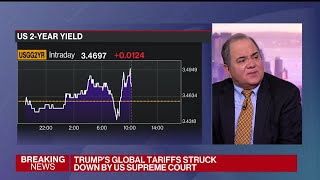


This Bloomberg Markets video, published February 20, 2026, features Dina Esfandiary discussing XLE, XOM, BRENT, CVX, LMT, RTX, NOC, ITA, EURN, DHT, FRO, VIX, GLD. 4 trade ideas extracted by AI with direction and confidence scoring.
Speakers: Dina Esfandiary · Tickers: XLE, XOM, BRENT, CVX, LMT, RTX, NOC, ITA, EURN, DHT, FRO, VIX, GLD