How Will Trump Respond to the Supreme Court Tariff Ruling?
Speakers
Nathan Dean
— Senior US Policy Analyst, Bloomberg Intelligence
Mike
— Policy Correspondent
Neil Dutta
— Renaissance Macro (Quoted)
Summary
- The Trump administration is expected to pivot to Section 122 of the Trade Act of 1974 as a "Plan B" following the Supreme Court ruling. This allows the President to impose a 15% tariff for up to 150 days by citing "international balance of payment problems."
- This 150-day window is viewed as a bridge to allow the administration time to conduct investigations required for longer-term tariffs under Section 232 (National Security), Section 301, or Section 201, targeting implementation by summer.
- The political stakes are high: Trump risks looking like a "lame duck" if he does not retaliate, but converting temporary tariffs to permanent ones just months before midterm elections carries significant voter risk.
- Market uncertainty is expected to rise as the administration is politically forced to "dial the tariff threat back on" rather than cave to the court ruling.
Ideas
Nathan Dean
Senior US Policy Analyst, Bloomberg Intelligence
Nathan Dean states, "Section 122 is most likely what you're going to see President Trump turn to, which is this 15% tariff." Mike adds this can be done "in just about any case he wants" if he claims balance of payment problems. A broad 15% tariff acts as an immediate tax on companies that rely on global supply chains. Retailers (XRT) and Consumer Discretionary (XLY) firms with thin margins and high import exposure will face immediate input cost inflation, which they must either absorb (crushing margins) or pass on (crushing demand). SHORT sectors heavily exposed to imports due to the high probability of the 15% tariff trigger. Trump may choose a symbolic, narrower tariff rather than a broad 15% levy to avoid consumer backlash before midterms.
Michael McKee
Policy Correspondent
Mike highlights that after the temporary Section 122 tariffs, the administration will look to "Section 232, the national security issue" or "Section 201" which allows up to "50% additional tariff... for those industries" that have been injured by trade. Section 232 and 201 are historically used to protect heavy domestic industries like Steel and Aluminum. If the administration uses the 150-day window to prepare these specific investigations, domestic metals producers stand to gain market share and pricing power by summer. WATCH domestic industrial producers for entry if investigations are formally announced. These investigations take time and the midterm election timeline may make unpopular protectionist measures difficult to implement.
Neil Dutta
Renaissance Macro (Quoted)
Neil Dutta notes, "The issue is if he does not dial the tariff threat back on, he basically looks like a lame duck... if Trump turns the trade knob back on, we get more uncertainty." The administration is politically cornered. They cannot accept the Supreme Court loss without looking weak. This guarantees a retaliatory policy response (Plan B), which reintroduces volatility and policy risk into the market that investors had hoped was settled by the court. LONG Volatility as a hedge against the chaotic implementation of "Plan B" tariffs. Trump could delay action to focus on other political priorities, causing volatility to subside.
Up Next
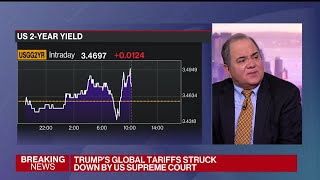


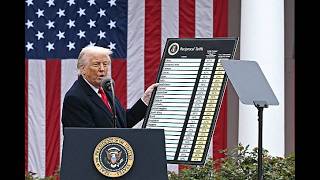

This Bloomberg Markets video, published February 20, 2026, features Nathan Dean, Michael McKee, Neil Dutta discussing XRT, XLY, JJU, XME, VIX. 3 trade ideas extracted by AI with direction and confidence scoring.
Speakers: Nathan Dean, Michael McKee, Neil Dutta · Tickers: XRT, XLY, JJU, XME, VIX