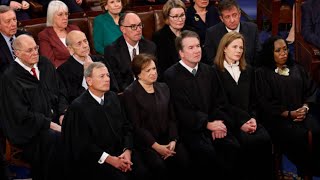
Supreme Court strikes down Trump tariffs, rebuking president’s signature economic policy
Speakers
Eamon Javers
— Senior Washington Correspondent, CNBC
Carl Quintanilla
— Anchor, CNBC
Summary
- The Supreme Court ruled 6-3 against the President, affirming that the International Emergency Economic Powers Act (AIPA) does not grant unilateral authority to impose tariffs to "reorder the global economy."
- The ruling strikes down the legal basis for the 2025 tariffs, stripping the President of "unilateral negotiating power" and leverage in international trade talks.
- Approximately $133.5 billion in tariffs collected under AIPA in FY25/26 is now in question, sparking a potential "food fight" over reimbursements to companies.
- The Administration may pivot to other authorities (Section 232, 301, 338), but these require lengthy investigations and lack the immediacy of AIPA.
Ideas
Eamon Javers
Senior Washington Correspondent
The President stated the cost of reimbursing the tariffs ($133.5 billion) is "so high to the treasury" that the government might struggle to pay. A sudden $133 billion liability for the US Treasury creates fiscal strain. If the government is forced to pay, it impacts liquidity; if they refuse, it creates legal and market uncertainty regarding sovereign obligations and corporate balance sheets. WATCH for fiscal fallout and Treasury issuance dynamics. The government may find a "loophole or carve out" to avoid paying, negating the fiscal shock but hurting corporate claimants.
Up Next


This CNBC video, published February 20, 2026, features Eamon Javers discussing TLT. 1 trade idea extracted by AI with direction and confidence scoring.
Speakers: Eamon Javers · Tickers: TLT