BUZZBERGThe leaderboard is ranked by Alpha Score, which weighs a speaker's average return, their number of calls, and reputation — a credibility rating of the source that can only raise a score, never lower it.Read the FAQ
USMCA renegotiation poses a serious risk to U.S. corn exports, as Mexico is the largest export market for U.S. corn and Canadian/Mexican markets replaced China as the top destination for U.S. agriculture. Farmers warn that losing these export markets would be devastating, and the talks are making the auto, energy and especially agriculture sectors very nervous.
"Shares of KKR and Blue Owl were down as much as 10 percent yesterday... This is the liquidity issue that's blowing up... Retail investors just don't think in terms of long-term investments, and they can't get their money out." Alternative asset managers have aggressively expanded their private credit offerings to retail investors to grow Assets Under Management (AUM). Because the underlying private loans are highly illiquid, a wave of retail panic and redemption requests forces these funds to gate withdrawals. This damages their reputation, halts AUM growth, and directly hits the fee revenues that drive their stock valuations. SHORT. The structural mismatch between illiquid private loans and retail liquidity demands makes these asset managers highly vulnerable to multiple compression as the private credit cycle turns. Institutional capital remains sticky and offsets retail outflows; default rates remain low, allowing these firms to maintain high yields and attract new capital.
"Shares of KKR and Blue Owl were down as much as 10 percent yesterday... This is the liquidity issue that's blowing up... Retail investors just don't think in terms of long-term investments, and they can't get their money out." Alternative asset managers have aggressively expanded their private credit offerings to retail investors to grow Assets Under Management (AUM). Because the underlying private loans are highly illiquid, a wave of retail panic and redemption requests forces these funds to gate withdrawals. This damages their reputation, halts AUM growth, and directly hits the fee revenues that drive their stock valuations. SHORT. The structural mismatch between illiquid private loans and retail liquidity demands makes these asset managers highly vulnerable to multiple compression as the private credit cycle turns. Institutional capital remains sticky and offsets retail outflows; default rates remain low, allowing these firms to maintain high yields and attract new capital.
"Shares of KKR and Blue Owl were down as much as 10 percent yesterday... This is the liquidity issue that's blowing up... Retail investors just don't think in terms of long-term investments, and they can't get their money out." Alternative asset managers have aggressively expanded their private credit offerings to retail investors to grow Assets Under Management (AUM). Because the underlying private loans are highly illiquid, a wave of retail panic and redemption requests forces these funds to gate withdrawals. This damages their reputation, halts AUM growth, and directly hits the fee revenues that drive their stock valuations. SHORT. The structural mismatch between illiquid private loans and retail liquidity demands makes these asset managers highly vulnerable to multiple compression as the private credit cycle turns. Institutional capital remains sticky and offsets retail outflows; default rates remain low, allowing these firms to maintain high yields and attract new capital.
"Shares of KKR and Blue Owl were down as much as 10 percent yesterday... This is the liquidity issue that's blowing up... Retail investors just don't think in terms of long-term investments, and they can't get their money out." Alternative asset managers have aggressively expanded their private credit offerings to retail investors to grow Assets Under Management (AUM). Because the underlying private loans are highly illiquid, a wave of retail panic and redemption requests forces these funds to gate withdrawals. This damages their reputation, halts AUM growth, and directly hits the fee revenues that drive their stock valuations. SHORT. The structural mismatch between illiquid private loans and retail liquidity demands makes these asset managers highly vulnerable to multiple compression as the private credit cycle turns. Institutional capital remains sticky and offsets retail outflows; default rates remain low, allowing these firms to maintain high yields and attract new capital.
"Shares of KKR and Blue Owl were down as much as 10 percent yesterday... This is the liquidity issue that's blowing up... Retail investors just don't think in terms of long-term investments, and they can't get their money out." Alternative asset managers have aggressively expanded their private credit offerings to retail investors to grow Assets Under Management (AUM). Because the underlying private loans are highly illiquid, a wave of retail panic and redemption requests forces these funds to gate withdrawals. This damages their reputation, halts AUM growth, and directly hits the fee revenues that drive their stock valuations. SHORT. The structural mismatch between illiquid private loans and retail liquidity demands makes these asset managers highly vulnerable to multiple compression as the private credit cycle turns. Institutional capital remains sticky and offsets retail outflows; default rates remain low, allowing these firms to maintain high yields and attract new capital.
"Shares of KKR and Blue Owl were down as much as 10 percent yesterday... This is the liquidity issue that's blowing up... Retail investors just don't think in terms of long-term investments, and they can't get their money out." Alternative asset managers have aggressively expanded their private credit offerings to retail investors to grow Assets Under Management (AUM). Because the underlying private loans are highly illiquid, a wave of retail panic and redemption requests forces these funds to gate withdrawals. This damages their reputation, halts AUM growth, and directly hits the fee revenues that drive their stock valuations. SHORT. The structural mismatch between illiquid private loans and retail liquidity demands makes these asset managers highly vulnerable to multiple compression as the private credit cycle turns. Institutional capital remains sticky and offsets retail outflows; default rates remain low, allowing these firms to maintain high yields and attract new capital.
The EU is targeting 50% of defense procurement to be from EU suppliers by 2030... meeting that goal requires production capacity, and that is where Sweden stands out. Many European nations dismantled their defense manufacturing during peacetime. Because Saab continuously invested in R&D and maintained its production lines, it is uniquely positioned to immediately capture the massive influx of localized EU defense spending. LONG. Saab has the actual physical capacity to meet the EU's aggressive rearmament mandates, giving them a monopoly-like advantage over lagging regional peers. Major European economies (France, Italy, Spain) fail to meet their defense spending targets due to domestic fiscal constraints.
The EU is targeting 50% of defense procurement to be from EU suppliers by 2030... meeting that goal requires production capacity, and that is where Sweden stands out. Many European nations dismantled their defense manufacturing during peacetime. Because Saab continuously invested in R&D and maintained its production lines, it is uniquely positioned to immediately capture the massive influx of localized EU defense spending. LONG. Saab has the actual physical capacity to meet the EU's aggressive rearmament mandates, giving them a monopoly-like advantage over lagging regional peers. Major European economies (France, Italy, Spain) fail to meet their defense spending targets due to domestic fiscal constraints.
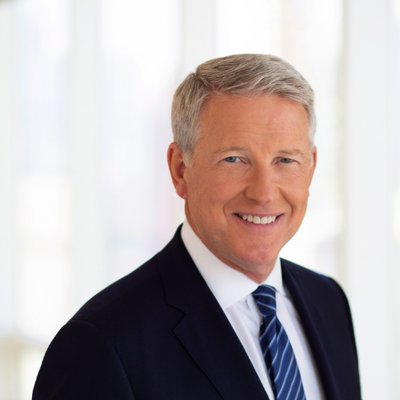
David Westin has 5 trade ideas tracked on Buzzberg across 5 tickers since March 2026. Ranked #1259 on the Buzzberg Alpha leaderboard. Most covered: KKR, OWL, APO.
#1259Ranked Speaker
#1259 of 1982 voices on Buzzberg
tracked since Mar 2026
1259David Westin@DavidWestin
Alpha Score8.4
top 64% of speakers
Calls5
Win Rate0%
Average Return
-19.7%
Best Calls
No live winners yet
Report this thesis
Suggest a missing thesis
Did we miss a tweet or video where this speaker shared a trade idea? Drop the link and we'll review it.
🍪 Cookies
We use cookies to operate this site and for analytics. Declining won't affect your access to content.