Ideas
"It takes time to get production back online... You have to have the refineries available to process it and they will be overwhelmed. It could take a couple months before prices start to come down significantly." The geopolitical closure of the Strait of Hormuz has created a severe supply bottleneck that cannot be quickly resolved by policy or immediate production hikes. This structural supply deficit will keep crude prices elevated well above $100, driving massive free cash flow for domestic oil producers and energy sector equities. LONG. Sustained high oil prices directly translate to earnings beats and margin expansion for unhedged exploration and production companies. A sudden geopolitical ceasefire or an accelerated demand destruction scenario (recession) that causes oil prices to crash.
"As consumer spending starts to slow down I think Fed rate cuts will come back on the table. I think the 10 year, 4.25% or higher starts to add value." The market is currently pricing in stagflation due to the oil shock, causing a selloff in Treasuries. However, the resulting pain at the gas pump will crush consumer discretionary spending, leading to a broader economic slowdown. Once the "growth scare" materializes, the Fed will be forced to cut rates, driving bond prices up. LONG. Buying long-duration Treasuries at elevated yields offers an asymmetric hedge against an impending consumer-led recession. Inflation becomes structurally unanchored, forcing the Fed to hike rates despite slowing growth, which would cause long-duration bonds to sell off further.
"One market we like is the municipal bond market. Yields are very attractive in the intermediate to long end of the curve." In a "higher for longer" rate environment where inflation is sticky but economic growth is cooling, investors need yield without taking on excessive corporate default risk. Municipal bonds offer tax-advantaged income and historical resilience during economic downturns, making them a superior risk-adjusted alternative to lower-tier corporate credit. LONG. Lock in attractive intermediate-to-long yields in high-quality municipal debt before the Fed eventually pivots to rate cuts. A severe liquidity crisis that causes a broad selloff in all fixed-income assets, temporarily widening municipal spreads.
"Adobe shares are down as the company CEO announced his resignation after an 18-year tenure amid skepticism among Adobe's ability to drive the AI era." A sudden leadership vacuum at a legacy software company during a critical technological transition (Generative AI) signals internal turmoil. Competitors moving faster on AI integration will likely steal market share, leading to multiple compression for the stock. AVOID. Uncertainty regarding future leadership and AI execution makes the stock dead money or a short candidate until a clear turnaround strategy is proven. A new, highly regarded CEO is appointed quickly and announces a transformative AI acquisition or product launch, sparking a relief rally.
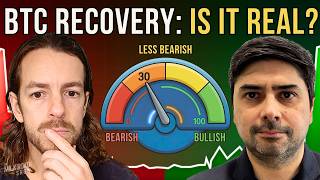
"Crypto-linked stocks are raising as investors speculate bitcoin could be approaching the final days of its recent selloff. Bitcoin is up 5%." Market sentiment is shifting from fear to accumulation in the digital asset space. As the technical selloff exhausts itself, capital will flow back into the underlying asset (Bitcoin) and the infrastructure plays (exchanges/miners) that generate revenue from renewed retail and institutional trading volumes. LONG. The exhaustion of selling pressure provides a tactical entry point for high-beta crypto assets. A broader macro risk-off event driven by the oil shock could force investors to liquidate high-volatility assets for cash.
"There is a big hole around software loans. That debt is coming due. Software is being replaced by AI. There are concerns about fraud." Private credit funds (BDCs) aggressively lent to enterprise software companies based on recurring revenue models. As AI disrupts these legacy software models, their revenues will decline just as their debt matures. This will trigger a wave of defaults in the private credit space, hurting BDC net asset values and the underlying software equities. AVOID. The intersection of AI disruption and a looming maturity wall creates a toxic environment for highly levered software companies and the private lenders holding their paper. The Fed slashes interest rates dramatically, allowing these software companies to refinance their debt cheaply and survive the AI transition.
"Meta shares in the red after the New York Times reported the company's latest AI model underperformed expectations. Analysts say Meta is likely to narrow their AI product's focus." Big Tech valuations are currently heavily dependent on AI leadership and execution. If a major player's foundational model falls behind peers, it threatens their future ad-targeting capabilities and user engagement, prompting investors to reallocate capital to clear AI winners. AVOID. Negative fundamental news regarding core AI capabilities will cap upside and invite multiple compression. The report is overblown, and Meta's core advertising revenue continues to print massive free cash flow, overriding the AI sentiment hit.
"On the public side the opportunity set is attractive. You being paid 5%-6%, that is a pretty good value proposition... the value of having a continuous price discovery." As retail and institutional investors get trapped in illiquid private credit funds (due to redemption gates), there will be a premium placed on liquidity. Public high-yield bonds offer comparable, attractive yields (5-6%) but with daily liquidity and transparent pricing, drawing capital away from private markets. LONG. Public liquid credit is mispriced relative to the illiquidity and default risks currently building in the private credit shadow banking sector. A severe macroeconomic recession causes a spike in corporate defaults, widening high-yield spreads and causing principal losses.
This Bloomberg Markets video, published March 13, 2026,
features Michael McKee, Priya Misra, Nisha Patel, Isabelle Lee, James Crombie, Lotfi Karoui
discussing USO, OXY, XLE, TLT, MUB, ADBE, BTC, COIN, BIZD, IGV, META, HYG.
8 trade ideas extracted by AI with direction and confidence scoring.
Speakers:
Michael McKee,
Priya Misra,
Nisha Patel,
Isabelle Lee,
James Crombie,
Lotfi Karoui
· Tickers:
USO,
OXY,
XLE,
TLT,
MUB,
ADBE,
BTC,
COIN,
BIZD,
IGV,
META,
HYG