Ideas
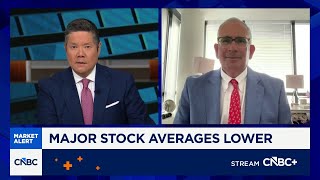
DoorDash (DASH) fell over 6% and software stocks were weak following a research report highlighting "left tail risks" where AI replaces white-collar jobs and disrupts the economy. The market is beginning to price in the deflationary/disruptive side of AI rather than just the productivity boom. Gig economy stocks (DASH) and expensive software (IGV) are being sold as investors question the sustainability of consumer spending in an AI-disrupted labor market. AVOID. Sentiment has shifted from "AI buys everything" to "AI breaks the economy." The report could be dismissed as fear-mongering, leading to a sharp relief rally in tech.
Novo Nordisk's (NVO) next-gen obesity shot fell short of Eli Lilly's (LLY) rival drug in data released today. Additionally, the FDA approved a label expansion for LLY's Zepbound. The GLP-1 market is a duopoly, but momentum is shifting. LLY is demonstrating clinical superiority and regulatory wins, while NVO is hitting pipeline stumbles. Capital will rotate from the loser to the winner within the sector. LONG LLY / SHORT NVO. LLY is solidifying dominance. NVO could release better data on other pipeline candidates; supply constraints could cap LLY's near-term upside.
IBM shares sank 13% (biggest drop since 2000) after AI startup Anthropic announced a cloud code tool that helps modernize COBOL. COBOL is a dated programming language that primarily runs on IBM mainframes. This is IBM's "moat." If AI can easily migrate companies off COBOL, IBM's sticky legacy revenue is structurally threatened by AI rather than aided by it. SHORT. The market is repricing IBM from a "stable legacy cash flow" play to a "disrupted incumbent." IBM could announce a partnership or its own defensive AI tools to mitigate the narrative.
Gilead (GILD) agreed to buy Arcellx (ACLX) for $7.8B. ACLX rallied 77%. This confirms that Big Pharma is actively deploying cash for pipeline acquisition. While the ACLX trade is done, it signals that small/mid-cap biotech with promising late-stage data are prime targets. WATCH. Look for other biotech names with strong clinical data in oncology/cell therapy as potential targets. M&A regulation could stifle future deals.
Yields dropped significantly (10-year down 5 bps) and the CIO of Citizens Private Wealth noted an "embrace of bonds." The combination of tariff risks (growth negative) and AI disruption fears (deflationary) is driving a classic flight to safety. When equities sell off on growth scares, money flows into Treasuries. LONG. Bonds are acting as the hedge against the "weird economy" narrative. If tariffs are viewed as purely inflationary (rather than growth-negative), yields could spike back up.
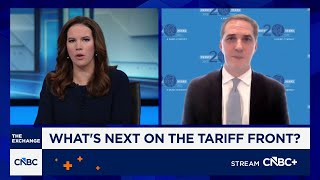
Gap (GPS) stock fell 6% on double the average volume following Trump's statement regarding a 15% global US tariff rate. Retailers with heavy international supply chains (apparel) are the most sensitive to tariff hikes. The high volume on the sell-off indicates institutional exit. SHORT. Until tariff policy clarity emerges, import-heavy retail is a "don't touch" sector. Tariffs could be used merely as negotiation leverage and not actually implemented.
Domino's Pizza (DPZ) reported a larger-than-expected rise in comparable sales, driven by "budget-friendly pies" and promotions. Stock finished up ~4%. In an environment where consumers are stretched (inflation/economy fears), they trade down to the lowest cost calorie options. DPZ is the primary beneficiary of the "trade-down" effect in food. LONG. A defensive play on the consumer wallet. Commodity costs (cheese/dough) rising could squeeze margins despite volume growth.
This Bloomberg Markets video, published February 23, 2026,
features Romaine Bostick, Cristina Aquino, Carol Massar, Emily Graffeo
discussing IGV, DASH, LLY, NVO, IBM, ACLX, GILD, TLT, IEF, GPS, DPZ.
7 trade ideas extracted by AI with direction and confidence scoring.
Speakers:
Romaine Bostick,
Cristina Aquino,
Carol Massar,
Emily Graffeo
· Tickers:
IGV,
DASH,
LLY,
NVO,
IBM,
ACLX,
GILD,
TLT,
IEF,
GPS,
DPZ