Will Trump Strike Iran?
Summary
- President Trump is reportedly considering a "limited strike" on Iran to force nuclear deal concessions; advisor Scott Bessant claims Iran is "a week away" from industrial-grade bomb material.
- The guest argues a strike would likely backfire, as Iran is already at a point of "existential weakness" and has no further concessions to offer, forcing them into a cycle of escalation.
- Retaliation would likely not be a direct massive strike on Israel (like in summer) but rather asymmetric attacks against US facilities and Gulf state allies.
- Regime change is viewed as a "worse outcome" scenario, as the likely successor to the current leadership is the hardline IRGC (Revolutionary Guard).
Ideas
"It indeed risks backfiring... setting off a cycle of escalation... I think this would be destabilizing." The analyst describes a high-probability scenario of miscalculation and destabilization in a critical geopolitical theater. When "off-ramps" are unavailable and nuclear rhetoric (Bessant's "week away" comment) heats up, capital flees to traditional safe havens. LONG Gold. De-escalation or a quick diplomatic resolution.
"The next hammer to drop would be a lot bigger... renewed conflict in the Middle East... The U.S. would be in a position of not having an identified off ramp." If a "limited strike" fails to force concessions (as the analyst predicts) and leads to a "cycle of escalation" without an off-ramp, the US enters a prolonged kinetic engagement. This necessitates replenishment of munitions and deployment of defense systems, benefiting defense primes. LONG Defense Contractors. The initial strike is a bluff, or the conflict remains strictly limited to a single event.
"I think we would see attacks against our facilities in the region, against our allies and partners. So the other Gulf states... destabilization in a region that is really central to President Trump's economic objectives." The speaker predicts Iranian retaliation will specifically target Gulf allies and US infrastructure in the Middle East. Any kinetic conflict or asymmetric attacks on Gulf energy infrastructure (Saudi Arabia, UAE) immediately threatens global oil supply, driving crude prices higher. LONG Oil futures and Energy equities as a geopolitical hedge. Trump secures a diplomatic deal without strikes, or Iran chooses not to retaliate to preserve the regime.
Up Next




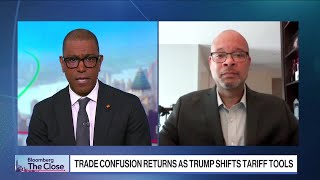
This Bloomberg Markets video, published February 23, 2026, discussing GLD, NOC, ITA, RTX, LMT, XLE, USO. 3 trade ideas extracted by AI with direction and confidence scoring.