Markets Brace For Fallout | Open Interest 3/30/2026
Speakers
Dani Burger
— Anchor, Bloomberg Television
Annmarie Hordern
— Reporter, Bloomberg
Mike McGlone
— Senior Commodity Strategist, Bloomberg Intelligence
J.P. Barnett
— Bloomberg
Adam Hodge
— Managing Director, Bully Pulpit International
Chris Verrone
— Head of Macro, Piper Sandler
Teresa Ribera
— European Commission Executive Vice President
Katerina Simonetti
— Morgan Stanley Private Wealth Management
Colonel Sanders
— Bloomberg Intelligence, Former Army Colonel
Ken Kencel
— CEO, Churchill Asset Management
Dirk Wallinger
— CEO, York Space Systems
Summary
- Brent crude heads for a record monthly gain as U.S.-Iran tensions escalate, with the 3-month forward curve pricing oil above $100. President Trump sends mixed signals: claiming negotiation progress while threatening to attack Iranian energy infrastructure if the Strait of Hormuz isn't reopened.
- Aluminum prices surge following Iranian strikes on Middle Eastern smelters, though Bloomberg Intelligence notes the metal had been trending lower before the event and only ~10% of global supply comes from the region.
- Goldman Sachs observes hedge fund capitulation on stocks, suggesting the potential for a sharp rebound if de-escalation occurs, but the S&P 500 is still down 7% YTD after five consecutive weekly losses.
- Democratic strategist Adam Hodge criticizes the lack of a clear U.S. strategic objective in Iran, warning prolonged conflict will keep commodity prices high, pressure the Fed, and could boost Democratic election prospects.
- Strategas' Chris Verrone views the market as marginally oversold (using 6,200 as a key NASDAQ level) and sees gold's recent blowoff top (at ~$5,500) as a sign it's no longer a safe haven. He notes bonds are entering a zone where they have historically been attractive.
- Morgan Stanley's Katerina Simonetti recommends a barbell strategy: buying high-quality large-caps in sectors with pricing power (like health care and financials) and adding high-quality intermediate fixed income, while reducing exposure to semiconductors and tech.
- European Commission EVP Teresa Ribera calls for scrutiny of tech "acqui-hires" and stresses the need for ethical AI development, but no immediate regulatory crackdown is signaled.
- Sysco's $29B acquisition of Jetro Restaurant Depot aims to expand into cash-and-carry for small businesses, but shares fall on concerns over $21B in new debt and dilution.
- Churchill Asset Management's Ken Kencel says private credit fundamentals remain strong (low default rates), but retail redemption pressures are creating noise and potentially widening opportunities for institutional managers in the middle market.
- York Space Systems CEO Dirk Wallinger says wartime footing is accelerating demand for rapid satellite deployment and technology refresh, with the company's scalable production and strategic supply chain positioning it well.
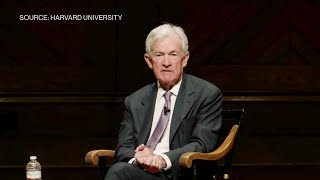
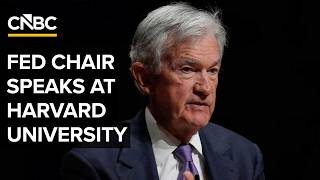
- Fed Chair Jerome Powell (in a live feed) states the Fed tends to look through supply shocks like oil spikes unless they unanchor inflation expectations, emphasizing the central bank's independence.
Ideas
McGlone states that by the time of the midterm elections, the December WTI crude contract is "more likely to be 50 than 100," and that "100 is a recession, 50 is normal." He argues the market is already sniffing out post-inflation deflation in futures, producers are bringing on supply to capitalize on high prices, and political incentives (Trump needing lower prices by midterms) will align to push prices lower. SHORT because he expects a significant decline from elevated levels near $113 toward $50. Further military escalation in the Middle East severely disrupts supply, countering the deflationary supply response.
Verrone contends that the price action in January and February "looked like a blowoff in gold and silver," and that "we learned a $5,500 gold is not a safe haven. Maybe it is at $3500." A parabolic price rise indicates speculative excess, stripping gold of its traditional safe-haven characteristics at such elevated levels. AVOID because gold is overvalued and no longer serves its purpose as a reliable hedge at current prices, implying limited upside or potential for correction. A severe, protracted geopolitical crisis could revive safe-haven demand, pushing prices higher despite valuation concerns.
Simonetti explicitly recommends increasing positioning in "financials" as part of a strategy to buy high-quality large-cap stocks during market corrections. She argues financials possess pricing power, allowing them to perform well even in an environment of high input prices and potentially softening demand. LONG because she identifies financials as a sector offering attractive buying opportunities with resilience. A deeper-than-expected economic slowdown leads to credit deterioration and reduces profitability for financial companies.
Simonetti states that "this is where fixed income comes in, especially high quality intermediate fixed income," which will "generate this income producing feature" for portfolios. Higher interest rates have created access to attractive yields in high-quality bonds, providing a durable source of income and portfolio ballast. LONG because she advocates adding high-quality intermediate fixed income to capture yield and build portfolio income. If inflation proves persistent and central banks hike rates further, bond prices could face additional pressure.
Up Next


This Bloomberg Markets video, published March 30, 2026, features Mike McGlone, Chris Verrone, Katerina Simonetti discussing WTI, GOLD, XLF, TLT. 4 trade ideas extracted by AI with direction and confidence scoring.
Speakers: Mike McGlone, Chris Verrone, Katerina Simonetti · Tickers: WTI, GOLD, XLF, TLT