WTI

West Texas Intermediate Crude Oil

Futures reference: CL=F

Current price
Loading...

Author price targets

Average target
USD 102.75

Where authors set their targets

Average1 dot = 1 author
Lowest
—
Highest
—

Authors and targets

Last 24 hours

Nov 09, 13:38 → Nov 10, 13:38

WTI extends losses as Trump signals pause in Iran strikes

ET CFO reported WTI crude fell 1.5% to $85.54 as global prices declined on hopes of easing Middle East tensions, while The Times of India put WTI at $86.50 by 0102 GMT. Both reports linked the move to US President Donald Trump indicating Washington would hold off on fresh military strikes against Iran for now. Brent had settled 5.85% lower in the previous session after touching its lowest since August 31.

Hormuz naval blockade remains despite pause in Iran strikes

Trump said the US would maintain its naval blockade in the Strait of Hormuz for now, keeping concerns over the security of a key global energy route alive, according to ET CFO and The Times of India. The reports said senior US and Gulf officials have expressed doubts about an imminent peace agreement between Washington and Tehran. Trump also said military action was not necessary 'at this point'.

Iran rejects reports of negotiations as US-Gulf officials doubt deal

Iran's security council chief Mohsen Rezaei rejected reports of ongoing negotiations, saying the US should stop spreading what he described as fake news about imaginary talks, according to ET CFO and The Times of India. He added that it was time for Washington to surrender to the seven conditions Iran has repeatedly set out. The reports also said senior US and Gulf officials doubt an imminent peace agreement.

OPEC October output rises led by Saudi Arabia, Kuwait and Iraq

The Times of India, citing a Reuters survey, reported that OPEC oil production increased in October, led by higher output in Saudi Arabia, Kuwait and Iraq despite continued constraints on exports. The report came as oil prices extended losses on hopes of easing Middle East tensions. Investors were also awaiting monthly EIA, OPEC and IEA reports for cues on demand and supply.

Russia and Ukraine schedule two-day US-brokered talks

Russian and Ukrainian officials were scheduled to meet for two days of US-brokered talks, their first such meeting since February, according to ET CFO and The Times of India. Trump had suggested last week that a broader peace agreement could be possible in the 4.5-year-old Russia-Ukraine war and could also incorporate Europe's security. The meeting was scheduled as oil markets watched diplomatic efforts in the Middle East and the Russia-Ukraine war.

Weekly brief

Nov 03, 13:38 → Nov 10, 13:38

Trump signals pause in Iran strikes but keeps Hormuz blockade

US President Donald Trump said a fresh attack on Iran was 'highly unlikely' and later that military action was not necessary 'at this point', according to reports. He said any decision depended on Iran signing a 'very strong agreement'. The US would maintain its naval blockade in the Strait of Hormuz for now. The reports also said senior US and Gulf officials doubt an imminent peace deal, and Iran's security council chief rejected talks.

WTI slides to lowest since August as diplomacy hopes cut risk premium

WTI fell to around $85.30, its lowest since August, and was down 4.95% in Tuesday's early Asian session, Mitrade reported. ET CFO put WTI at $85.54, while The Times of India cited $86.50 by 0102 GMT. OilPrice.com said Brent traded at $91.61 and WTI at $85.81 after crashing 7% on Monday. Earlier, CNBC TV18 reported Brent below $96 and WTI at $88.21 as peace-talk hopes eased supply fears.

OPEC October output rises led by Saudi Arabia, Kuwait and Iraq

A Reuters survey cited by The Times of India found OPEC production increased in October, led by Saudi Arabia, Kuwait and Iraq despite export constraints. OilPrice.com reported the survey showed OPEC added 1.38 million barrels daily to 22.87 million bpd, still below February's 25.48 million bpd average. OPEC+ had pledged to boost output earlier in the year, but the Iran war made it impossible for the group to deliver, OilPrice.com said.

Houthis attack Saudi Aramco offices and East-West pipeline

The Houthis claimed responsibility for an attack on Saudi Aramco's corporate office in Riyadh, and Saudi officials said debris blew out windows across several floors, Mitrade reported. CNBC TV18 said the Saudi energy ministry described damage to Aramco offices as minor, with no deaths or injuries. OilPrice.com reported a Houthi attack on the East-West pipeline caused a limited fire that was extinguished. UKMTO also reported an unknown projectile struck a tanker leaving the Strait of Hormuz.

Iran rejects talks as US and Gulf officials doubt peace deal

Iran's security council chief Mohsen Rezaei rejected reports of ongoing negotiations, saying the US should stop spreading 'fake news about imaginary talks' and that it was time to surrender to Iran's seven conditions, according to ET CFO and The Times of India. The reports also said senior US and Gulf officials have expressed doubts about an imminent peace agreement between Washington and Tehran.

Qatar PM meets Trump and Vance as enrichment proposal circulates

Mitrade reported that Qatari Prime Minister and Foreign Minister Sheikh Mohammed bin Abdulrahman Al Thani met Trump and Vice President JD Vance in Washington to discuss advancing US-Iran talks. An Al Arabiya source said a new Qatar-Pakistan proposal would allow Washington to permit Iran to enrich uranium on its soil up to 3.67%, with Tehran agreeing to that limit. The initiative included a US offer to release Iranian assets valued between $6 billion and $9 billion if an agreement is reached.

Iran proposes Hormuz reopening in exchange for blockade relief

CNBC TV18 reported that Iran proposed an arrangement under which the US would end its blockade of Iranian ports, lift some sanctions and halt bombing in exchange for Tehran ending its blockade of the Strait of Hormuz. Talks on Iran's nuclear programme and other sanctions would follow. Iranian Foreign Ministry spokesman Esmaeil Baghaei defended the proposal to restart peace talks within two days, calling it the most reasonable offer on the table, the report said.

Russia and Ukraine schedule two-day US-brokered talks

Russian and Ukrainian officials were scheduled to meet for two days of US-brokered talks, their first such meeting since February, according to ET CFO and The Times of India. Trump had suggested last week that a broader peace agreement could be possible in the 4.5-year-old Russia-Ukraine war and could also incorporate Europe's security. The meeting was scheduled as oil markets monitored diplomatic efforts in the Middle East and the Russia-Ukraine war.

Middle East oil exports recover above 90% of pre-war levels

Lee Ji-hwan said Middle East oil exports have recovered to more than 90% of pre-war levels, so even if negotiations drag on, normalized supply should push oil lower. He also said oil fell 7.5% as speculative long positions were unwound ahead of the midterms. In his view, lower oil would ease inflation and let the market focus on the economy.

Rubio casts doubt on Iran peace deal as Trump signals restraint

SeekingAlpha reported that Senator Marco Rubio expressed skepticism about an Iran peace deal while Trump indicated reluctance to resume military strikes in the region. The post was published as oil markets weighed competing signals on US-Iran de-escalation and the risk of renewed conflict. Rubio's skepticism added to doubts already voiced by US and Gulf officials over an imminent agreement.

What to watch

US-Iran talks hinge on Qatar-Pakistan enrichment proposal

Mitrade cited an Al Arabiya source saying a new Qatar-Pakistan proposal would allow Washington to permit Iran to enrich uranium on its soil up to 3.67%, with Tehran agreeing to that limit, alongside a US offer to release $6 billion-$9 billion in Iranian assets if an agreement is reached. ET CFO and The Times of India reported Iran's security council chief rejected reports of negotiations, while US and Gulf officials doubted an imminent peace deal. The proposal's fate remains an open question for oil supply.

API weekly crude stock report due later Tuesday

Mitrade said traders were bracing for the American Petroleum Institute weekly crude oil stock report later on Tuesday as WTI traded around $85.30 in early Asian hours. The API data is a scheduled input for crude traders during the session. Inventory changes can influence near-term crude pricing.

Monthly EIA, OPEC and IEA oil reports awaited for demand cues

ET CFO reported investors are awaiting monthly oil supply and demand reports from the US Energy Information Administration, OPEC and the International Energy Agency for fresh cues on the global demand and supply outlook. The three reports are watched for signals on whether supply and demand remain tight. Their assessments could shape crude pricing as diplomacy and attacks continue.

Russia-Ukraine two-day US-brokered talks scheduled

ET CFO and The Times of India reported Russian and Ukrainian officials were scheduled to meet for two days of US-brokered talks, their first such meeting since February. Trump had suggested last week that a broader peace agreement could be possible in the 4.5-year-old Russia-Ukraine war and could also incorporate Europe's security. The talks are a diplomatic track oil traders are monitoring alongside the Middle East conflict.

Loading chart...
Chart data and price change

Window: 2026-10-12 – 2026-11-10 UTC

Price: 93.74 → 86.85 (-7.35%), from 2026-10-12 to 2026-11-09. USD/barrel

Unique authors discussing this ticker as a share of all author–ticker pairs across X, YouTube, Reddit and Substack. Each author counts once per ticker in the selected period. Mindshare as of 2026-11-10T03:26:15.000247+00:00; refreshed daily.

Daily chart values. Sentiment: average author score, −1 to +1. Mindshare: this ticker’s unique authors as a share of all author–ticker pairs that day. A dash means no observation for that date.
DatePrice (USD/barrel)SentimentMindshare
93.74+0.0890.526%
94.14+0.1000.260%
95.09+0.0380.486%
97.97+0.1440.533%
101.41+0.0180.558%
—+0.5000.128%
—-0.1500.486%
103.66-0.1670.346%
101.79-0.1880.414%
97.15+0.0200.550%
99.47+0.0450.447%
103.27+0.0000.693%
—+0.1250.567%
—+0.0000.645%
101.76+0.0000.166%
99.90+0.0400.240%
102.78-0.1110.394%
102.00+0.1670.108%
104.12-0.0830.238%
—-0.2500.211%
—+0.0000.244%
96.46-0.1670.533%
96.09-0.0680.851%
88.12-0.0180.565%
90.52-0.1170.637%
90.83-0.0290.373%
—-0.5000.319%
—-0.5000.088%
86.85+0.0120.334%
—-0.3330.000%
Window: 2026-10-12 – 2026-11-10 UTC
Log in to see ideas

The bull thesis

Renewed Iran conflict seen risking another energy price spike

Amos Hochstein said plans to resume military action against Iran are still alive, probably the lead policy, and put the chance above 50/50; he expects crude and refined product costs to surge if war resumes. Bob McNally called post-election military escalation the most likely scenario and said WTI around $150-$160 could be enough to kill the economy. Steve Weiss sees Trump likely acting aggressively before Democrats take control, while Park Hyun-do warns Iran could target refineries and make Hormuz hard to reopen.

Peace optimism looks overdone and risk premium could return

Patrick Ceresna called the roughly $18 peak-to-trough drop mostly risk-premium removal without a meaningful fundamental change, saying a peace deal within days is an outlier and re-escalation is almost the path of least resistance. Michael Every said the crude selloff reflects more optimism than realism and expects energy prices to stay supported until a real resolution. Tony Greer wants to fade the peace narrative with a small long near the 200-day moving average.

Refining cracks and physical tightness rule out a crude collapse

Warren Pies said middle distillate cracks near $70, with Singapore gasoil above $70, rule out a collapse in crude, and refiners will ultimately bid up oil as they retool toward the middle of the barrel. He described physical markets as badly unbalanced: more than 60% of VLCCs are laden, Brent-WTI has blown out, and SPR/G7 releases are running low. He thinks the situation must resolve within about 45 days, with geopolitics setting the next move.

SPR depletion sets up a refill-driven demand surprise

Kevin Muir argued you do not need geopolitics to be bullish oil because strategic petroleum reserve releases were much bigger than expected and softened the Hormuz closure. That inventory drawdown cannot go on forever, he said; once the SPRs are empty, a large wave of refill demand should follow. Countries such as India, having seen how unstable the world is, now want bigger reserves of their own, and he expects the market to be surprised by how much demand shows up.

Low inventories point to restocking and hoarding into next year

Meredith Whitney said oil inventories are extremely low. Although the forward curve shows lower prices next year, she expects oil to rise as next year gets closer because inventories will need restocking and hoarding is likely. She also expects gasoline prices to stay where they are, a reason she thinks Congress can do little about affordability.

Global oil market remains heavily undersupplied, target is $100

Paul Sankey called $100 a barrel through 2027 a reasonable target, above 2027 futures near $85, and rejected the idea that oil has peaked. He said inventories have been drawn so far that, using his rule of three days to recover for every crisis day, the market only recovers by November 2028. It remains heavily undersupplied, China is still about 3 million barrels a day below normal imports, and recovering Middle East refining capacity only just meets demand, he said.

Long-term supply constraints support much higher WTI prices

Josef Schachter expects WTI to move above $150 before the end of the decade, with a possible larger spike in the 2030s, because supply is constrained and new oil costs more. He uses $80 WTI for 2026 and $90 for 2027 in his outlook. He expects those supply constraints to keep prices elevated beyond the near term.

Iran may defend a $90 floor through recurring disruptions

Matt Gertken expects Trump to make some face-saving strikes on Iran over the next three months before pulling back, causing a brief short-term oil spike. Beyond that, he said Iran's strategy is to defend roughly $90 per barrel as a floor over the next two years by keeping ceasefires incomplete, occasionally disrupting shipping and sporadically attacking infrastructure. He thinks Iran can hold that floor because US and global growth keep expanding, with a firm labor market and continued AI capex.

Spot oil should be well above $120 on physical tightness

Felix Jauvin argued spot oil arguably should be well above $120, even though front-month crude has been whipsawed by fake tweets and likely intentional policy, keeping traders from putting on size. He said longer-dated futures show a steady bid that reflects fundamentals: a drained SPR, no volume through Hormuz, and China importing again. Diesel and crack spreads have already priced the tightness and are causing demand destruction, he added.

Unresolved conflict makes the oil dip a buy

Jonah Van Bourg called oil 'kind of a buy here' after a roughly 8% drop, expecting it to go 'straight back up.' He argued the conflict is far from over: the president keeps unilateral control of foreign and military policy, and Israel sees an Iranian nuclear weapon as an existential threat it will deal with with or without the US, putting the Strait of Hormuz at risk. Without geopolitical risk he values oil at about $50.

Oil market seen staying tight for the next two quarters

Ariana Salvatore said the election may change incentives for Iran and the president and could open a clearer path to de-escalation, but warned against reading that as the end of the Iran war. She said any agreement is unlikely to last because there is no trust mechanism in the US-Iran relationship, with sequencing, implementation, sanctions and nuclear questions still open. Morgan Stanley still expects the global oil market to stay tight for the next two quarters, she said.

Refined products and other conflicts keep energy prices elevated

Sarah Hunt said she expects oil and refined product prices to stay elevated for longer, even after the recent drop in oil. Her reason is that Russia-Ukraine is not resolved and other conflicts keep hitting energy infrastructure, which she said is not a short-term problem to fix. She described her energy view as a committed preference.

Bear thesis & objections

Post-midterm shift raises odds of war ending and oil falling

Joseph Wang said lower oil prices are a clear implication of the political shift, with a greater chance the Iran war ends as Schumer discusses defunding the war and JD Vance publicly breaks with the president. Yan Liberman said a Democratic Congress can block funding for the Iran war, making it harder to continue, and expects the administration to change course for 2028. So Hyeon-cheol and Avi Felman also see incentives to end the war, while Joe Terranova said inflation 'lost' and the energy trade's fever has broken.

Peace deal or Strait reopening would push oil sharply lower

Joseph Lavorgna said a Middle East peace deal or diplomatic resolution should move oil and sensitive commodity prices lower, helping the inflation outlook. Timna Tanners said if pressure builds to end the war and the Strait of Hormuz reopens, oil and diesel prices could drop sharply, though slowly because embedded and insurance costs are higher. Bill Ackman called higher oil and energy prices temporary, expecting the conflict to end within months as the US gains control of the Strait.

Demand destruction and supply response will pull oil lower

Mike Wilson said he personally expects oil to fall quite a bit because demand destruction is likely and supply is likely to respond. He argued that the Strait of Hormuz being exposed as a choke point will push energy-insecure countries to secure their own supply and drill more, adding supply. He views lower oil as a positive driver for markets into 2027.

Technical breaks could accelerate oil's slide toward $80

Park Se-ik said crude oil failed to break out near $90 and has turned lower; he would like to see a further slide toward $80, viewing that as favorable for inflation and equity risk. Pablo Gil said oil's drop from 115-116 to 93-94 reflects geopolitical relaxation and that a support break could bring additional large falls. Keith McCullough said a break of the $92 trend level could send oil down another $10-$30, making a short conditional on that break.

Supply additions and Hormuz reopening could push oil below $50

Jang Woo-jin expects crude oil to fall next year, with a possible $40-$50 range, because supply is likely to rise: OPEC+ discipline is weakening, and the UAE, Venezuela and the US are adding barrels, while a Hormuz reopening could release more supply. Ivan Sant'Anna said that once the strait reopens and the market is free, oil could fall below $40 a barrel, noting the US and Brazil are no longer import-dependent and big producers could flood the market.

US and Canadian surpluses could collapse WTI toward $50

Mike McGlone expects WTI crude at $90 to fall to around $50 by this time next year and said a collapse is 'a matter of when, not if.' He cited US and Canadian surpluses approaching 9 million barrels a day versus 4-5 million at the 2022 peak, prices running around double the cost of production, and the Iran war speeding technology that replaces fossil fuels, including deflationary forces such as cheap Chinese EVs. He also sees crude in a long post-2008 hangover cycle.

Overproduction points to $65-$70 oil next year

Fereidun Fesharaki expects oil to fall over the next year to around $65-$70 a barrel because of heavy overproduction and oversupply. He said oil was near $60 just before the war, so the whole run-up was driven by the war, and his words were 'we are looking downwards.' He also put fair value at $80-$90 based on supply and demand, Hormuz flows and low inventories, with anything above that a war-risk premium.

Oil is a dead asset as shale revives and demand peaks

Russell Clark called oil 'a dead asset' or 'dead commodity' to a degree. He said the Iran war is reviving US shale production, with rig counts and output rising, and falling long-dated US natural gas futures signal future oversupply. Road demand for oil has already peaked in China at a low level and is topping out or declining in Europe and the US, breaking the link between energy use and GDP, which is why no new refineries are being built.

Global glut and weak demand make oil overpriced

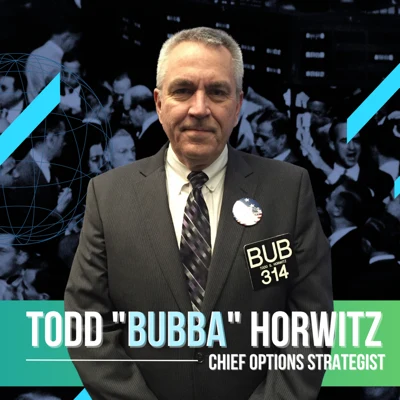
Todd Horwitz said he is short oil and considers it overpriced, having called it a selling opportunity of a lifetime and said he would sell at 105. He would not chase it after a $10 drop but would sell into a rally and add to the short at 100. His reasons include a global oil glut, weak demand that he sees as a sign of recession, China buying at a discount, and each geopolitical spike making a lower high.

Middle East exports recover above 90% of pre-war levels

Lee Ji-hwan said Middle East oil exports have recovered to more than 90% of pre-war levels, so even if negotiations drag on, normalized supply should push oil lower. He also said oil fell 7.5% as speculative long positions were unwound ahead of the midterms. In his view, lower oil would ease inflation and let the market focus on the economy.

Even a stalemate points oil lower from the supply shock

Park Joon-woo said the US-Iran war is unlikely to ease because neither side can concede without looking defeated, so a stalemate is likely even after the midterms. Over a one-year horizon, he finds it hard to call oil higher; since some shipping traffic continues, even a stalemate points oil downward rather than upward from the supply shock. He cautioned that a big drop should not be expected because lower oil could prompt Iran to act again, so prices may hover near the $90s.

Top Calls

Price change since each call, adjusted for long/short direction. Results calculated:

Feed
Loading...
Loading...
Loading...
Loading...
Loading...
Loading...
All Content✓
Source feeds
Buzzberg Top 50 ✓
All market capsNo capitalization filter✓
200 B and aboveMega✓
10 B to 200 BLarge✓
2 B to 10 BMid✓
0 to 2 BSmall✓
Custom
Enter market cap range in B USD
Time Author Thesis Company / ticker Signal Since call Position Source
19:45
Nov 10
Milk Road
Oil may fall when Iran war ends
Tim expects oil to fall once the war with Iran ends, as uncertainty clears and supply/refining normalizes; cheaper energy should drag inflation lower and could let the Fed stop hiking and discuss cuts. This is a downside forecast on oil, not a disclosed short.
WTI West Texas Intermediate Crude Oil Avoid — —
18:34
Nov 10
The David Lin Report
Oil falls if Iran war ends
Thorne argues that ending the Iran war would remove the energy risk premium, causing oil, gasoline and tanker/insurance costs to drop sharply; that disinflation would then reduce the case for Fed tightening. He treats lower energy as a central condition for the dovish rates and cyclical outlook.
WTI West Texas Intermediate Crude Oil Avoid — —
15:16
Nov 10
Oil worth $50 without war
Oil without war is valued at $50, a conditional downside target; no own position or explicit short is disclosed.
WTI West Texas Intermediate Crude Oil Avoid — —

About WTI Investor Commentary

Across the available history and selected sources, Buzzberg tracks WTI (West Texas Intermediate Crude Oil) across 132 sources: 1210 bullish vs 462 bearish calls from 989 authors. Historical directional balance: 22% = 100 × (bullish − bearish) / all deduplicated idea records, including other directions. This is neither a probability of a price rise nor the share of bullish authors. 3403 total trade ideas tracked. Past 7 days, before deduplication: 8 bullish, 1 bearish, 54 other directions. Latest voices: Tim Warman, Jim Thorne, draikotrading.