Ideas
Bloomberg reports the U.S. is considering requiring permits for sales of AI chips from Nvidia and AMD to certain regions/actors due to the conflict. This introduces a new layer of regulatory friction and potential revenue caps. While demand is high, the government becoming the "gatekeeper" of sales creates uncertainty and potential volume bottlenecks. Watch for clarity on the scope of permits; this is a headwind for high-flying semi valuations. The permits turn out to be a formality and do not materially impact sales volume.
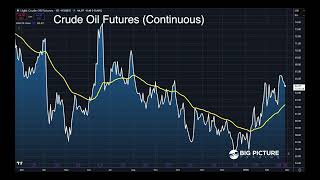
Oil equities have outperformed significantly. Current valuations imply oil prices at $100+, despite WTI trading around $80. The sector has seen massive inflows recently after a period of outflows. Energy stocks have "outrun fundamentals." Unless the war expands significantly to permanently keep oil above $100, the risk/reward is skewed to the downside as valuations are stretched. Avoid chasing the energy rally; the trade is crowded and expensive. The Strait of Hormuz remains closed for months, pushing oil to $120+, justifying the high valuations.
Europe is a net importer of oil/gas and is economically weaker than the U.S., which is a net exporter. European equity valuations are in the 90th percentile historically, while the U.S. is in the 57th. The closure of the Strait of Hormuz and rising energy costs disproportionately hurt the European industrial base and consumer. The valuation gap suggests Europe has much further to fall as this geopolitical risk gets priced in. Short European equities or rotate capital back to the U.S. Rapid de-escalation in the Middle East lowers energy costs quickly.
The Strait of Hormuz closure stops Qatar (a major LNG exporter) from shipping gas. U.S. gas prices are stable, but Asian/European prices are volatile. The U.S. is a major LNG exporter that does *not* rely on the Strait of Hormuz. As global supply tightens due to the Qatar blockage, demand for U.S. LNG will skyrocket to fill the void in Europe and Asia. Long U.S. LNG exporters and Natural Gas exposure. Quick reopening of the Strait restores Qatari supply.
OpenAI is scaling back plans to embed native shopping/checkout for travel within ChatGPT, pivoting instead to referring users out to partners. The market feared ChatGPT would become a "super app" that disintermediates OTAs (Online Travel Agencies). This reversal removes a massive existential threat, validating the "moat" of the incumbents. Long the OTA sector on a relief rally and reduced disruption risk. OpenAI reverses course again or another AI competitor successfully integrates native booking.
Broadcom (AVGO) reported earnings beating expectations, with the CEO projecting AI chip sales to top $10 billion next year. Unlike the pure-play sentiment hit NVDA took from export restrictions, AVGO is demonstrating execution and supply chain stability. It is successfully diversifying the AI winner circle beyond just Nvidia. Long on strong fundamentals and AI infrastructure demand. Broader semiconductor sector rout drags down high-quality names.
Drexler notes that current fashion merchandise is "boring" and lacks emotion. However, he explicitly calls out discounters like Walmart, Burlington, and Ross as "formidable." In an environment where consumers are squeezed by gas prices and unimpressed by full-price fashion innovation, they trade down to off-price and discount retailers who offer value. Long discounters as they capture market share from struggling mall brands. Supply chain disruptions from the Middle East conflict increasing freight costs for importers.
This Bloomberg Markets video, published March 05, 2026,
features Katie Greifeld, Venu Krishna, Ernest Moniz, Norah Mulinda, Carol Massar, Mickey Drexler
discussing AMD, NVDA, USO, XLE, EZU, VGK, UNG, LNG, EXPE, ABNB, BKNG, AVGO, ROST, BURL, WMT.
7 trade ideas extracted by AI with direction and confidence scoring.
Speakers:
Katie Greifeld,
Venu Krishna,
Ernest Moniz,
Norah Mulinda,
Carol Massar,
Mickey Drexler
· Tickers:
AMD,
NVDA,
USO,
XLE,
EZU,
VGK,
UNG,
LNG,
EXPE,
ABNB,
BKNG,
AVGO,
ROST,
BURL,
WMT