BUZZBERGThe leaderboard is ranked by Alpha Score, which weighs a speaker's average return, their number of calls, and reputation — a credibility rating of the source that can only raise a score, never lower it.Read the FAQ
The technology sector remains broadly constructive. Capital spending is funded, benefiting the AI ecosystem, and despite shifts in the narrative and some tests, the earnings stability for the spenders (who are still posting well over 30% growth) supports tech stocks.
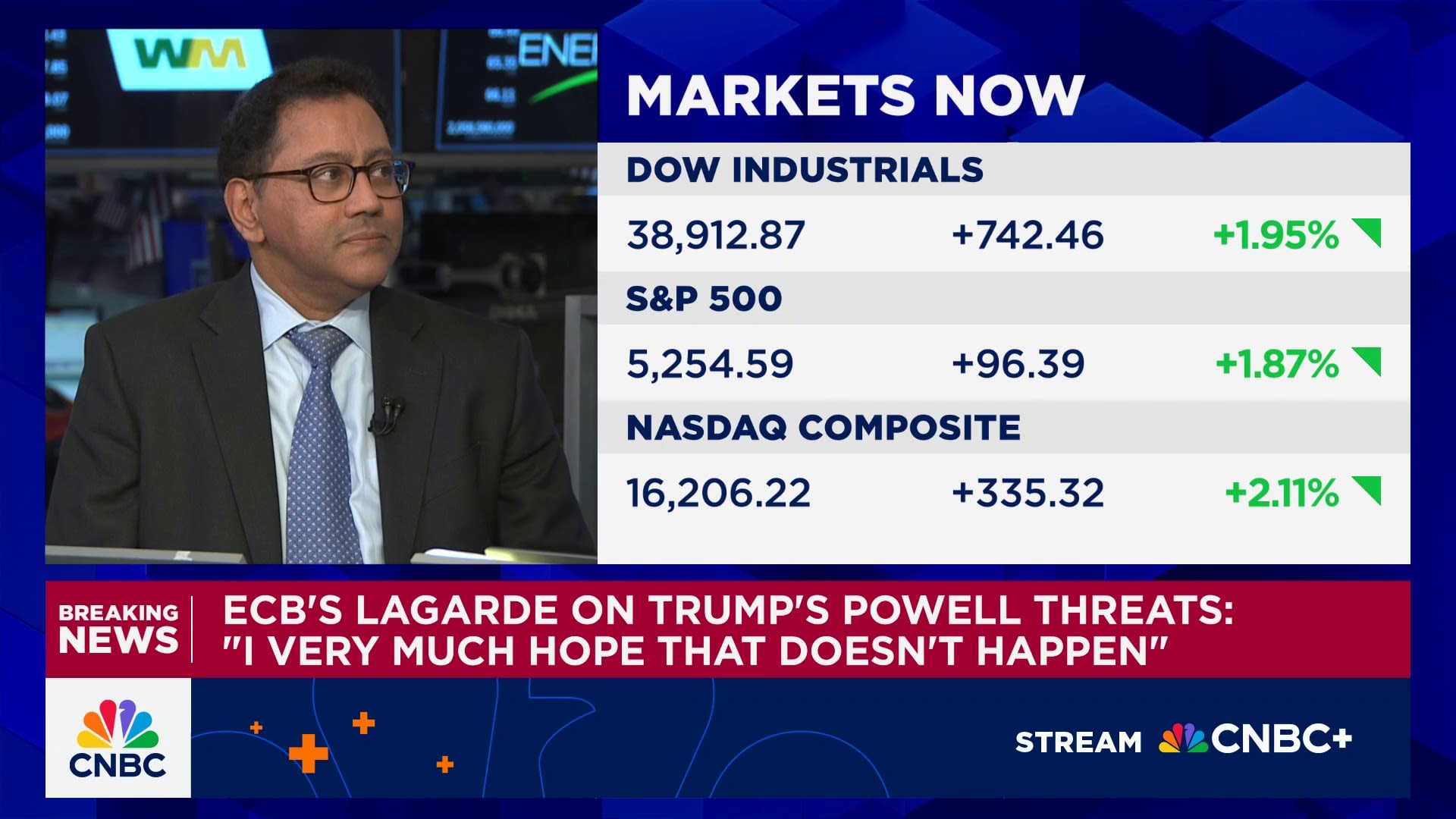
Vinu Krishna stated that Barclays raised its price target and earnings estimate for the S&P 500 last week, and in a base case of geopolitical resolution, the US economy is resilient as a net energy exporter. The raise in targets is based on the expectation that the Middle East crisis will resolve, minimizing long-term impact, and the US economy's relative strength will support earnings, leading to S&P 500 upside. This implies an attractive entry point and bullish outlook for the S&P 500, hence a LONG direction. The thesis breaks if the geopolitical crisis worsens or prolongs significantly, potentially driving the S&P 500 down to 5900 in a downside scenario.
Vinu Krishna stated that Barclays raised its price target and earnings estimate for the S&P 500 last week, and in a base case of geopolitical resolution, the US economy is resilient as a net energy exporter. The raise in targets is based on the expectation that the Middle East crisis will resolve, minimizing long-term impact, and the US economy's relative strength will support earnings, leading to S&P 500 upside. This implies an attractive entry point and bullish outlook for the S&P 500, hence a LONG direction. The thesis breaks if the geopolitical crisis worsens or prolongs significantly, potentially driving the S&P 500 down to 5900 in a downside scenario.
Venu Krishna explicitly said that in a scenario of sustained higher oil prices, the energy sector clearly benefits. Higher oil prices directly boost revenues and profits for energy companies, giving them pricing power. LONG energy minerals sector as a hedge or beneficiary of ongoing geopolitical tensions and elevated oil prices. A rapid resolution to the Iran conflict that causes oil prices to collapse.
Venu Krishna explicitly said that in a scenario of sustained higher oil prices, the energy sector clearly benefits. Higher oil prices directly boost revenues and profits for energy companies, giving them pricing power. LONG energy minerals sector as a hedge or beneficiary of ongoing geopolitical tensions and elevated oil prices. A rapid resolution to the Iran conflict that causes oil prices to collapse.
Europe is a net importer of oil/gas and is economically weaker than the U.S., which is a net exporter. European equity valuations are in the 90th percentile historically, while the U.S. is in the 57th. The closure of the Strait of Hormuz and rising energy costs disproportionately hurt the European industrial base and consumer. The valuation gap suggests Europe has much further to fall as this geopolitical risk gets priced in. Short European equities or rotate capital back to the U.S. Rapid de-escalation in the Middle East lowers energy costs quickly.
Europe is a net importer of oil/gas and is economically weaker than the U.S., which is a net exporter. European equity valuations are in the 90th percentile historically, while the U.S. is in the 57th. The closure of the Strait of Hormuz and rising energy costs disproportionately hurt the European industrial base and consumer. The valuation gap suggests Europe has much further to fall as this geopolitical risk gets priced in. Short European equities or rotate capital back to the U.S. Rapid de-escalation in the Middle East lowers energy costs quickly.
Europe is a net importer of oil/gas and is economically weaker than the U.S., which is a net exporter. European equity valuations are in the 90th percentile historically, while the U.S. is in the 57th. The closure of the Strait of Hormuz and rising energy costs disproportionately hurt the European industrial base and consumer. The valuation gap suggests Europe has much further to fall as this geopolitical risk gets priced in. Short European equities or rotate capital back to the U.S. Rapid de-escalation in the Middle East lowers energy costs quickly.
Europe is a net importer of oil/gas and is economically weaker than the U.S., which is a net exporter. European equity valuations are in the 90th percentile historically, while the U.S. is in the 57th. The closure of the Strait of Hormuz and rising energy costs disproportionately hurt the European industrial base and consumer. The valuation gap suggests Europe has much further to fall as this geopolitical risk gets priced in. Short European equities or rotate capital back to the U.S. Rapid de-escalation in the Middle East lowers energy costs quickly.
Venu Krishna has 5 trade ideas tracked on Buzzberg across 5 tickers since March 2026. Ranked #766 on the Buzzberg Alpha leaderboard. Most covered: SPY, XLK, XLE.
#766Ranked Speaker
#766 of 1796 voices on Buzzberg