Ideas
"TSMC reported some numbers and is about 30% higher when it comes to sales over the past two months... TSMC provides chips to the likes of Nvidia, AMD, and Broadcom." TSMC acts as the primary foundry for the world's leading AI chip designers. A massive 30% jump in their early-year sales validates that hyperscaler capex and end-market demand for AI infrastructure remain incredibly strong, directly benefiting the fabless companies that rely on TSMC's manufacturing. LONG the AI semiconductor supply chain as fundamental growth continues to outpace geopolitical noise. Geopolitical escalation involving Taiwan could severely disrupt TSMC's manufacturing capabilities and the broader tech supply chain.
"Strategy Inc. is benefiting from the gains we have seen in Bitcoin, which is above $70,000 today. It's actually doubled down on Bitcoin, buying about $1 billion in Bitcoin yesterday." MicroStrategy operates as a levered proxy for Bitcoin. By aggressively using its corporate balance sheet and debt to accumulate BTC during periods of price strength, the company amplifies its equity upside as long as the underlying cryptocurrency maintains its upward momentum. LONG MSTR and BTC as corporate treasury adoption and digital asset momentum continue to drive prices higher. Extreme volatility in crypto markets; a sharp drawdown in Bitcoin would severely punish MSTR's highly levered balance sheet.
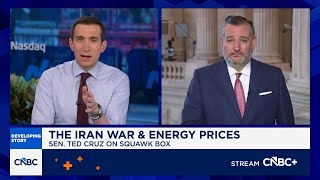
"Today, all of them [oil majors] are going down in premarket trading. That is on the back of Brent pulling back from the gains we saw yesterday... on President Trump's comments on easing the war." The recent surge in energy equities was entirely predicated on a geopolitical risk premium stemming from the Iran conflict. With signals from the White House that the war will end "very soon," this premium is rapidly deflating, causing a violent mean reversion in both crude prices and the oil majors that track them. SHORT oil majors and crude proxies as the market aggressively prices out the worst-case Middle East escalation scenarios. The conflict drags on longer than expected, or the continued closure of the Strait of Hormuz creates a genuine, prolonged physical supply shortage.
"Operating profit for Volkswagen is the lowest it has been since 2016. We saw margin come down to .8%... you will have BYD, the EV maker of China, will be making cars in Europe within the tariff barrier." Volkswagen's core automotive business is structurally deteriorating. Despite being insulated from immediate energy shocks via long-term contracts, their inability to sell high-margin vehicles (only 266 Porsches sold) and the looming localized production of cheaper Chinese EVs will continue to compress their already razor-thin margins. AVOID Volkswagen as it faces a toxic combination of falling consumer demand and fierce, low-cost competition in its home market. Aggressive corporate cost-cutting measures succeed faster than expected, or European regulators implement stricter barriers against Chinese automakers.
Wei Li
Global Chief Investment Strategist, BlackRock
30:15
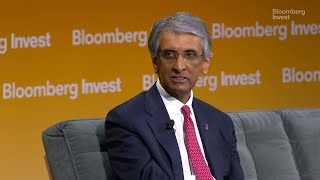
"I am paying close attention to wage dynamics, because ultimately, if the average hourly earnings are... growing at 3.5%... which is more consistent with core inflation getting closer to 3% rather than 2%... we cannot be complacent about inflation longer-term." Sticky wage growth establishes a higher floor for core inflation. Combined with the immutable laws of supply chain rewiring and high debt servicing costs, the Federal Reserve will be constrained in its ability to cut rates. This forces the inflation premium embedded in long-duration bonds to rise, driving bond prices down. SHORT long-duration Treasuries as structural inflation pressures overwhelm the market's aggressive rate cut expectations. A sudden, severe economic recession forces the Fed into emergency rate cuts, sparking a massive flight-to-safety rally in long bonds.
"A quarter of Apple's iPhones are now made in India. Increased iPhone production in the country by about 53% last year to get around U.S. tariffs on Chinese exports." Apple's heavy reliance on Chinese manufacturing has historically been its largest geopolitical vulnerability. By successfully scaling production in India, Apple is actively de-risking its supply chain from US-China trade tensions while simultaneously positioning itself to capture market share in India's rapidly growing domestic economy. LONG AAPL as supply chain diversification improves operational resilience and removes a major geopolitical overhang from the stock. Potential quality control issues, labor disputes, or logistical bottlenecks as manufacturing scales rapidly in a new region.
"Expectations are for a 10% swing on earnings... with equity down 50% from where they were in September and the cost of their debt going up significantly... it is going to be focused on free cash flow, which has been negative, and the levered balance sheet." Oracle is attempting to pivot into a major AI cloud player, which requires massive, ongoing capital expenditures. However, unlike its cash-rich mega-cap peers, Oracle has a highly levered balance sheet and negative free cash flow, making its stock extremely sensitive to any signs that its AI investments are not generating immediate returns. WATCH Oracle into earnings; its high debt load and capital intensity make it a high-risk, high-reward binary event. Oracle reports a massive beat on cloud revenue and positive free cash flow, triggering a violent short squeeze.
This Bloomberg Markets video, published March 10, 2026,
features Abeer Abu Omar, Oliver Crook, Wei Li, Julie Fine, Neil Campling
discussing TSM, AMD, AVGO, NVDA, MSTR, BTC, CVX, USO, XOM, VWAGY, TLT, AAPL, ORCL.
7 trade ideas extracted by AI with direction and confidence scoring.
Speakers:
Abeer Abu Omar,
Oliver Crook,
Wei Li,
Julie Fine,
Neil Campling
· Tickers:
TSM,
AMD,
AVGO,
NVDA,
MSTR,
BTC,
CVX,
USO,
XOM,
VWAGY,
TLT,
AAPL,
ORCL