Pentagon Says US Is Stepping Up Attacks on Iran

Watch on YouTube ↗  |  March 10, 2026 at 13:52  |  4:03  |  Bloomberg Markets

Summary

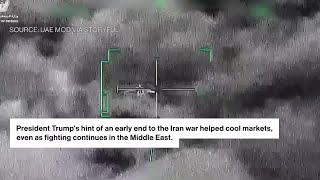
  • The US is escalating military operations against Iran with explicit objectives to dismantle its ballistic missile program, industrial base, and navy.
  • A stark contrast exists between President Trump's messaging of a "short-term excursion" and the reality on the ground, as Iran rejects ceasefire talks and the US Defense Secretary commits to an open-ended timeline.
  • Iran's IRGC is actively blocking oil exports in the Strait of Hormuz and has successfully shut down a key UAE refinery via drone strikes, triggering historic intraday volatility in crude oil markets.
Trade Ideas
Tyler Kendall Multimedia Editor 1:25
Later today we could see one of the largest bombardments of the military campaign... dismantling Iran's ballistic missile program and the industrial base, destroying Iran's navy. A massive, sustained bombardment campaign requires significant expenditure of precision-guided munitions, cruise missiles, and air defense interceptors. The US military will need to rapidly replenish these depleted stockpiles, directly translating into new, high-volume government contracts for the prime defense contractors that manufacture these weapons systems. LONG major US defense prime contractors (LMT, RTX, GD) as they secure replenishment contracts for expended munitions and naval warfare assets. The conflict ends abruptly as President Trump suggested, limiting the total volume of munitions expended and capping the upside of subsequent replenishment orders.
Tyler Kendall Multimedia Editor 1:56
The IRGC is maintaining that they will continue to block oil exports, and a key production facility refinery in the UAE ended up closing due to a drone attack by Iran. Direct kinetic attacks on UAE refineries and blockades in the Strait of Hormuz physically remove oil supply from the global market. This immediate supply shock, combined with Iran's refusal to agree to a ceasefire, forces a massive geopolitical risk premium into crude prices as global buyers scramble to secure barrels. LONG USO as a direct play on Middle Eastern oil supply disruptions and escalating geopolitical risk premiums. A sudden ceasefire or successful US naval escorts rapidly reopening the Strait of Hormuz, which would collapse the risk premium and normalize supply.
Tyler Kendall Multimedia Editor 1:56
The IRGC is maintaining that they will continue to block oil exports... disruptions in the Strait of Hormuz do continue. The Strait of Hormuz is a critical global maritime chokepoint. Blockades and military actions force oil tankers to either pay massive insurance risk premiums or reroute entirely around the Cape of Good Hope. Rerouting extends voyage times significantly, which ties up vessel capacity, severely tightens global tanker supply, and drives up daily charter rates for tanker operators. LONG crude and product tanker equities (FRO, STNG, NAT) to capitalize on surging freight rates caused by the geopolitical chokepoint disruption. The US military successfully deploys naval escorts that secure the waterway, normalizing shipping routes, reducing voyage times, and crushing freight rates.
Up Next

This Bloomberg Markets video, published March 10, 2026, features Tyler Kendall discussing GD, LMT, RTX, USO, FRO, STNG, NAT. 3 trade ideas extracted by AI with direction and confidence scoring.

Speakers: Tyler Kendall  · Tickers: GD, LMT, RTX, USO, FRO, STNG, NAT