Ideas
AI optimism warranted but near-term timing off.
Market AI optimism is warranted long-term but timing is off near-term because the technologies are expensive and companies have not yet figured out how to use them; firms may cut junior hiring and later regret it. He prefers to watch the theme rather than chase it now.
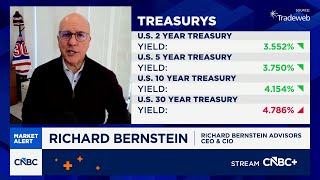
Ten-year yields likely stay above four percent.
He expects 10-year Treasury yields to stay a little above 4%, anchored by nominal GDP: above-average inflation plus real GDP. He sees a range-bound balance where yields that rise too far prompt a Fed response, while yields that fall too low signal a weakening economy that also prompts Fed action.
Metals rally partly tariff stockpiling; watch.
Silver and other metals have had a rip-roaring rally that may be partly driven by stockpiling ahead of potential tariffs; if that stockpiling fades it could pressure prices, though silver selloffs have so far been bought, so it is a setup to watch.
TSMC capex benefits ASML and Applied Materials.
TSMC's plan to spend about $56 billion in 2026, up from $40.9 billion, signals the AI buildout is not slowing and benefits semiconductor equipment suppliers ASML and Applied Materials, even as TSMC management remains cautious on actual AI demand.
TSMC is top AI trade.
TSMC is the primary AI trade: it beat expectations, is the only foundry giving a clear five-year outlook to 2029, implies AI customer revenue will more than double in 2026 and grow 30% annually to 2029, and its capex risk is limited because only it can deploy leading-edge fabs.
Russell 2000 durable earnings-led catch-up.
Small caps and the Russell 2000 are showing the first durable turn in forward earnings estimates relative to the S&P 500 in three years, while sentiment and flows are extremely negative; that setup can drive a durable catch-up move even if it is not linear.
Financials favored; leadership shifting to regionals.
The 2026 play is financials, with leadership potentially shifting to regional banks. Investment banks have already had strong numbers baked into models and face tougher year-over-year growth comparisons, while regional banks should improve; deregulation is also a long-term positive.
Goldman preferred over Morgan Stanley.
Both Goldman Sachs and Morgan Stanley had top-tier quarters, but if forced to choose one, he would choose Goldman Sachs over Morgan Stanley, largely because Goldman's equity trading business was exceptionally strong.
Goldman preferred over Morgan Stanley.
Both Goldman Sachs and Morgan Stanley had top-tier quarters, but if forced to choose one, he would choose Goldman Sachs over Morgan Stanley, largely because Goldman's equity trading business was exceptionally strong.
Swipe-fee pressure hurts credit card companies.
Swipe-fee pressure is likely to continue and lower profitability for credit card companies, with competition from nonbanks and fintechs adding further pressure.
Value cyclicals have room to run.
U.S. value cyclicals have room to run: valuations are attractive in parts of the U.S., the market backdrop is positive, and large capital allocators may rotate out of crowded AI and data-center exposure into value cyclicals.
Dollar depreciation likely tolerated long term.
The administration likely would not object to dollar depreciation, and long-term global diversification away from U.S. assets could effectuate that; it is a long-term process rather than a panic signal.
S&P 500 bullish on upward revisions.
Bullish S&P 500 call with a 7800 target; earnings are driving returns and 2026 estimates are being revised up rather than down, showing analysts continue to underestimate growth potential in large AI tech and the broader market.
Lean into financials on affordability agenda.
He would lean into financials because the midterm election-year affordability agenda will put financials front and center, Washington will try to put money in consumers' hands, and a strong M&A environment provides a backstop.
Corporate credit spreads to tighten further.
Corporate credit should do well and spreads should tighten further because the economy is functioning and M&A and credit conditions are supportive.
Tech earnings growth supports sector.
Tech companies should deliver mid-20s earnings growth versus low single digits for the rest of the market, a gap that is hard for the sector not to reward.
Consumer discretionary upside from affordability focus.
If Washington addresses affordability and puts money in consumers' hands, consumer discretionary should surprise to the upside.
Housing stocks benefit from affordability focus.
Housing stocks, not just homebuilders, should continue to do well because affordability is a major political focus and mortgage purchase discussions are supportive.
Crude oil cheap; prices should recover.
Crude is very cheap, and low prices cure low prices by forcing production below sustainable levels. He also argues the U.S. should refill the SPR while prices are low, which would support demand.
This Bloomberg Markets video, published January 15, 2026,
features Drew Matus, Lisa Abramowicz, Peter Elstrom, Pierre Ferragu, Kevin Gordon, Gerard Cassidy, Jason Thomas, Jonathan Golub, Harold Hamm
discussing AI-SECTOR, US10Y, SILVER, GLD, COPPER, Aluminum, Tin, ASML, AMAT, TSM, IWM, XLF, KRE, GS, MS, Credit card companies, Value cyclicals, USD, SPY, LQD, XLK, XLY, XHB, WTI.
19 trade ideas extracted by AI with direction and confidence scoring.
Speakers:
Drew Matus,
Lisa Abramowicz,
Peter Elstrom,
Pierre Ferragu,
Kevin Gordon,
Gerard Cassidy,
Jason Thomas,
Jonathan Golub,
Harold Hamm
· Tickers:
AI-SECTOR,
US10Y,
SILVER,
GLD,
COPPER,
Aluminum,
Tin,
ASML,
AMAT,
TSM,
IWM,
XLF,
KRE,
GS,
MS,
Credit card companies,
Value cyclicals,
USD,
SPY,
LQD,
XLK,
XLY,
XHB,
WTI