Oil Volatility Calms, Airline Stocks Soar | The Close 3/17/2026
Speakers
Romaine Bostick
— Anchor, Bloomberg
Isabelle Lee
— Reporter, Bloomberg
Jimmy Chang
— Chief Investment Officer, Rockefeller Global Family Office
Sean Dobson
— CEO, Amherst
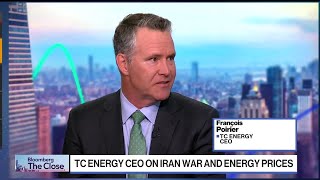
François Poirier
— CEO of TC Energy
Jay Jacobs
— U.S. Head of ETFs, BlackRock
Summary
- Oil market volatility has calmed (WTI implied vol down ~0.6%), with prices stabilizing around $103/barrel, providing temporary stability that emboldens equity traders.
- U.S. airline stocks (e.g., Delta) are rallying on a surge in bookings; travelers are buying tickets preemptively ahead of anticipated fare increases due to rising fuel costs.
- Market leadership remains concentrated in Energy stocks, with massive fund inflows pushing the sector to ~7% of assets under management.
- Jimmy Chang warns the market appears "too sanguine"; the scale/depth of the Iran conflict is greater than recent geopolitical issues, and duration/elevated energy prices are key risks.
- Consumer resilience is noted due to large tax refunds (est. $150B more than last year), which may offset rising energy costs in the near term.
- Sean Dobson (Amherst) highlights a severe mortgage credit problem, stating the current market only serves the "top quarter" of society's wealth, calling recent White House executive orders a first step but not a magic solution.
- François Poirier (TC Energy) sees significant investment impetus in North American natural gas & power infrastructure, driven by LNG export demand and data center power needs, but cites permitting and turbine supply chains as bottlenecks.
- A portfolio manager notes a potential "financial impact" risk: foreign holders (e.g., Japan, Taiwan, Korea) of ~$20T in U.S. assets may need to sell them to fund oil balances if high prices persist, a longer-term tail risk not widely considered.
- Emerging Market local currency bonds are presented as an attractive, temporarily repriced opportunity with strong fundamentals (high policy rates, falling inflation, fiscal discipline).
- Jay Jacobs (BlackRock) observes a client shift from bullish to moderate positioning, with flows moving towards international equities and portfolio diversifiers like buffer ETFs, signaling a desire to mitigate volatility.
Ideas
U.S. airline executives report a surge in bookings and potential fare increases; Delta had its biggest booking day and raised its Q1 revenue forecast. Travelers are rushing to buy tickets before anticipated fare hikes, which are expected due to rapidly rising jet fuel costs (up ~60% since the war began). Strong near-term demand is overshadowing fuel cost concerns, driving stock rallies. This is a tactical, demand-pull trade. Sustained high fuel prices eventually eroding margins if fare increases cannot fully offset them, or a sharp economic slowdown curbing travel demand.
There have been "massive inflows" into Energy stocks from U.S. active and passive funds, accelerating since the war began. This concentration creates a disconnect as other sectors (e.g., Airlines) rally simultaneously, and the trade's sustainability hinges entirely on conflict duration and oil price elevation. The sector is a key market leader but is crowded. It warrants close monitoring as a bellwether for broader market risk sentiment tied to geopolitics. A swift resolution to the conflict or a breakdown in oil prices could trigger rapid outflows from the crowded trade.
EM local bonds were one of the best fixed-income sectors last year, have corrected ~5% due to the Iran war, but fundamentals remain strong (high policy rates, falling inflation, prudent fiscal policy). The sell-off is a temporary repricing. High local rates provide room for central banks to cut, and some economies are leveraged to the commodity cycle. The recent drawdown presents a buying opportunity for a sector with attractive yield and fundamental strength. A prolonged war causing sustained risk-off sentiment or a significant strengthening of the US dollar.
Foreign countries (Japan, Taiwan, Korea) hold ~$20T in U.S. assets. Oil prices in their depreciated currencies are near 25-year highs. If high oil prices persist, these countries may need to sell U.S. assets to fund their oil import balances, creating a potential seller overhang. This is a longer-term financial channel risk that is not widely priced in, suggesting vigilance on foreign flows into U.S. bonds and equities. This selling pressure may not materialize if oil prices fall or if alternative funding mechanisms are used.
Up Next



This Bloomberg Markets video, published March 17, 2026, features Romaine Bostick, Jimmy Chang, Senior Portfolio Manager discussing JETS, XLE, EMLC, TLT. 4 trade ideas extracted by AI with direction and confidence scoring.
Speakers: Romaine Bostick, Jimmy Chang, Senior Portfolio Manager · Tickers: JETS, XLE, EMLC, TLT