Ideas
The Strait of Hormuz is effectively closed due to the war with Iran. Tankers are piling up, and 1/5th of the world's oil supply is blocked. WTI is near $89, Brent over $90. This is a physical supply shock, not just speculation. With no immediate "offramp" to the conflict and the White House admitting the timeline is murky, the risk premium in energy must re-rate higher. Supply constraints directly equate to higher spot prices for crude and energy producers. LONG oil futures proxies and energy sector producers. A sudden ceasefire or US military intervention that quickly reopens shipping lanes would cause a massive price collapse.
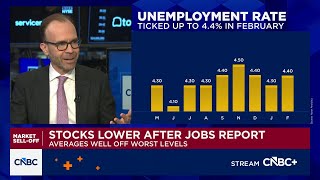
The US lost 92k jobs, and unemployment rose to 4.4%. Roland notes the bond market is only pricing in one rate cut, which is "wild" given six negative bond reports. Rieder notes real rates are attractive and income is back. A negative payroll print of this magnitude typically forces the Fed to cut rates to support the labor market. While inflation (oil) is a concern, the economic deterioration (job losses) will eventually force a flight to safety in bonds, and current yields (>4%) offer a "cushion" of income while waiting for capital appreciation. LONG duration and aggregate bonds for income and capital appreciation potential on Fed pivot. Stagflation—if oil pushes inflation higher, the Fed may be unable to cut rates despite job losses, causing yields to rise (prices to fall).
Roland states that software companies have produced 30% year-over-year earnings growth, yet the sector is being treated as "oversold" due to macro fears. The market is mispricing the fundamental strength of US tech. Unlike 2022, earnings growth is robust. The sell-off is sentiment-driven, creating a disconnect between price and actual corporate performance. LONG Software and US Growth Tech. Continued rise in long-term yields (due to oil inflation) typically compresses valuations for long-duration growth assets like software.
Coronado notes that while consumers ignore modest gas hikes, "if it is big and sustained, they start getting more cautious on other kinds of spending." We have a "double whammy" for the consumer: rising unemployment (-92k jobs) and the highest gas prices of the Trump presidency. This destroys discretionary income. The "wealth effect" that supported spending in 2025 is evaporating. AVOID Consumer Discretionary and Retail. If the government issues massive stimulus checks or tax refunds (mentioned as a possibility) to offset energy costs, spending could remain resilient.
Robinhood is launching a new closed-end fund (Ticker: RVI) on the NYSE to give retail investors access to private, late-stage companies (e.g., SpaceX, OpenAI, Databricks). This product democratizes access to the "pre-IPO" pop that is usually reserved for VCs. By listing on the NYSE, it provides liquidity to an illiquid asset class. If the fund trades at a premium due to retail demand for "hype" names (AI/Space), the stock could see significant initial momentum. LONG RVI (Robinhood Ventures). The underlying private assets are illiquid; if the market turns, the fund could trade at a steep discount to NAV.
Miller explicitly notes "Defense companies doing well" on the movers screen. Jamrisko reports the White House says there is "no telling how much more is ahead" regarding the war in Iran. The conflict is escalating, not resolving. The US is using stockpiles, and the administration is signaling a prolonged engagement ("no deal short of unconditional surrender"). This guarantees sustained government spending on munitions and defense platforms. LONG Defense Contractors. A sudden diplomatic resolution or "unconditional surrender" by Iran that ends the conflict abruptly.
This Bloomberg Markets video, published March 06, 2026,
features Alaric Nightingale, Emily Roland, Julia Coronado, Vlad Tenev, Matt Miller
discussing USO, XLE, VDE, TLT, AGG, BND, MSFT, IGV, CRM, XLY, RTH, RVI, ITA, LMT, RTX.
6 trade ideas extracted by AI with direction and confidence scoring.
Speakers:
Alaric Nightingale,
Emily Roland,
Julia Coronado,
Vlad Tenev,
Matt Miller
· Tickers:
USO,
XLE,
VDE,
TLT,
AGG,
BND,
MSFT,
IGV,
CRM,
XLY,
RTH,
RVI,
ITA,
LMT,
RTX