Ideas
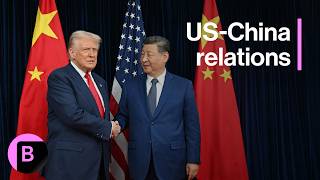
The Chinese government is now putting restrictions on the adoption of Open Claw for banks and some of the state agencies, citing security issues... You can see Tencent trimming early gains. State intervention and security-based regulatory crackdowns will severely cap the monetization potential of generative AI for Chinese technology giants. If enterprise and state-level adoption is restricted, these companies will not realize the same AI-driven productivity and revenue multiples as their Western counterparts. AVOID. Regulatory overhang in China continues to stifle technological innovation and enterprise software adoption, making Chinese tech a value trap compared to US/Taiwanese peers. The Chinese government could reverse course to stimulate the economy, or these companies could successfully monetize AI directly to consumers rather than enterprise/state clients.
The Strait of Hormuz remains effectively closed. We are seeing a relief rally [in oil prices dropping]. I don't think that will be one that holds for too much longer. Markets will want to see action over rhetoric at the moment. The current drop in oil prices is driven by a massive IEA SPR release and political rhetoric. However, an SPR release is a temporary physical band-aid. If the Strait of Hormuz remains blocked beyond the market's currently priced-in 5-week timeline, the structural supply deficit will overwhelm the SPR intervention, causing oil to violently reverse higher. WATCH. Wait for the immediate bearish impact of the SPR release to be fully priced in, then look for long entries if the physical blockage of the Strait persists. The US and Israel could successfully secure a naval corridor through the Strait, or a sudden diplomatic cease-fire could permanently remove the geopolitical risk premium.
Private credit continues to come under a lot of selling pressure. Private credit has been plunging... down about 30% over the course of the last couple months. Signals that the markets and investors have been quick to reprice an asset class... potentially on exposure to software names, hype around AI. Business Development Companies (BDCs) and private credit funds aggressively lent to software and tech startups based on inflated AI valuations. As the hype cools and rates remain volatile, these highly leveraged, illiquid loans face severe mark-to-market write-downs and rising default risks. SHORT. The private credit bubble is deflating as the underlying collateral (software/tech valuations) is repriced, which will directly hit the NAV and dividend sustainability of publicly traded BDCs. A sudden pivot to aggressive rate cuts by the Federal Reserve could ease debt burdens on private tech companies, preventing defaults and stabilizing private credit NAVs.
TSMC sales for the first two months of the year coming at about 30% year-over-year so that shows how the demand remains strong on that front... along with Oracle's better-than-expected earnings. Both pointed to a very solid AI outlook. Global AI infrastructure spending is completely insulated from Middle East geopolitical shocks and energy supply chain disruptions. As capital flees volatile commodity-linked assets, it will rotate into high-growth, cash-rich semiconductor and cloud infrastructure leaders that are demonstrating tangible revenue acceleration. LONG. AI hardware and infrastructure demand is overriding macroeconomic and geopolitical fears, making these names safe-haven growth assets. A broader macroeconomic recession triggered by sustained high energy prices could eventually force enterprise customers to cut IT and cloud capex budgets.
Expectations for rate hikes from the Bank of Japan is being trimmed back right now because of these concerns around the war. The governor also warning that the war in Iran might actually have a major impact on Japanese economy. That's partly why you are seeing the Japanese Yen remain weak at around 158 against the dollar. Japan is highly dependent on Middle Eastern energy imports. The economic shock of the Hormuz closure forces the BOJ to delay monetary normalization. This maintains the massive yield differential between the US and Japan, ensuring the Yen remains a preferred funding currency for carry trades. SHORT. Geopolitical energy shocks disproportionately hurt Japan's economy, trapping the BOJ in an accommodative stance and driving further Yen depreciation. The Japanese Ministry of Finance could intervene directly in the FX market to prop up the Yen, causing sharp, sudden short-squeezes.
Iran's arsenal of cheap, plentiful drones and ballistic missiles is forcing American forces to burn through high-end and hard to replace interceptors... The US is trying to ramp up from producing just under 100 air defense interceptors a year, trying to get up to 400. Asymmetric warfare is forcing the US military to deplete its stockpiles of advanced munitions at an unsustainable rate. This guarantees massive, long-term government contracts for prime defense contractors to replenish inventories and expand manufacturing capacity for air defense systems. LONG. The structural depletion of US and allied munitions creates a highly visible, multi-year backlog for aerospace and defense manufacturers. Supply chain bottlenecks (e.g., solid rocket motor shortages) could prevent these companies from actually scaling production to meet the government's demand, delaying revenue recognition.
This Bloomberg Markets video, published March 11, 2026,
features Winnie Hsu, Matthew Ryan, Joumanna Bercetche, Courtney McBride
discussing KWEB, TCEHY, USO, BIZD, ARCC, 005930.KS, TSM, ORCL, FXY, BA, RTX, LMT.
6 trade ideas extracted by AI with direction and confidence scoring.
Speakers:
Winnie Hsu,
Matthew Ryan,
Joumanna Bercetche,
Courtney McBride
· Tickers:
KWEB,
TCEHY,
USO,
BIZD,
ARCC,
005930.KS,
TSM,
ORCL,
FXY,
BA,
RTX,
LMT