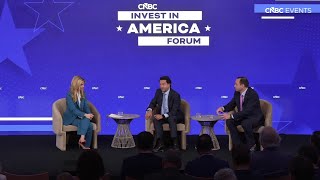
Bloomberg Surveillance 4/15/2026

Watch on YouTube ↗  |  April 15, 2026 at 15:30  |  2:24:09  |  Bloomberg Markets
Speakers
Noel Dixon — Macro Strategist, State Street Global Markets
Susan Bell — Head of U.S. Analysis, Rystad Energy
Beata Manthey — Head of European Equity Strategy, Citi
Gerard Cassidy — Head of US Bank Equity Strategy, RBC Capital Markets
Phil Camporeale — Portfolio Manager, J.P. Morgan Asset Management
Max Layton — Global Head of Commodities Research, Citi
Brent Schutte — Editor, Financial Mail

Summary

Bloomberg Surveillance on April 15, 2026, focuses on market resilience near all-time highs despite the ongoing blockade of the Strait of Hormuz. Analysts discuss strong bank earnings, the inflationary impact of higher oil prices, and the dominance of U.S. tech and AI themes. Geopolitical updates suggest a potential extension of the U.S.-Iran ceasefire, but physical oil markets remain severely stressed. Investment views center on selective U.S. equity exposure, regional banks, and commodities as a hedge.

  • Equity markets rally close to record highs, shrugging off Middle East tensions.
  • Bank earnings show record trading revenue, with executives highlighting consumer resilience.
  • Analysts debate the impact of the Hormuz blockade on oil prices and global growth, with Asia and Europe seen as most exposed.
  • Investment strategists favor U.S. equities and a selective approach, with upgrades from Citi and JPMorgan.
  • Geopolitical updates indicate potential ceasefire extension between U.S. and Iran, but the Strait remains largely closed.
  • Private credit risks are downplayed by bank executives but noted as a liquidity stress point by asset managers.
  • Commodities are recommended as a strategic hedge against persistent inflation.
  • The future of Fed Chair Powell is questioned as President Trump threatens to fire him if he doesn't leave on time.
Trade Ideas
Noel Dixon Macro Strategist, State Street Global Markets 4:22
U.S. equities remain resilient and selective.
The U.S. market will be more insulated from higher commodity prices and geopolitical uncertainty, and selective opportunities will persist, particularly in technology and semiconductors, due to the ongoing race with China and significant demand for AI hardware.
Noel Dixon Macro Strategist, State Street Global Markets 4:22
U.S. equities remain resilient and selective.
The U.S. is the most prepared economy to deal with an oil price spike, having shifted from importer to exporter. Higher energy prices benefit U.S. energy sector earnings, and fiscal stimulus (the 'Big Beautiful Bill') offsets consumer pain. Inflation expectations remain anchored, supporting U.S. equities.
Noel Dixon Macro Strategist, State Street Global Markets 8:12
Asia and Europe exposed to energy shock.
Asia (specifically South Korea and Japan) and Europe are very exposed to the energy shock due to high energy import dependency, which will create economic weakness and potential investment opportunities in those regions after corrections, such as in Asia tech.
Susan Bell Head of U.S. Analysis, Rystad Energy 31:07
Oil physical market stressed; risks remain.
The physical oil market is extremely stressed due to the Hormuz blockade, with physical premiums far above futures prices, and this stress will not turn around until flows are re-established. The market has not yet priced in potential Iranian retaliation, which could cause prices to spike again.
Prefer regional banks over money-center banks.
Regional banks like Huntington, PNC, and Citizens Bank offer better risk-reward trade-offs than the large money-center banks after their recent run-up, despite the strong trading-driven earnings from the big banks.
Beata Manthey Head of European Equity Strategy, Citi 52:06
Downgrade Japan equities to underweight.
Downgraded Japan to underweight as a geopolitical hedge due to its high exposure to the energy shock, similar to the downgrade of the UK earlier.
Gerard Cassidy Head of US Bank Equity Strategy, RBC Capital Markets 72:21
Universal banks better than investment banks.
Universal banks like JPMorgan and Bank of America have had excellent results and outlooks, making them preferable to pure investment banks like Goldman Sachs and Morgan Stanley, which trade at superior valuations.
Brent Schutte Editor, Financial Mail 137:02
Small and mid-cap stocks offer better value.
Investors should own small and mid-cap stocks because they are cheaper (14-15x earnings) and have similar expected earnings growth (17.5%) as the S&P 500 (trading at 22x), offering better value and being underinvested.
Brent Schutte Editor, Financial Mail 137:02
Own commodities as an inflation hedge.
Investors need to own some commodities as an inflation hedge because inflation may be more permanent than transitory, and long-dated Treasuries may no longer serve as an effective hedge.
Up Next

This Bloomberg Markets video, published April 15, 2026, features Noel Dixon, Susan Bell, David George, Beata Manthey, Gerard Cassidy, Brent Schutte discussing SMH, SPY, EWY, AAXJ, VGK, EWJ, WTI, HII, PNC, CFG, JPM, BAC, IWM, DBC. 9 trade ideas extracted by AI with direction and confidence scoring.

Speakers: Noel Dixon, Susan Bell, David George, Beata Manthey, Gerard Cassidy, Brent Schutte  · Tickers: SMH, SPY, EWY, AAXJ, VGK, EWJ, WTI, HII, PNC, CFG, JPM, BAC, IWM, DBC