Iran War: US Awaits Response to Peace Plan, Tehran Keeps Up Attacks | The Opening Trade 3/25/2026
Speakers
Anna Edwards
— Anchor, Bloomberg TV (London)
Lizzy Burden
— Crypto Reporter, Bloomberg News
Antonio Garcia Pasqual
— Global Head of Economics, Santander
Rene Haas
— CEO, Arm
Neil Campling
— Tech/TMT Analyst
Mark Cudmore
— Executive Editor, Bloomberg Live / Macro Strategist
Silas Brown
— Senior Reporter, Bloomberg
Anthony DiPaola
— Reporter, Bloomberg (Energy)
David Luboff
— Head of APAC Infrastructure, KKR
Christine Lagarde
— President, European Central Bank
Skylar Montgomery-Williams
— Markets Live Team, Bloomberg
Summary
- Markets (stocks up, bond yields & oil down) are latching onto de-escalation signals from the US regarding the Iran war, including a reported 15-point peace plan, despite continued military activity and no formal Iranian acceptance.
- The war is causing a significant supply-side shock, creating a "stagflationary impulse." The economic impact's severity hinges on the duration of the Strait of Hormuz closure and the level of oil price persistence.
- Arm (ARM) announced a transformational shift from licensing IP to designing & selling its own AI chips, targeting $5B in annual revenue from this business within five years. Analysts see a massive potential increase in revenue per chip sold.
- An acute energy crisis is already biting in Asia (e.g., Philippines national emergency, Australian fuel shortages), with Shell's CEO warning Europe will feel the same disruption by April. This is clashing with surging energy demand from the AI/data center build-out.
- The ECB's reaction function is in focus. Christine Lagarde outlined a principles-based approach, noting key differences from 2022 (smaller shock so far, less demand-pull, tighter policy), but emphasized extreme vigilance given the scale of the supply disruption.
- Private credit funds are under strain, with major names like Ares imposing 5% withdrawal caps as redemption requests surge, creating a potential "vicious cycle" of sentiment-driven outflows.
- Airlines are a direct casualty, with United's CEO stating higher oil prices will reduce travel demand and force fare increases, and Ryanair's CEO refusing to hedge fuel until prices fall significantly.
- JPMorgan Private Bank's equity strategist remains constructive on global stocks (S&P 500 target 7,500), viewing the geopolitical shock as a short-term headwind, but sees duration of high oil prices as the key risk to earnings.
- Goldman Sachs' asset allocation head argues for a defensive stance due to the stagflation shock, criticizing the market's focus on marginal headlines over a deteriorating fundamental picture with more infrastructure damage.
- KKR's APAC infrastructure head is highly optimistic on Asia, citing a strong pipeline and infrastructure's inflation-linked resilience, though acknowledges high oil prices will impact growth in the import-dependent region.
Ideas
Neil Campling states Arm's move to manufacture its own chips is "transformational," representing a potential 100-fold increase in revenue per chip compared to licensing. By moving down the value chain from IP licensor to chip designer/seller, Arm captures a much larger share of the final chip's value, directly benefiting from the massive AI-driven compute capex cycle. This is a fundamental, positive reinvention of the business model with a clear path to significantly higher revenue and profit. Execution risk in manufacturing and competition from established players like AMD and Intel.
Mark Cudmore is "very bearish" on global stocks, arguing fundamentals are worse than a week ago due to more energy infrastructure damage and continued Strait closure, yet markets are trading higher. He believes the market is mistakenly focused on superficial headline trading and "jawboning" while ignoring a clear and worsening stagflationary shock from the ongoing supply disruption. The disconnect between price action and deteriorating fundamentals presents a downside risk. An authentic and swift de-escalation that resolves the physical supply blockade quickly.
Morgan Stanley upgraded both BP and Repsol to Overweight, arguing the oil market is unlikely to return to its pre-conflict regime. These two European majors have greater upstream (production) exposure, making their earnings more sensitive to elevated oil prices, which the bank believes will persist. In a higher-for-longer oil price environment driven by geopolitical disruption, these companies are positioned to outperform. A rapid and sustained de-escalation in the Iran conflict leading to a swift reopening of the Strait of Hormuz and a collapse in oil prices.
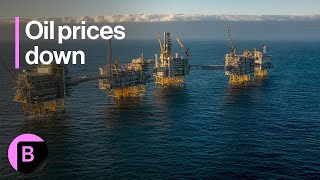
Anthony DiPaola states that physical oil is not flowing freely through the Strait of Hormuz, with only a "trickle" of cargoes passing, and that Iran is charging tolls. Until there is a formal agreement and full reopening of the Strait, the physical supply disruption continues, which supports prices and risks longer-term production issues as fields and refineries remain shut in. The market's focus on diplomatic headlines is at odds with the on-the-ground reality of continued blockage, making the oil price highly sensitive to genuine progress. A sudden diplomatic breakthrough leading to an immediate and unconditional reopening of the Strait.
Up Next


This Bloomberg Markets video, published March 25, 2026, features Neil Campling, Mark Cudmore, Charlie Wells, Anthony DiPaola discussing ARM, ACWI, BP, WTI. 4 trade ideas extracted by AI with direction and confidence scoring.
Speakers: Neil Campling, Mark Cudmore, Charlie Wells, Anthony DiPaola · Tickers: ARM, ACWI, BP, WTI