Trump Says Iran Bombing Could Last Weeks, Tehran Defiant | The Pulse 3/2/2026
Speakers
**Francine Lacqua**
— Anchor, Bloomberg
**Joumanna Bercetche**
— Reporter, Dubai
**Tina Fordham**
— Founder, Fordham Global Foresight
**Hasan Alhasan**
— Senior Fellow, IISS (Institute for Strategic Studies)
**Dan Williams**
— Reporter, Jerusalem
**Karim Chedid**
— Head of Investment Strategy, BlackRock
**Jeff Currie**
— Chief Strategy Officer, Carlyle (Energy/Commodities Expert)
**Leen Al Saadi**
— Aviation Reporter
**Dina Esfandiary**
— Senior Advisor, International Crisis Group (ICG)
Summary
- War Context (March 2026): A US/Israel bombing campaign against Iran has been active for 48 hours following the assassination of Iran's Supreme Leader. Iran is retaliating against US assets, Saudi refineries (Aramco), and Gulf infrastructure.
- Energy Shock: Oil prices have spiked ($7-8 handle increase overnight), and European Natural Gas is up 25%. Jeff Currie argues the market has been complacent about a "supply glut" that doesn't exist, predicting a structural repricing of energy due to the exhaustion of spare capacity and the start of a "hoarding impulse."
- Supply Chain Disruption: The Strait of Hormuz is effectively threatened (though not fully closed), and major airspace across the Middle East (Iran, Israel, Kuwait, Bahrain) is closed, grounding logistics and travel.
- Market Reaction: Global stocks are tumbling, the Dollar and Gold are rising. BlackRock suggests this is currently viewed as a "volatility shock" rather than a permanent inflation shock, but risks are asymmetric to the downside.
Ideas
European Natural Gas futures (TTF) surged over 25% overnight. Currie explicitly states, "Europe is in the worst situation... If you are looking for a hedge for what is going on, buy TTF." Europe is cut off from Russian gas and is not part of the "China block" supply chain. They are heavily reliant on LNG imports. While US investors cannot easily buy TTF directly, US LNG exporters (like Cheniere) benefit directly from the arbitrage spread and heightened European demand. LONG US LNG exporters as a proxy for the European energy crisis. Warm winter in Europe or government caps on energy prices.
Hasan Alhasan
Head of Research, Arca
Alhasan notes that Gulf air defenses have been operating effectively with "interception rates north of 90%." A 90% interception rate implies a massive expenditure of interceptor missiles (Patriots, THAADs). These are high-cost consumables that must be replenished immediately. Raytheon (RTX) makes the Patriot; Lockheed (LMT) makes THAAD. The sheer volume of Iranian projectiles ensures a backlog of orders for these defense primes. LONG Defense Primes focused on air defense systems. Supply chain bottlenecks preventing rapid manufacturing of replacements.
Karim Chedid
Editor-in-Chief, The Block
Chedid observes that "Gold is continuing to be an effective hedge in times of geopolitical volatility," specifically noting it helps when stock/bond correlations break down. In a scenario where inflation spikes (due to oil) and growth slows (due to war), the traditional 60/40 portfolio fails (stocks and bonds both drop). Gold acts as the non-correlated store of value during the "fog of war" phase where the endgame is unclear. LONG Gold as a portfolio buffer. A strong US Dollar (DXY) can sometimes act as a headwind to Gold, though currently, both are rising together (safe haven bid).
Jeff Currie
Chief Strategy Officer of Energy Pathways, Carlyle Group
Currie states the market was "priced for a glut" and "complacency," but now "spare capacity is exhausted" (only Saudi/UAE have it, and it's limited). He notes a "hoarding impulse" will accelerate as nations secure supply chains. The conflict has moved from proxy skirmishes to direct attacks on infrastructure (Saudi refineries). With the US SPR depleted (down to ~400m barrels) and shale production rolling over, the supply cushion is gone. This forces a structural repricing of oil higher, benefiting the commodity directly and the producers. LONG Oil futures/exposure and Energy producers. A sudden diplomatic de-escalation or demand destruction from a global recession.
Leen Al Saady
Reporter, Bloomberg (Aerospace)
Airspace is closed over Iran, Israel, Kuwait, and Bahrain. Major hubs (Dubai, Doha) are facing "massive disruptions" and "blanket flight suspensions." The Middle East is a critical connector for global long-haul aviation (Europe to Asia). Rerouting flights burns more fuel (which is spiking in price) and increases operational costs. The "financial impact will be very large" due to lost revenue and stranded assets. SHORT the Airline sector ETF (JETS) due to the double whammy of rising fuel costs and network paralysis. Government bailouts or a quick reopening of airspace.
Up Next



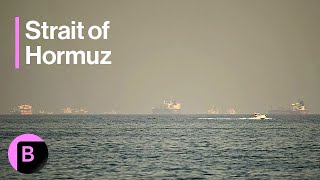

This Bloomberg Markets video, published March 02, 2026, features Jeff Currie, Hasan Alhasan, Karim Chedid, Leen Al Saady discussing LNG, RTX, LMT, GLD, XLE, USO, JETS. 5 trade ideas extracted by AI with direction and confidence scoring.
Speakers: Jeff Currie, Hasan Alhasan, Karim Chedid, Leen Al Saady · Tickers: LNG, RTX, LMT, GLD, XLE, USO, JETS