Conflict Spreads to Lebanon as Israel Attacks Hezbollah Targets
Summary
- Visual confirmation of significant kinetic military action in Beirut, Lebanon on March 2.
- Multiple large explosions and fires observed in urban areas, indicating a severe escalation in regional conflict.
- The scale of the smoke and fire suggests heavy bombardment, likely triggering geopolitical risk premiums across global markets.
Ideas
Video footage shows heavy airstrikes, explosions, and fire in Beirut, Lebanon. Kinetic warfare in the Middle East necessitates the replenishment of munitions and the deployment of defense systems. This directly benefits prime defense contractors and the aerospace/defense sector. Long Defense stocks as a hedge against geopolitical escalation. Ceasefire agreements or de-escalation would reverse the "war premium."
Visual confirmation of conflict escalation in a key Middle Eastern capital. Instability in the Middle East historically threatens energy supply routes and production stability. Markets price in a risk premium for Crude Oil during active bombardment phases in the region. Long Oil and Energy producers. If the conflict remains strictly contained without involving major oil producers (like Iran/Saudi Arabia), the risk premium may fade quickly.
Nighttime footage of explosions and smoke over a populated city. War creates uncertainty. Investors typically flee risk assets (equities) and move capital into safe havens (Gold) while volatility (VIX) spikes due to the unpredictability of the conflict's scope. Long Safe Havens and Volatility. Market desensitization to ongoing conflict could result in muted reactions.
Up Next
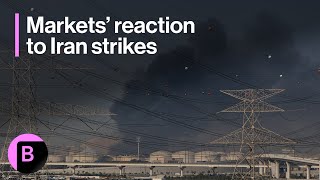



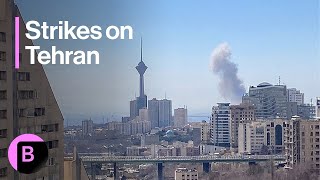
This Bloomberg Markets video, published March 02, 2026, discussing LMT, ITA, RTX, NOC, USO, XLE, VIX, GLD. 3 trade ideas extracted by AI with direction and confidence scoring.