Ideas
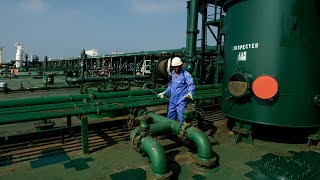
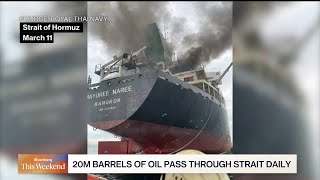
"The real loss in the market is because the Strait of Hormuz is blocked... we are losing roughly 20 million barrels a day." With the Strait of Hormuz blocked and the US threatening Iranian oil infrastructure, global oil supply is severely constrained. Strategic Petroleum Reserve releases are insufficient to cover the shortfall, driving up crude prices and benefiting oil producers and tracking ETFs. LONG oil and broad energy sector ETFs as geopolitical risk premiums and physical supply disruptions persist. A sudden diplomatic resolution, naval escorts successfully reopening the Strait, or massive coordinated SPR releases could crash oil prices.
"It is fantastic for freight because it is taking a lot of capacity out of the market... it will raise rates significantly." The closure of the Strait of Hormuz forces ships to wait idly or reroute entirely, effectively reducing global shipping capacity. This supply-demand mismatch drives up freight and charter rates, directly boosting revenues for shipping companies. LONG shipping equities as capacity constraints lead to higher freight rates and expanded margins. Reopening of the Strait or the implementation of military naval escorts mitigating the risk could normalize shipping capacity and rates.
"The Middle East in general is about 10% of the market. It is usually smaller things like fertilizer... If you can't get it in the Middle East, you will have to get it somewhere else and capacity will be tight." Disrupted fertilizer exports from the Middle East will tighten global supply, driving up prices. North American fertilizer producers will benefit from higher realized prices and increased demand as buyers seek alternative sources. LONG agricultural fertilizer producers as supply shocks drive up commodity pricing. Farmers delay purchases due to high costs, leading to demand destruction, or the conflict resolves quickly allowing Middle Eastern supply back online.
"Kerosene is the biggest expense for an airline, and we have some airlines that hedge for this... But a lot of airlines do not. There is little or no hedging going on." Spiking jet fuel prices directly hit airline operating margins. Combined with route disruptions and airspace closures in the Middle East, airlines face higher operating costs that they may not be able to fully pass on to consumers without destroying travel demand. SHORT airlines as fuel cost inflation compresses margins and geopolitical disruptions limit global routing. Airlines successfully pass on costs via fuel surcharges without losing passenger volume, or oil prices rapidly decline.
"The pipelines are now owned by Sable Offshore in California... The administration wanted to restart production in California and now they are using the Defense Production Act." The federal government is actively forcing the restart of Sable Offshore's pipeline infrastructure using the Defense Production Act, bypassing local environmental hurdles and unlocking 55,000 barrels a day of production for the company. LONG Sable Offshore as federal intervention clears regulatory roadblocks for its assets to come online. Legal challenges from the state of California could delay the restart despite the invocation of the Defense Production Act.
"Data centers produce a lot of heat. That has to be removed. We are the company that helps the data center remove that heat... We are a leader in that space." The exponential growth in AI data centers requires massive, energy-efficient cooling infrastructure. Trane Technologies is a direct beneficiary of this capital expenditure cycle, providing the necessary thermal management systems. LONG Trane Technologies as a derivative play on AI data center buildouts and energy efficiency upgrades. A slowdown in AI infrastructure spending or increased competition in the thermal management sector.
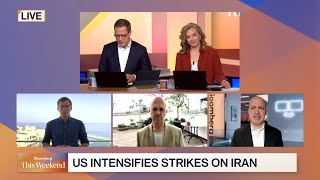
This Bloomberg Markets video, published March 14, 2026,
features Anthony DiPaola, Lee Klaskow, Benedikt Kammel, Christina Ruffini, Dave Regnery
discussing XLE, USO, ZIM, FRO, STNG, NTR, MOS, CF, JETS, UAL, DAL, SOC, TT.
6 trade ideas extracted by AI with direction and confidence scoring.
Speakers:
Anthony DiPaola,
Lee Klaskow,
Benedikt Kammel,
Christina Ruffini,
Dave Regnery
· Tickers:
XLE,
USO,
ZIM,
FRO,
STNG,
NTR,
MOS,
CF,
JETS,
UAL,
DAL,
SOC,
TT