DIGI Pnael: Jeff, Dan and Philip
Speakers
Christina
— Host/Anchor
Philip
— Reporter, UAE
Jeff Mason
— White House Correspondent
Dan Williams
— Jerusalem Reporter, Bloomberg
Summary
- The US executed a massive bombing raid on Iran's Kharg Island (which handles 90% of Iranian oil exports), though oil infrastructure was intentionally spared for now.
- Iran has escalated by threatening UAE ports and cities; a major oil facility in Fujairah was struck by drones.
- The Strait of Hormuz is under a de facto blockade with dozens of ships waiting to enter and hundreds waiting to exit, causing shipping insurance rates to skyrocket.
- The US-Iran conflict cost $11.3 billion in its first six days, and the President has signaled a willingness for a prolonged war, deploying 2,500 additional Marines.
- Israel is preparing for a significant expansion of its ground operation into Lebanon, potentially pushing up to the Litani River to dismantle Hezbollah.
Ideas
"What we're looking at here is pretty much a full-on blockade of the Strait of Hormuz." The Strait of Hormuz is the world's most critical chokepoint for crude oil. With tankers unable to transit and alternative pipeline ports (like Fujairah) suffering drone strikes, global oil markets face an immediate and severe supply shock. This physical bottleneck will force crude oil prices significantly higher. LONG USO to capture the immediate upside in crude oil prices driven by Middle Eastern supply destruction and transit blockades. A diplomatic breakthrough or a successful US-led naval escort coalition that quickly reopens the Strait, causing the geopolitical risk premium in oil to collapse.
"The first six days of the war with Iran cost more than 11.3 billion... he said it would last as long as necessary." A high-intensity, multi-front conflict in the Middle East burning through nearly $2 billion a day requires massive replenishment of munitions, missile defense interceptors, and logistical support. This guarantees a surge in government defense spending and long-term contract backlogs for prime US defense contractors. LONG major US defense contractors (LMT, RTX, GD) as they are the direct financial beneficiaries of sustained, elevated military spending and weapons procurement. Congress pushes back on war funding due to election-year concerns over government waste, or the administration abruptly pivots to a peace deal.
"Insurance companies have skyrocketing rates and they also, of course, deem it very, very dangerous indeed to pass through the Strait of Hormuz. So there is no movement here." When a major maritime chokepoint is paralyzed, global shipping capacity is severely constrained. Tankers must either wait idle or take drastically longer alternative routes. This reduction in available vessel supply causes freight day-rates to explode upward, generating windfall profits for tanker operators whose fleets are operating outside the immediate danger zone. LONG crude and product tanker equities (FRO, STNG, NAT) to capitalize on the exponential spike in global freight rates caused by the Hormuz blockade. The conflict de-escalates rapidly, allowing normal transit to resume and instantly deflating the premium on shipping rates.
Up Next
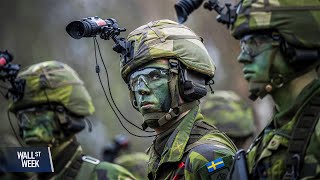


This Bloomberg Markets video, published March 14, 2026, features Jeff Mason discussing USO, GD, RTX, LMT, NAT, STNG, FRO. 3 trade ideas extracted by AI with direction and confidence scoring.
Speakers: Jeff Mason · Tickers: USO, GD, RTX, LMT, NAT, STNG, FRO