Admin Denies Hormuz Escort, Stocks Whipsawed | Bloomberg Businessweek Daily 3/10/2026
Speakers
Carol Massar
— Anchor, Bloomberg
Tim Stenovec
— Anchor/Co-Host, Bloomberg TV & Radio
Norah Mulinda
— Market Reporter, Bloomberg
Charlie Pellett
— Anchor/Reporter, Bloomberg
Iain Marlow
— National Security Editor, Bloomberg
Kevin Gordon
— Head of Macro Research and Strategy, Schwab
Karoline Leavitt
— White House Press Secretary
Joe Mathieu
— Host, Bloomberg Radio
Summary
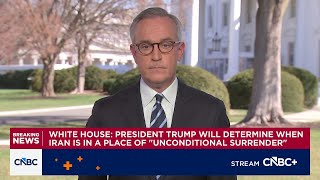
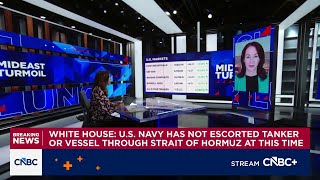
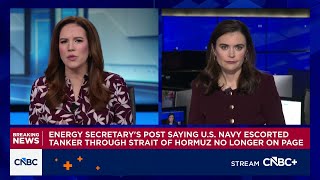
- Oil markets are experiencing extreme headline-driven volatility, with WTI crude plunging 15% intraday (below $80) on a subsequently deleted social media post claiming the US Navy escorted a tanker through the Strait of Hormuz, before bouncing back to the mid-$80s.
- The US war with Iran shows mixed signals regarding its timeline; President Trump suggests it will end "very soon," while the Pentagon reports its most intense day of attacks and notes the Strait of Hormuz remains largely shut.
- Schwab's macro strategy remains unchanged despite geopolitical shocks, maintaining a constructive view on ex-US equities due to a weak dollar and better relative growth in Europe and Asia.
- The "AI Trade" is shifting from mega-cap tech infrastructure to broader economic diffusion, suggesting cap-weighted indices may underperform as non-tech sectors begin to reap productivity benefits.
- US consumers are facing a tug-of-war: massive tax refunds averaging $3,700 are hitting bank accounts, but energy prices hovering between $80-$90 per barrel threaten to absorb that stimulus.
Ideas
Most of the oil and natural gas coming out of the Persian Gulf, going through the Strait of Hormuz, is going to Asia... I think the market has not yet been convinced by U.S. pledges to keep the strait open. The physical oil market is trading entirely on headline risk regarding the Strait of Hormuz. A deleted tweet about a US Navy escort caused a 15% intraday drop, showing extreme sensitivity. Until the physical flow of oil is guaranteed, the geopolitical risk premium remains highly unstable. Watch oil trackers closely rather than taking a blind directional bet. The market is prone to massive whipsaws based on unverified social media posts and conflicting government statements regarding naval escorts. Going long risks a sudden diplomatic resolution or confirmed US Navy escorts crashing the price; going short risks Iran mining the strait and sending crude back over $100.
We came into the year relatively constructive outside of the U.S. from a stock market perspective... given growth around the world higher to this. Especially in Europe and parts of Asia. The weak dollar story was a huge support to ex-U.S. stocks. International developed markets are benefiting from a combination of accelerating relative economic growth and a weakening US dollar, which boosts the value of foreign earnings when translated back to USD. Long broad international or developed market ETFs to capture the geographic diversification and currency tailwinds that are currently outpacing US domestic growth. A sudden spike in the US dollar due to geopolitical safe-haven flows, or a severe escalation in the Middle East conflict that disproportionately hurts European energy markets.
Brent crude creeping back up in the 80 to 90 range but hovering there and I think that puts more of a pinch on the consumer... I think it starts to eat into stimulus coming to the consumer. Despite massive tax refunds averaging $3,700 from new legislation, elevated energy prices act as a regressive tax. Lower and middle-income consumers will be forced to spend their tax stimulus on gasoline rather than discretionary retail goods. Neutral on consumer discretionary stocks. The bullish catalyst of government tax stimulus is being directly neutralized by the bearish reality of $80-$90 oil prices at the pump. If oil prices collapse due to a sudden end to the Middle East conflict, the consumer discretionary sector could see a massive rally as the tax stimulus is freed up for retail spending.
If you believe it is starting to diffuse throughout the economy, you're seeing benefits of this technology, it may not be the best from a cap weighted index perspective. If you thought tech and communication services with the big drivers and players... they are taking more of a backseat giving way to the rest of the market. The initial phase of the AI trade heavily rewarded the mega-cap tech companies building the infrastructure. The next phase will benefit the broader economy (non-tech sectors) that adopt AI to increase productivity and expand profit margins. Long equal-weight S&P 500 indices to reduce concentration risk in mega-cap tech and gain exposure to the broader market's impending productivity boost. AI adoption in non-tech sectors takes longer than expected to materialize into actual earnings growth, or mega-cap tech continues to monopolize all AI-related profits.
Up Next

This Bloomberg Markets video, published March 10, 2026, features Iain Marlow, Kevin Gordon discussing USO, VEA, VXUS, XLY, RSP. 4 trade ideas extracted by AI with direction and confidence scoring.
Speakers: Iain Marlow, Kevin Gordon · Tickers: USO, VEA, VXUS, XLY, RSP