Energy Secretary Wright removes post saying U.S. Navy escorted tanker through Strait of Hormuz
Speakers
Pippa Stevens
— Markets and Energy Reporter, CNBC
Kelly Evans
— Anchor, The Exchange (CNBC)
Unknown Speaker
— Bits and Bips co-host
Summary
- Oil prices experienced extreme intraday volatility driven entirely by unconfirmed social media headlines regarding geopolitical tensions.
- WTI crude dropped below $77 per barrel on initial reports that the US Navy was escorting a tanker through the Strait of Hormuz.
- Prices violently reversed and spiked back above $80 per barrel immediately after Energy Secretary Wright deleted the post, highlighting the massive geopolitical risk premium currently priced into energy markets.
Ideas
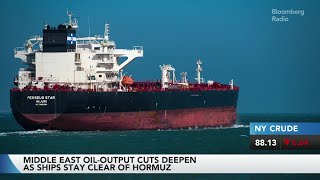
"About the post on X, about the US Navy escorting a ship through the Strait of Hormuz. And oil prices of course move lower. But the post is no longer on the Secretary's page... WTI now back above that $80 level." The Strait of Hormuz is a critical chokepoint for global oil logistics. The initial news of US Navy escorts signaled a de-risking of the passage, instantly stripping the geopolitical risk premium out of the commodity and causing a sharp sell-off. The deletion of the post reintroduced the threat of supply disruption, causing an immediate $3+ price spike. This price action proves that crude is currently trading on headline risk rather than fundamental supply and demand. WATCH. The extreme intraday whipsaw driven by a single deleted social media post makes blind directional bets dangerous. Traders should wait for official policy clarification from the Department of Defense or Department of Energy before committing capital. Taking a definitive long or short position exposes traders to massive gap risks if the government suddenly confirms the escorts (bearish for oil) or if a tanker is actually attacked in the strait (bullish for oil).
Up Next

This CNBC video, published March 10, 2026, features Pippa Stevens discussing XLE, USO. 1 trade idea extracted by AI with direction and confidence scoring.
Speakers: Pippa Stevens · Tickers: XLE, USO