Markets Whipsaw After Trump Delays Iran Strike Deadline | Open Interest 3/23/2026
Speakers
Matt Miller
— Anchor, Bloomberg
Dani Burger
— Anchor, Bloomberg Television
Annmarie Hordern
— Reporter, Bloomberg
Peter Tchir
— Head of Macro Strategy, Academy Securities
Amanda Agati
— Chief Investment Officer, PNC Asset Management Group
Sitara Sundar
— Global Investment Specialist, J.P. Morgan Private Bank
Nadav Zafrir
— CEO, Check Point Software Technologies
Colonel Wayne Sanders
— Bloomberg Intelligence
Aaron David Miller
— Senior Fellow at Carnegie Endowment
Summary
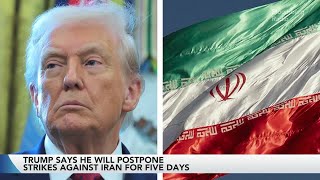
- President Trump postponed strikes on Iranian energy infrastructure for five days, citing "good talks." Iranian media flatly denied any negotiations were occurring, creating significant market uncertainty.
- Markets reacted with extreme whipsaw volatility: Brent crude oil plunged ~10% from ~$114 to ~$101/barrel, travel/airline stocks (UAL, CCL, RCL, CVNA) surged 5-7%, and energy stocks (XOM, CVX, OXY) sold off sharply.
- Analyst Peter Tchir is skeptical of a quick resolution, interpreting the 5-day delay as time for a US Marine Expeditionary Force to arrive and for further attacks to degrade Iran's coastal defenses, keeping the Strait of Hormuz closure risk alive.
- Long-term investment thesis from Peter Tchir focuses on "vertical integration" and energy/defense independence: bullish on European defense/drone capabilities, oilfield services, nuclear power, and domestic chip/tech infrastructure as a multiyear trend.
- PNC's Amanda Agati advises staying nimble, neutral, and diversified in a high-volatility regime, seeing pockets of opportunity in fixed income and remaining overweight big tech/AI for fundamental strength despite valuations.
- JPMorgan's Sitara Sundar emphasizes active management, fundamentals, and strong balance sheets, viewing gold as a long-term diversifier (not just a geopolitical hedge) and alternatives as essential for portfolio defense.
- Cyber risk is expected to intensify. Check Point's CEO notes cyberattacks often increase after kinetic conflicts and will be amplified by AI, which democratizes attack tools and creates new vulnerabilities during network modernization.
- Geopolitical expert Aaron David Miller views Trump's move as a climb-down from an untenable ultimatum, driven by Gulf State pressure. He sees no credible near-term deal, arguing the war may accelerate Iran's desire for a nuclear weapon and that the U.S. will have to make significant concessions to reopen the Strait.
- There is a core disagreement on the credibility of the administration's narrative. Miller and other reports contradict Trump's claim that Iran was 2-4 weeks from a nuclear weapon, calling it a justification for a "war of choice."
Ideas
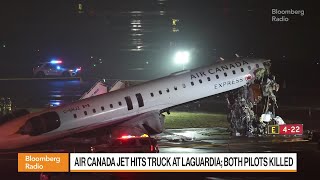
Host highlights United Airlines (UAL) up 6.3%, Carnival (CCL) up 6.7%, and Royal Caribbean (RCL) up 6.5% as travel/consumer stocks exposed to oil prices have a "big rebound" following the de-escalation headline. The perceived reduction in Iran conflict risk causes oil prices to crash, which is a direct cost relief and sentiment booster for airlines and cruise operators. LONG due to a sharp, news-driven relief rally in the most oil-sensitive segments of the consumer discretionary sector. The rally reverses if Iran tensions re-escalate, denying the talks, or if the travel disruption narrative (e.g., La Guardia crash) outweighs the oil price relief.
Hosts state "energy stocks are plunging with the price of oil" and note Chevron (CVX) and Exxon (XOM) were down hard pre-market, with Occidental (OXY) down $4.50. The president's delay of strikes eases immediate fears of a supply-disrupting regional war, causing a violent sell-off in the oil price and the equities levered to it. AVOID due to severe near-term headline risk and direct exposure to the crashing oil price on the de-escalation news. The situation reverses if the 5-day deadline passes with no deal and military action resumes, spiking oil prices again.
Tchir is "trying to figure out... who in Europe is going to make drones?" and sees an opportunity as Europe builds up a defense force around drones, part of a broader push for national independence. Geopolitical fragmentation and the Iran conflict are driving European nations to invest in independent defense capabilities, with drones being a more immediately achievable project than carriers or jets. WATCH for investment opportunities in European defense, specifically within the drone manufacturing subsector, as a developing multiyear theme. European defense integration is slow and politically fraught; the thematic may take longer to materialize than expected.
Agati states they are "overweight exposure tactically speaking in the AI automation play" and that big tech's business models (revenue, capex) are still very much the case. Large tech companies are seen as defensively positioned with resilient revenue streams, are less exposed to oil/geopolitical risks, and are the primary beneficiaries of the secular AI investment trend. LONG as a defensive growth exposure within a volatile market, and as a core holding for the AI thematic. Valuations are not "outright cheap," and a broader market correction could provide a better entry point.
Sundar states they have "been telling clients to lean into gold as a diversifier," noting it's not just a geopolitical hedge but could serve as a diversifier over the long run. In a regime of high volatility across asset classes, gold offers a non-correlated return stream and maintains its historical role as a store of value. LONG as a strategic portfolio diversifier, not just a tactical hedge against the current Middle East conflict. Rising real interest rates or a sustained risk-on market rally could dampen gold's appeal.
Up Next

This Bloomberg Markets video, published March 23, 2026, features Dani Burger, Matt Miller, Peter Tchir, Amanda Agati, Sitara Sundar discussing RCL, CCL, UAL, XLE, XLI, XLK, GOLD. 5 trade ideas extracted by AI with direction and confidence scoring.
Speakers: Dani Burger, Matt Miller, Peter Tchir, Amanda Agati, Sitara Sundar · Tickers: RCL, CCL, UAL, XLE, XLI, XLK, GOLD