Squawk Pod: Talks with Iran, a call with the President, & energy prices - 03/23/26 | Audio Only
Speakers
Mohamed El-Erian
— Chief Economic Adviser, Allianz
Richard Goldberg
— Former White House National Security Council Director for Countering Iranian Weapons of Mass Destruction
Dan Murphy
— CNBC International Correspondent (Dubai)
Joe Kernen
— Co-Anchor, Squawk Box
Becky Quick
— Co-Anchor, Squawk Box
Cameron Costa
— CNBC Producer
Summary
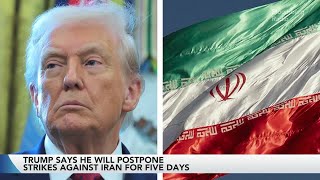
- President Trump's Truth Social post announced a 5-day postponement of U.S. strikes on Iranian power plants/energy infrastructure due to "productive conversations" with Iran, triggering violent market reversals.
- Equity futures spiked (Dow futures up ~1000 pts) and oil prices collapsed (WTI fell from ~$98 to ~$87) on the perceived de-escalation, reversing earlier "flight to cash" safe-haven flows.
- Mohamed El-Erian frames the critical uncertainty around whether the U.S. can get Israel to buy into any potential deal, as the objectives of the three warring parties (US, Iran, Israel) are not aligned.
- El-Erian notes the market reaction reflects a violent unwind of positions that were short and positioned for further escalation following a prior 48-hour ultimatum to Iran.
- Richard Goldberg provides military context: the U.S./Israel operation had a defined target set estimated to take 4-8 weeks, and they are likely only halfway through, implying 3+ more weeks of potential targets.
- Goldberg interprets the president's move as potentially "market management" to collapse risk premiums and buy more time to complete the military mission, rather than a premature end to hostilities.
- Dan Murphy emphasizes the postponement is conditional and not a ceasefire, with the Strait of Hormuz still closed. If no deal is reached by the new Friday deadline, oil prices could "rocket back up."
- Murphy reports a significant shift in Gulf State sentiment, with senior Emirati officials stating Iran's strategy has "failed" by bringing the Gulf States closer together and closer to the White House.
- Iranian news agency FARS denied any talks occurred, claiming Trump "backed down" after Iranian counter-threats, illustrating the high degree of informational conflict and market uncertainty.
- Analysts highlight the difficulty of an "off-ramp," with Iranian demands (e.g., control over Strait of Hormuz transit, guarantees against future strikes) seen as near-impossible for the US/Israel/Gulf States to accept.
Ideas
The speaker stated oil prices are completely dependent on unpredictable geopolitical headlines, using the example of WTI dropping from $98 to $87 within moments based on a presidential post. The near-term path of oil is solely a function of developments in the U.S.-Iran conflict, which remains highly uncertain due to multi-party negotiations, field commander actions in Iran, and Israeli objectives. Direction is WATCH because the asset is in a state of extreme headline-driven volatility with binary outcomes (escalation vs. de-escalation) dependent on unresolved political/military events within a 5-day window. A breakdown in talks or an incident on the ground (e.g., Israeli action, Iranian field commander strike) could instantly reverse the de-escalatory price move.
Up Next


This CNBC video, published March 23, 2026, features Mohamed El-Erian discussing WTI. 1 trade idea extracted by AI with direction and confidence scoring.
Speakers: Mohamed El-Erian · Tickers: WTI