MacroVoices #526 Matt Barrie: Pay To PrAI
Speakers
Erik Townsend
— Founder & Host, MacroVoices
Patrick Ceresna
— Derivatives Specialist, MacroVoices
Matt Barrie
— Founder & CEO, Freelancer.com
Anas Alhajji
— Managing Partner, Energy Outlook Advisors
Summary
- Matt Barrie argues the current consumer AI business model is unsustainable, as inference costs exceed subscription revenue (e.g., a $200/month plan can burn $51,000 in underlying compute).
- He sees strong parallels to the dot-com bubble: massive capital misallocation and vendor-financed mega-rounds (e.g., OpenAI's $122B raise) but acknowledges AI's transformative potential is real.
- A shift to per-token pricing is deemed inevitable, which would price the product out for much of the world and turn software development into a high-variance "slot machine" due to hallucinations.
- AI is creating instability in private credit markets, as portfolios hold debt against SaaS businesses whose economics are now threatened by AI-powered productivity gains.
- The Iran conflict poses a direct risk to AI financing and energy costs, as Middle Eastern capital may shift to defense and infrastructure, and data centers are vulnerable to attack.
- Dr. Anas Alhajji frames the Iran conflict as historic, with no clear red lines, and argues the closure of the Strait of Hormuz is a failure of U.S. policy, regardless of whether the U.S. (via insurance) or Iran is responsible.
- He projects oil prices will continue rising due to a structural shortage of 10-12 million barrels per day, with demand destruction likely only near $160/barrel, potentially leading to a global recession or stagflation.
- A key market insight is that strategic petroleum reserve releases affect price differentials (keeping U.S. prices relatively low) more than absolute price levels, benefiting U.S. competitiveness.
- Erik Townsend is concerned the conflict could escalate to targeting civilian power infrastructure and nuclear/desalination plants, which would be a Geneva Convention violation and a humanitarian disaster.
- He remains long-term bullish on gold (targeting $6,000) and uranium, but sees near-term pressure on gold if oil-driven inflation delays Fed rate cuts.
Ideas
The speaker stated the current oil shortage is 10-12 million barrels per day and that "prices will continue going up" until significant demand destruction occurs, which he models around $160/barrel. The Strait of Hormuz remains closed, SPR releases only impact price differentials, and all other policy levers (Jones Act, sanctions exemptions) are exhausted or ineffective. The ongoing Iran conflict sustains the supply deficit. LONG because the fundamental supply/demand imbalance, exacerbated by the conflict, is expected to drive prices higher in the medium term. A sharp global recession or stagflation could destroy demand enough to reverse the price trend.
The speaker proposed buying May 2026 $13 put options on the BIZD ETF, a public market proxy for Business Development Companies (BDCs) and private credit. Matt Barrie's analysis indicates private credit is stressed because its portfolios contain debt from SaaS companies whose business models are being eroded by AI, and funding rounds are becoming too large for equity, forcing over-reliance on debt. SHORT (via puts) to gain convex downside exposure to a potential repricing of credit risk in the private credit space, while avoiding the negative carry of a physical short. The private credit market stabilizes or rallies, or the stress does not materialize in the public BDC complex within the option's timeframe.
Up Next
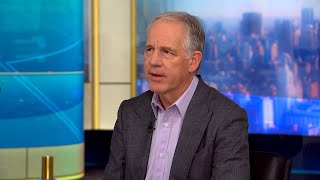



This Macro Voices video, published April 02, 2026, features Anas Alhajji, Patrick Ceresna discussing WTI, BIZD. 2 trade ideas extracted by AI with direction and confidence scoring.
Speakers: Anas Alhajji, Patrick Ceresna · Tickers: WTI, BIZD