Who’s Paying for US Tariffs? | Presented by CME Group
Speakers
Steven Miran
— Chair, Council of Economic Advisers
Narrator
— CME Group Presenter
Summary
- Federal Reserve Governor Steven Mirren argues that US trade tariffs have been more benign than feared, suggesting exporting nations absorb costs via lower margins rather than passing them to US consumers.
- This view contradicts data from the Yale Budget Lab, which estimates the median annual cost of tariffs per US household is approximately $1,400.
- The Fed acknowledges that a significant portion of inflation overshooting the 2% target is directly attributable to tariff pressures.
Ideas
Steven Miran
Chair, Council of Economic Advisers
The Fed has stated that "a notable part of inflation overshooting the 2% target is due to tariff pressures." If tariffs are causing structural inflation to persist above the 2% target, the Federal Reserve will be forced to keep interest rates higher for longer to combat it. Sticky inflation is the enemy of long-duration bonds; as yields rise to reflect inflation premiums, bond prices must fall. SHORT long-duration government bonds as inflation expectations re-anchor higher. A sudden economic recession could force the Fed to cut rates despite high inflation (stagflation), which might bid up bonds as a safety trade.
Steven Miran
Chair, Council of Economic Advisers
Mirren argues tariffs are paid by "exporting nations by way of lower profit margins." If the US maintains higher interest rates to fight tariff-inflation (as noted in the transcript), and exporting nations are forced to cut margins or devalue their currencies to remain competitive against US protectionism, the relative demand for the US Dollar increases. Higher yields + lower imports = stronger currency. LONG the US Dollar against major trading partners. Retaliatory tariffs from other nations could hurt US exports, potentially weakening the dollar in the long run.
"Research puts the burden of paying most of the tariffs on Americans with the annual median cost near $1,400 per household." This is a direct hit to disposable income. If the average household loses $1,400 in purchasing power to tariff costs, that capital is removed from the discretionary budget. Retailers, luxury goods, and non-essential services will face volume compression as consumers prioritize staples and cover tariff-induced price hikes. SHORT the consumer discretionary sector due to wallet share erosion. Wage growth could outpace tariff costs, or the government could introduce fiscal stimulus/rebates to offset the household burden.
Up Next




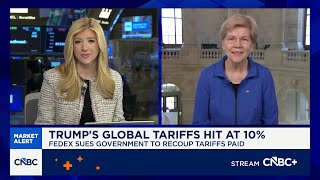
This Bloomberg Markets video, published February 24, 2026, features Steven Miran discussing TLT, IEF, USD, UUP, XLY, XRT. 3 trade ideas extracted by AI with direction and confidence scoring.
Speakers: Steven Miran · Tickers: TLT, IEF, USD, UUP, XLY, XRT