Why Iran War is Making German Inflation Soar | The Pulse 3/30
Speakers
Wei Li
— Global Chief Investment Strategist, BlackRock
Sanam Vakil
— Director, Middle East and North Africa Programme, Chatham House
Joaquim Miranda Sarmento
— Finance Minister, Portugal
Joumanna Bercetche
— Anchor, Bloomberg
Mark
— Bloomberg Economist
Summary
- Wei Li (BlackRock) argues the Middle East conflict is accelerating pre-existing structural investment themes, specifically energy security/independence, supply chain resilience, infrastructure, and defense.
- She states the energy shock, against a backdrop of already-above-target inflation, creates a "really, really challenging" calculus for central banks. The risk shifts from "can they cut?" to "will they hike fast enough?" to prevent real rates from becoming accommodative.
- However, she notes that very high debt levels in developed economies may limit how far central banks can hike, making their trade-offs "really tough."
- On positioning, she is neutral on directional equities but favors the mentioned structural themes. She holds a modest overweight in US dollar-denominated emerging market debt, citing structural improvements in credit quality.
- Sanam Vakil (Chatham House) assesses the chance of direct US-Iran talks as "very slim," noting the US is simultaneously mobilizing troops for a potential high-risk operation to open the Strait of Hormuz.
- She argues the war has "weakened" but not broken the Iranian regime, creating a "hardened militaristic version" rather than regime change, with the biggest challenge coming when the war stops.
- The conflict's primary market risk is a physical supply disruption, particularly via the Strait of Hormuz. An estimated 11 million barrels per day of oil were already offline pre-war; a prolonged Strait closure would significantly tighten the market.
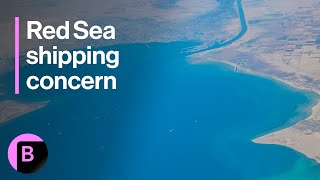
- The entry of the Houthis into the conflict raises the risk to Saudi Arabia's rerouted oil exports (5 million bpd) via the Red Sea, a "vital lifeline."
- Portuguese Finance Minister Sarmento states the war's fiscal and economic impact depends on its duration and effect on oil/gas supply. Portugal entered the crisis from a position of strength (2025 budget surplus of 0.7% of GDP, debt below 90%) but faces multiple fiscal challenges.
- He differentiates the current shock from 2022: it is primarily a supply shock on energy, without the coincident post-pandemic demand shock. He expects some demand destruction but inflation "far from" 2022 levels.
Ideas
Reporters state the Houthi entry into the war poses a risk to the ~5 million bpd of Saudi oil exports rerouted through the Red Sea, a "vital lifeline." A Strait of Hormuz closure would take an estimated 11 million bpd offline, creating significant market tightness. Physical supply disruptions from the conflict are beginning to show up in prices, creating upward pressure. This contributes to a broader energy shock impacting inflation and growth. The asset is under clear upward price pressure due to geopolitical risk, but the ultimate direction depends on conflict escalation (e.g., Strait closure) or de-escalation, warranting close monitoring. A swift diplomatic resolution or the failure of attacks to materially disrupt shipping flows.
Wei Li states the Middle East conflict is accelerating the theme of "energy security" and "energy independence," which is an "all of the above" approach including traditional and alternative sources. She notes 60% of the global population lives in natural gas-importing countries facing disrupted supply. Geopolitical instability creates a "supercharged environment" for investing in energy security. This theme was already in place due to factors like AI data center power demand and is now being accelerated. The sector should grow in significance within portfolios. This is a structural, long-term investment opportunity catalyzed by current events. A rapid and sustained resolution to Middle East tensions reducing the perceived urgency for energy independence.
Wei Li explicitly names "infrastructure" as a key investment theme linked to greater focus on "supply chain resilience" and "reshoring," which is being accelerated by current events. Geopolitical and trade disruptions create demand for more resilient infrastructure, both for rebuilding and for securing supply chains. Many infrastructure companies are global, benefiting from the theme regardless of location. This is a structural theme with reinforcing near and medium-term demand drivers. A significant global economic downturn leading to widespread cancellation or deferral of infrastructure projects.
Wei Li explicitly names "defense" as a key investment theme being "catapulted" and accelerated by events in the Middle East. Geopolitical conflict increases focus on and spending for national and regional defense, supporting the sector's fundamentals. This is a structural theme with positive demand drivers, making it an attractive area for investment. A sudden and lasting peace that drastically reduces defense spending priorities.
Wei Li states BlackRock has a "modest overweight" in US dollar-denominated emerging market debt, citing the structural improvement in the quality of the asset class and favorable exposure to Latin America and energy exporters/importers. Despite being caught in recent market reversals (dollar strength, curve shifts), the underlying credit quality improvement provides a longer-term positive basis. The asset class is seen as positively positioned for the longer term, warranting attention, though it may face near-term volatility from broader market flows. A severe, prolonged risk-off event or a significant further strengthening of the US dollar.
The Portuguese Finance Minister describes TAP as a "very well performing consolidated company," likely "the last" midsized European airline available for acquisition by large aviation groups, with strong networks in South America, Canada, and Africa. He believes the short-term crisis (high fuel prices) will not strongly impact the "medium and long-term perspective" of interested buyers focused on growth and the company's fundamentals. Non-binding bids are due imminently (April 2). The company is positioned as a unique consolidation target with attractive assets, making it a key situation to monitor for potential M&A activity. The war causing a deep, prolonged recession that scuttles airline consolidation plans or severely damages TAP's fundamentals.
Up Next


This Bloomberg Markets video, published March 30, 2026, features Joumanna Bercetche, Wei Li, Joaquim Miranda Sarmento discussing WTI, XLE, PAVE, ITA, EMB, TAP. 6 trade ideas extracted by AI with direction and confidence scoring.
Speakers: Joumanna Bercetche, Wei Li, Joaquim Miranda Sarmento · Tickers: WTI, XLE, PAVE, ITA, EMB, TAP