Trump Talks Up Iran Deal Hopes; Proxy Attacks | Horizons Middle East & Africa 3/30/2026
Speakers
Joumanna Bercetche
— Anchor, Bloomberg
Samy Chaar
— Lombard Odier, Chief Economist & Switzerland CIO
William Roebuck
— Arab Gulf States Institute, Executive Vice President & Former U.S. Ambassador to Bahrain
Katralnada BinGhatti
— BinGhatti Holding, CEO & Managing Director
Anthony DiPaola
— Reporter, Bloomberg (Energy)
Jennifer
— Bloomberg Chief Africa Correspondent
Greg Sullivan
— Russia Economy and Government Editor, Bloomberg
Stuart
— Bloomberg Executive Editor for MENA & Russia
Summary
- Market sentiment is firmly 'risk-off' on day 31 of the Iran conflict, with Asian and European equity futures down, driven by fears of a prolonged war and its economic impact.
- Brent crude oil is a key sentiment gauge, trading at $115 (up 2.5%), close to its recent high of $119, despite IEA stockpile releases and rerouting of ~60% of Strait of Hormuz flows via pipelines.
- Aluminum prices spiked ~4% after targeted attacks on two key smelters in the UAE (Emirates Global Aluminum) and Bahrain (Alba), demonstrating direct commodity market disruption.
- An interesting market dynamic emerged: U.S. Treasury yields fell despite the inflationary oil shock, suggesting bonds are beginning to price in a potential growth slowdown outweighing inflation concerns.
- Samy Chaar (Lombard Odier) states the asymmetric risks have led his firm to eliminate active portfolio risks and move closer to strategic benchmarks, awaiting clarity. He believes the global economy can withstand $115 oil, leading to an "inflationary slowdown," but not a recession, which would require prices above $150.
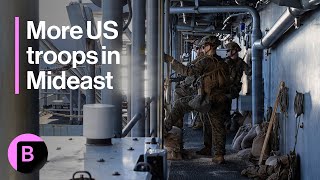
- William Roebuck sees a low likelihood of a near-term negotiated settlement, interpreting the deployment of ~10,000 additional U.S. troops as a prelude to escalation, likely aimed at reopening the Strait of Hormuz, which he views as a difficult military objective.
- Katralnada BinGhatti (UAE property developer) reports stable buyer behavior so far, with demand underpinned by UAE residents (vs. foreign investors). The company has stress-tested for price corrections of 20-30% and remains confident in its liquidity, with two-thirds of its portfolio in resilient mainstream/mid-luxury segments.
- Angola successfully returned to international debt markets with a $2.5B Eurobond, planning to use $500M to buy back 2028 debt, signaling cautious investor optimism despite its vulnerability as a net fuel importer amidst high oil prices.
- Ukraine is leveraging its defense expertise against Iranian drones to seek fuel and military supply agreements with Gulf states like Saudi Arabia and Qatar, as traditional Western aid wanes.
Ideas
The anchor reported aluminum trading up 3.9% because two aluminum smelters (Emirates Global Aluminum in UAE and Alba in Bahrain) were hit/targeted over the weekend, damaging production. Physical attacks on critical production infrastructure directly disrupt supply and create immediate scarcity in the physical commodity market. The price spike is a direct, near-term reaction to a supply shock. Further attacks or assessments of severe damage could sustain or increase price pressure. Damage assessments prove minor, or production is quickly restored from other global sources.
The speaker stated that regions like Europe are energy importers and are "bound to have more sensitivity to the situation," leading his firm to move "closer to benchmark" in those regions. As a major energy importer, Europe faces a disproportionate growth and inflation shock from sustained high oil prices, directly impacting corporate earnings and equity market performance. The explicit identification of higher sensitivity and the action to reduce active risk (de-risk) in those markets implies a bearish or cautious view relative to other regions. A swift resolution to the conflict and a sharp drop in oil prices, or European economies proving more resilient than anticipated.
Up Next

This Bloomberg Markets video, published March 30, 2026, features Joumanna Bercetche, Samy Chaar discussing JJU, VGK. 2 trade ideas extracted by AI with direction and confidence scoring.
Speakers: Joumanna Bercetche, Samy Chaar · Tickers: JJU, VGK