Trump Threatens Iran Escalation, Rattling Markets | The China Show 4/2/2026
Speakers
Yvonne Man
— Head of APAC, CoinDesk
David Ingles
— Anchor, Bloomberg
Joe Mathieu
— Host, Bloomberg Radio
Bilal Saab
— Senior Managing Director, Trends U.S.
Stephanie Leung
— CIO, StashAway
Adam Ferrar
— Senior Geoeconomics Analyst, Bloomberg Economics
Jill de Ces
— Managing Editor, Bloomberg
Jomana Berset
— Middle East and Africa Anchor, Bloomberg
Liang Landing
— Managing Editor, Asian Equities, Bloomberg
Trina Chen
— Co-head of Greater China Equity Research & China Basic Materials/Agriculture Analyst, Goldman Sachs
Paul Allen
— Reporter, Bloomberg
Summary
- Markets reacted negatively (risk-off) to President Trump's primetime address, interpreting it as lacking a clear "off-ramp" for the Iran war and signaling potential escalation over the next 2-3 weeks.
- Key market disappointment: Trump did not declare victory or announce a troop withdrawal. Instead, he threatened to strike Iran's electric power plants if no deal is reached, which markets viewed as a potential war crime and escalation.
- The speech delinked U.S. military objectives from reopening the Strait of Hormuz, placing responsibility on allies and oil-importing nations. Analysts view this as unrealistic, citing Gulf states' lack of naval capability and the strategic difficulty of reopening the strait.
- Oil price sensitivity is paramount; higher prices negatively correlate with most risk assets, with fixed income being the most susceptible. Extreme oil prices (e.g., ~$110) cause greater market dispersion.
- A contrarian view suggests Trump is using market reaction (yesterday's rally on withdrawal rumors) as leverage, testing his ability to move markets to buy 2-3 more weeks to force the Strait open before strategic oil reserves deplete and midterm elections approach.
- China is seen as a potential diplomatic and economic beneficiary: it can position itself as a defender of the rules-based order, gain intelligence on U.S. military tactics, and see increased demand for its EVs, renewables, and refined fuel products in Asia.
- The conflict exposes vulnerabilities in global supply chains beyond oil: Middle East fertilizer production (key for nitrogen, phosphate) and aluminum smelting are at risk, threatening food and industrial commodity prices with a lagged effect.
- Despite the risk-off move, one portfolio manager sees an opportunity in previously crowded, high-momentum tech trades (e.g., NVIDIA, Microsoft) that have sold off and now appear cheap on a longer-term basis.
- Analyst cautions that while Iran's conventional military is degraded, it retains escalatory options (e.g., attacking Gulf energy infrastructure) and greater tolerance for economic pain, meaning the situation could worsen.
- BYD's March sales data highlight a bifurcated market: overseas exports surged ~65% (benefiting from high oil prices), while domestic sales slumped ~40%, reflecting weak local consumption and reduced subsidies.
Ideas
BYD's overseas exports jumped ~65% in March, while domestic sales slumped ~40%. The company is guiding for higher overseas sales targets for the year. Surging oil prices due to the Iran war are boosting the incentive for consumers globally to switch from gasoline vehicles to EVs. However, weak domestic consumption and scaled-back subsidies in China are hurting local demand. The company is becoming increasingly reliant on overseas sales for growth, making it a key barometer for global EV adoption amid high energy prices. The stark divergence between export and domestic performance warrants close monitoring. A resolution to the Iran conflict and a sharp drop in oil prices could reduce the urgency for consumers to switch to EVs. Domestic competition in China remains fierce.
Trina Chen stated that the Middle East produces 10-15% of global fertilizer (nitrogen, potash, phosphate) and one-third of seaborne traded urea. Spot prices for urea are up ~70% YTD. She sees historical precedent where triple-digit oil prices lead to 50-100% higher grain prices. The Iran war disrupts Middle East production and logistics (Strait of Hormuz), tightening global fertilizer supply. Fertilizer is critical for crop yields; a 10% reduction in usage can reduce yields by more than 10%. We are in the key planting season for Asia. The process industries sector, particularly fertilizer producers, faces significant supply-side risks that could drive prices materially higher, with a lagged but severe impact on global food prices and security. A swift end to the war and reopening of the Strait. Chinese fertilizer exports could ease tightness post its planting season.
Up Next


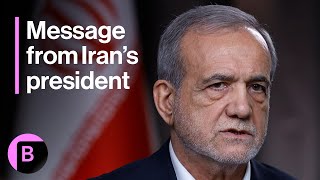


This Bloomberg Markets video, published April 02, 2026, features David Lloyd, Stephanie Leung discussing 1211.HK, XLE. 2 trade ideas extracted by AI with direction and confidence scoring.
Speakers: David Lloyd, Stephanie Leung · Tickers: 1211.HK, XLE