Iran’s President Issues Open Letter to the American Public
Speakers
Joumanna Bercetche
— Anchor, Bloomberg
Summary
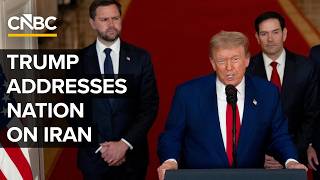
- Iranian President Masoud Pezeshkian issued an open letter to the American public ahead of Trump's national address, filled with political rhetoric questioning if the US is acting as a "proxy for Israel" and claiming Iran's actions are in "self-defense."
- The speaker casts doubt on the letter's purpose and the president's influence, noting Iranian state TV suggested Iran "had never asked for a cease fire" and that Pezeshkian may lack clout on key nuclear/military decisions.
- For true shifts in Iran's position, analysts suggest watching the new supreme leader and the speaker of parliament, Mohammad Bagher Ghalibaf, rather than the president.
- President Trump has signaled a desire to "de-link" the fate of the Strait of Hormuz from US military operations, suggesting other, more reliant countries should handle it, explicitly referencing China.
- The UK is convening a virtual meeting of ~35 foreign secretaries to discuss diplomatic, economic, and potential military measures to reopen the strait, with military action seen as a last resort.
- The UAE has invoked Article 7 at the UN Security Council, seeking diplomatic cover for the potential use of force to reopen the strait, calling Iran's control "economic terrorism."
- A key market implication mentioned is rising oil and gasoline prices due to the Strait of Hormuz disruption.
- A major uncertainty is whether international diplomatic efforts will yield results or if the situation escalates.