Asian Stocks Rise Ahead of Trump Speech | The Asia Trade 4/2/2026
Speakers
Shery Ahn
— Anchor, Bloomberg Television
Haidi Stroud-Watts
— Anchor, Bloomberg
Jeff Mason
— White House Correspondent
Laura Davison
— Washington Bureau Chief, Bloomberg
Ed Ludlow
— Co-Host, Bloomberg Technology
Annabel Droulers
— Anchor, Bloomberg TV
Gita
— Markets Commentator (Bloomberg)
Garfield Reynolds
— Markets Reporter/Editor, Bloomberg
Mieko Nakabayashi
— Professor, Waseda University; Former Japanese Lawmaker
Lanhee Chen
— Fellow, Hoover Institution, Stanford University
Jacky Tang
— CIO for Emerging Markets, Deutsche Private Bank
Adam Farrar
— Senior Geo-Economics Analyst, Bloomberg Economics
Paul Allen
— Reporter, Bloomberg
Douglas Silliman
— Former U.S. Ambassador to Iraq & Kuwait; President, Arab Gulf States Institute
Joe Mathieu
— Host, Bloomberg Radio
Summary
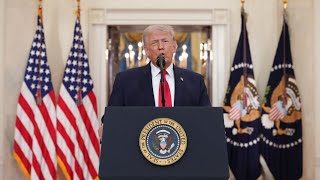
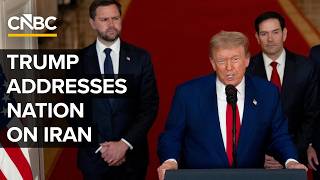
- Iran War De-escalation Hope: President Trump's timeline of 2-3 weeks for ending U.S. military action is driving a sharp risk-on rally in Asian and U.S. equity futures. Market action is partly an unwind of short positions and positioning for an end to the conflict.
- Oil Market Volatility: Brent crude fell below $101 on war conclusion hopes, but uncertainty remains extreme. Options markets price scenarios from a complete structural collapse to $450/barrel. The key variable is the reopening of the Strait of Hormuz, which Trump has suggested might not be a precondition for U.S. withdrawal.
- Central Bank & Growth Impact: The Iran war and oil shock had taken Fed rate cuts off the table, reinforcing resilient U.S. economic data. South Korea and Japan face significant growth concerns as large Middle Eastern oil importers.
- AI Sector Rotation: The AI theme saw significant buying, with Samsung having its best day since 2001. A notable shift is occurring in private markets: secondary market investors are pivoting from OpenAI shares to Anthropic, due to Anthropic's disruptive momentum and lower relative valuation (~<$400B vs. OpenAI >$850B).
- Anthropic's Product Edge: An Anthropic executive stated their coworker/agentic tool "Cowork" is expected to drive more interest than "Claude Code" because it has broader appeal across non-engineering staff (e.g., legal, financial services), whereas Claude Code only targets the 2-5% engineering staff.
- Space & Tech Financing: SpaceX confidentially filed for an IPO, targeting a June listing to raise ~$75B at a $1.75-$2T valuation to fund a new business model focused on space-based data centers (satellites). Separately, a $16B financing package is near completion for a massive new Oracle data center in Michigan to power OpenAI applications.
- Geopolitical Realignment: The Iran war is causing U.S. allies in Asia (Japan) and Europe to question U.S. commitments, accelerating diplomatic outreach (e.g., France-Japan talks) to build alternative partnerships and diversify security and supply chains away from over-reliance on the U.S.
- China's Relative Insulation & Opportunity: China is seen as a relative winner; its energy mix relies more on coal and alternative sources, reducing dependence on Middle Eastern oil. The war gives Beijing a diplomatic opening to position itself as a defender of stability and a potential intermediary, especially regarding the Strait of Hormuz.
- Long-term AI Thesis Intact: Despite geopolitical noise, AI is viewed as a structural, mid-cycle boom that will continue to drive earnings and economic growth, remaining a major investment theme post-crisis.
Ideas
Shares of OpenAI have "fallen out of favor" on the private secondary market, with investors pivoting to Anthropic. Demand is shifting because Anthropic has been the "big disrupter this year," and its valuation is less than half that of OpenAI, with anticipation it may catch up. This indicates a loss of momentum and relative overvaluation for OpenAI in private markets, while Anthropic is gaining investor favor due to its products (like Cowork) and perceived valuation gap. AVOID OpenAI (in private secondary markets) due to loss of investor demand and high relative valuation. WATCH Anthropic for its momentum and potential valuation catch-up. OpenAI regains product momentum or Anthropic's execution falters.
Tang outlines three scenarios for the Iran war's end: Bull case (quick normalization, 10% chance), Base case (gradual energy supply return in Q2, prolonged normalization, 60% chance), Bear case (Strait of Hormuz closed into H2, causing stagflation, 30% chance). The base case expects oil prices to stay elevated at $90-$100 as the geopolitical premium will not be easily relinquished without a formal deal. WATCH due to high near-term volatility and unresolved fundamental path. Markets are pricing in de-escalation, but the range of outcomes and associated risks (e.g., prolonged Strait closure) is wide. A diplomatic breakthrough leading to a swift reopening of the Strait of Hormuz could cause a sharper drop in prices than currently modeled.
Tang states China is a "winner" in the energy crisis due to its consumption mix (over half from coal, of which China is the largest producer, and 18-20% from oil). Its 5-year plan aims to increase alternative energy share and reduce carbon emissions, lowering reliance on Middle Eastern oil compared to Japan and South Korea. This structural insulation from Middle East energy shocks provides relative economic and market stability, making Chinese assets more attractive amidst regional volatility. LONG on a relative basis within Asia due to lower vulnerability to the specific geopolitical/energy shock. A severe global recession triggered by the oil crisis would overwhelm China's domestic insulation.
Up Next
This Bloomberg Markets video, published April 02, 2026, features Annabel Droulers, Jacky Tang discussing OPENAI, ANTHROPIC, WTI, FXI. 3 trade ideas extracted by AI with direction and confidence scoring.
Speakers: Annabel Droulers, Jacky Tang · Tickers: OPENAI, ANTHROPIC, WTI, FXI