Bloomberg Surveillance 3/23/2026
Speakers
Jonathan Ferro
— Anchor, Bloomberg Television
Annmarie Hordern
— Reporter, Bloomberg
Geoffrey Yu
— Senior Strategist, BNY Mellon
Joumanna Bercetche
— Anchor, Bloomberg
Norman Roule
— Former Senior US Intelligence Official
Michael Haigh
— Head of Commodities Research, Societe Generale
Stephanie Roth
— Chief Economist, Wolfe Research
Tracie McMillion
— Chief Investment Officer, Wells Fargo
Marc Short
— Former Chief of Staff to Vice President Mike Pence
Ellen Wald
— Senior Fellow, Atlantic Council (Energy Expert)
Collin Martin
— Chief Fixed Income Strategist, Charles Schwab
Michael Contopoulos
— Director of Fixed Income, Richard Bernstein Advisors
Andrew Hollenhorst
— Chief Economist, Piper Sandler
Steven Miran
— Chair, Council of Economic Advisers
Neil Dutta
— Renaissance Macro (Quoted)
Summary
- The market is grappling with the economic impact of a major Middle East conflict, described as the largest oil supply disruption in history, with the Strait of Hormuz effectively closed.
- The situation is fluid, with major market whipsaws driven by social media posts from President Trump regarding de-escalation and talks with Iran, which were subsequently denied by Iranian state media.
- The energy shock is seen as a dual supply and demand shock: higher prices are inflationary but also depress consumer demand by acting as a tax, potentially leading to a growth slowdown.
- Analysts highlight significant secondary and tertiary supply chain impacts beyond crude oil, including shortages of helium (critical for chip manufacturing), ammonia/fertilizer, and damage to over 40 energy sites requiring months to repair.
- The bond market has repriced aggressively, with the 2-year Treasury yield briefly hitting 4%, as markets price out Fed cuts and, in some cases, price in hikes for 2026.
- There is a key debate on the Fed's reaction function: some (Stephanie Roth, Stephen Miran) argue the Fed should/will look through the supply shock and maintain a dovish bias, while others (Mike Contopoulos) see a non-negligible chance of a hike.
- Equities are seen as vulnerable, particularly high-growth and tech sectors, due to margin compression from higher input costs and tighter financial conditions.
- A major uncertainty is the duration of the conflict; a resolution "in weeks" is seen as manageable, but a "months-long" disruption would require a significant equity market discount.
- United Airlines issued a stark warning, stating that sustained high jet fuel prices would add $1 billion to its annual costs, illustrating the corporate profit margin threat.
- Governor Stephen Miran argues for continued Fed rate cuts, maintaining that the oil shock is both inflationary and deflationary for demand, and does not yet see evidence of second-round effects or unanchored inflation expectations.
Ideas
Haigh states the oil market is moving from "Scenario A" (quick resolution, $125/bbl) to "Scenario B" (conflict through April, $150/bbl). He notes 17 million barrels per day have been displaced, creating a massive deficit, and physical infrastructure damage means a multi-month recovery. Each day the conflict continues, more production is taken offline and infrastructure is damaged, making it harder and slower to restore supply. This creates a "higher for longer" price scenario. Direction is WATCH due to extreme volatility and binary headline risk, but the fundamental supply/demand picture is strongly bullish. The thesis is for sharply higher prices if the conflict persists. An immediate and miraculous diplomatic resolution could bring prices down quickly, though some supply loss would remain.
Haigh explains gold's sharp sell-off by noting a "big pause" in central bank buying, as countries are focused on the energy crisis. He speculates some central banks may have sold gold to subsidize energy costs for their populations. A key structural buyer (central banks) has stepped away from the market and may have turned into a seller, removing a major source of demand amid rising yields. Direction is AVOID. The lack of official sector support, combined with rising real rate expectations, creates a poor near-term setup for gold. Central banks resume aggressive buying once the immediate energy crisis passes, which Haigh suggests is likely over a longer horizon.
McMillion states Wells Fargo is telling investors to rebalance, moving from commodities/energy into equity sectors like financials, industrials, and utilities. The view is that the conflict is likely measured in weeks, not months. This creates an opportunity to "sell high" in inflated energy-related assets and "buy low" in sectors that have sold off. Direction is WATCH for these sectors as potential recovery plays if the geopolitical situation stabilizes. The call is for rotational positioning, not outright bullishness on the broader market. The conflict drags on for months, causing a deeper growth scare that negatively impacts all cyclical sectors, including industrials and financials.
Contopoulos states that "tech is a cyclical sector" and is "incredibly vulnerable" to a growth slowdown accompanied by higher interest rates. He references 2022 as an example of tech underperforming in an earnings recession. Higher rates and a potential growth shock from the energy crisis would compress valuations and hit earnings for cyclical tech names, which have been market leaders. Direction is AVOID. The sector is seen as having disproportionate downside risk if the economic backdrop deteriorates. The energy shock is resolved quickly, growth remains resilient, and the AI investment cycle continues unabated, supporting tech earnings.
Up Next

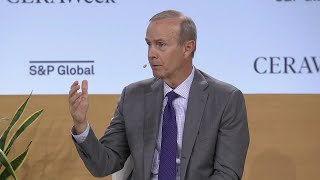
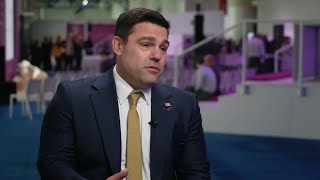
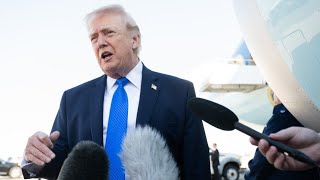

This Bloomberg Markets video, published March 23, 2026, features Michael Haigh, Tracie McMillion, Michael Contopoulos discussing USO, GLD, XLU, XLK. 4 trade ideas extracted by AI with direction and confidence scoring.
Speakers: Michael Haigh, Tracie McMillion, Michael Contopoulos · Tickers: USO, GLD, XLU, XLK