Trump Appeals for Help With Hormuz | Balance of Power: Early Edition 3/16/2026
Speakers
Donald Trump
— President of the United States
Summary
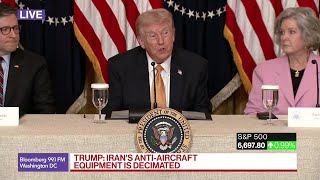
- President Trump states the US has struck over 7,000 targets in Iran, achieving a 90% reduction in Iran's ballistic missile launches.
- He predicts oil prices will go down "very, very rapidly" once the conflict in Iran is over, despite current high prices.
- The US is pressuring allies (France, UK, Germany, Japan, South Korea, China) to help secure the Strait of Hormuz but claims it does not need them.
- The administration's strategy focuses on degrading Iranian military capabilities while avoiding strikes on Iranian energy infrastructure to prevent a major escalation.
- The Department of Homeland Security (DHS) remains unfunded, causing operational stress for TSA and potential travel delays.
Ideas
"We are the strongest nation in the world... We have the strongest military, by far. We don't need them... Put it this way, if we ever need them, they won't be there." The President emphasizes unilateral US military strength and expresses deep skepticism towards traditional allies' reliability. This rhetoric and the ongoing prosecution of a large-scale air campaign (7,000+ targets) signal a continued, and potentially expanded, commitment to robust defense spending and autonomous military capability, benefiting prime defense contractors. This is LONG on major US defense contractors, as the administration's posture favors sustained or increased domestic military investment and production. A sudden, negotiated end to the conflict could lead to calls for a "peace dividend" and reduced spending. Political opposition could challenge the defense budget.
"I can tell you that when this is over, oil prices are going to go down very, very rapidly, so is inflation, so is everything else." The President is directly forecasting a rapid decline in oil prices upon the resolution of the Iran conflict. He frames the current high prices as a temporary wartime phenomenon. Acting on this explicit forward guidance suggests a short position in oil. This is a SHORT bet on the price of oil, anticipating a swift decline as the conflict concludes. The conflict could drag on longer than expected. A successful Iranian asymmetric attack (e.g., mines, drones) in the Strait of Hormuz could spike prices again. Other geopolitical or supply issues could emerge.
"The number one cascading effect is the price of oil... If by that time we haven't seen any substantial security of that supply chain... then you could be looking at long-term price increases." (Context: The ongoing DHS shutdown is stressing TSA operations, causing potential airport delays). Airlines face two headwinds: 1) High and volatile jet fuel costs linked to the Iran conflict and Strait of Hormuz security, and 2) Operational disruption from the DHS/TSA shutdown impacting travel throughput and customer experience. These are pressure points to monitor. This is a WATCH recommendation. The sector is in the crosshairs of macro (oil) and political (shutdown) risks. A resolution of either could be a catalyst, but the current setup is fraught. Oil prices fall faster than expected, providing relief. The DHS shutdown ends, easing operational friction. A severe travel disruption event could cause a sharper sell-off.