Trump Gives Update on Iran: Military has Been Obliterated, Some Allies Will Help With Hormuz
Speakers
Donald Trump
— President of the United States
Summary
- US military forces have conducted over 7,000 strikes in Iran, destroying over 100 naval vessels and 30 mine-laying ships.
- Iranian offensive capabilities have been severely degraded, with a 90% reduction in ballistic missile launches and a 95% reduction in drone attacks.
- Kharg Island's oil infrastructure (the "pipes") was intentionally spared to allow for future rebuilding, though it remains a targeted threat if hostilities escalate.
- The US is aggressively expanding oil supply through record domestic drilling and a renewed partnership with Venezuela, routing millions of barrels of heavy crude to Gulf Coast refineries.
- Allied nations highly dependent on the Strait of Hormuz (Japan 95%, China 90%) are being pressured to deploy minesweepers and share the defense burden.
Ideas
"We're hammering their capacity to threaten commercial shipping in the Strait of Hormuz with more than 30 mine laying ships destroyed... They're all at the bottom of the sea." Oil tanker stocks have benefited heavily from elevated freight rates and insurance premiums driven by the threat of Iranian attacks in the Strait of Hormuz and the Red Sea. With Iran's naval threat "decimated" and labeled a "paper tiger," the Strait becomes safe for commercial transit. This will cause shipping routes to normalize and war-risk premiums to collapse, hurting tanker revenues. SHORT. Commercial shipping and tanker equities will reprice downward as geopolitical transit risks evaporate. Rogue proxy groups or lone-wolf actors could still deploy asymmetric attacks (like small drones or sea mines) that keep insurance premiums and freight rates elevated.
"We're number one in oil by double now. We drill, baby, drill... And that doesn't include Venezuela... millions, literally millions of barrels of oil are being taken out." The combination of record-breaking US domestic oil production and the rapid unlocking of Venezuelan crude creates a massive global supply glut. Simultaneously, the destruction of Iran's military removes the geopolitical risk premium that typically keeps oil prices elevated during Middle East conflicts. Flooding the market with supply while neutralizing the primary regional threat is highly bearish for crude prices. SHORT. The underlying commodity will face severe downward price pressure from oversupply and evaporating war premiums. Trump explicitly noted that Kharg Island's oil pipes could be destroyed on "5 minutes notice." If that tail-risk materializes, global oil prices would instantly spike.
"We've taken out millions of barrels of oil [from Venezuela] and brought to Houston and other places to the refineries. We have refineries set up specifically for that... The big companies are going in." Chevron (CVX) is the primary US oil major with licenses to operate and extract in Venezuela. Furthermore, Gulf Coast refiners like Valero (VLO) and Marathon Petroleum (MPC) operate complex refineries specifically designed to process heavy, sour crude. A massive influx of cheap Venezuelan feedstock will directly expand their refining margins. LONG. US majors operating in Venezuela and Gulf Coast heavy-crude refiners are direct beneficiaries of this geopolitical pivot. Political instability in Venezuela could disrupt supply chains, or future administrations could reimpose strict sanctions on Venezuelan crude.
Up Next
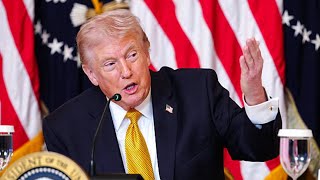



This Bloomberg Markets video, published March 16, 2026, features Donald Trump discussing STNG, FRO, INSW, USO, CVX, VLO, MPC. 3 trade ideas extracted by AI with direction and confidence scoring.
Speakers: Donald Trump · Tickers: STNG, FRO, INSW, USO, CVX, VLO, MPC