Ideas
Fed policy error will lower long-end yields
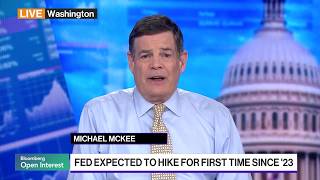
Hiking into an energy and fiscal supply shock risks a policy error; because the Fed cannot print oil or fix fiscal policy, its heavy-handedness will eventually force long-end rates lower.
Two-year Treasuries overshot, set to rally
The front end has overshot the Fed path by about 100bp with short positioning, so the 2-year yield is likely to reverse lower over six months.
Limited AI regulation supports AI theme
Congress is worried about killing the golden goose, so any AI regulation is likely to be modest, protecting U.S. innovation and limiting regulatory downside for AI.
Oil supply risks keep crude bid
Crude holds the key; Saudi production and export disruptions and Iran's pressure on the Strait of Hormuz could become a bigger problem if the East-West pipeline and regional exports are not addressed, keeping upside risk in oil.
2027 Fed easing will lift Treasuries
The Fed is overestimating higher-rate permanence and underestimating easing from 2027; inflation falls sharply next year as tariffs fade and memory costs decline, with policy rules 150bp below current fed funds, implying rate cuts.
Treasury yields near peak, buy bonds
Long-end yields are close to equilibrium and term premium is not rising; buyers should come in on valuation, and if an event hits, 2s and 5s are too high and will fall fast, dragging 10s and 30s lower.
Higher inflation favors infrastructure, commodities
She increased infrastructure and commodities because supply shocks and a Fed hiking cycle cannot fully offset a higher inflationary world.
Strong earnings support S&P 8000 target
Maintains S&P 500 year-end target of 8000 because the economy and earnings are strong; multiples have already discounted rate hikes, so equities can grind higher with less exuberance.
AI capex beneficiaries still have earnings runway
AI capex has driven 20% of S&P earnings up 70% YoY, benefiting the industrial, chip, and electricity/power sides; investment is unlikely to slow due to bottlenecks and competition with China.
Software selloff overdone, shares can rally
The software selloff was overdone and both software and hardware can rally because AI investment bottlenecks and U.S.-China competition keep the buildout moving.
More AI capex is a mistake
The current LLM technology path is a long-term mistake; pouring more money into trillion-parameter black boxes is sunk-cost fallacy because safety guarantees are impossible without understanding the systems.
AI capex needs private and public credit
The AI capex cycle is unprecedented and will require every source of capital; Apollo is a debt provider for Broadcom and Nvidia and wants to finance OpenAI and Anthropic, creating scale opportunities in private credit and investment-grade debt with a strong economy.
Broadcom wins away from model race
Gross margin is highest away from the LLM models, so companies like Broadcom doing the picks-and-shovels work can prosper regardless of which AI model wins.
10-year fair range is higher for long
Rates will be higher for longer and low rates are not coming back soon, but the 10-year fair range is 4.25-4.5%, suggesting a higher-for-longer range rather than a clean directional trade.
Growth and capex push rates higher
Rates are going higher because growth and the largest capital-spending boom in years are driving real rates and core inflation higher, forcing the Fed to play catch-up.
Capital spending drives higher stocks and rates
Stocks can go higher longer-term because extraordinary capital spending is driving growth and rates higher; short-run volatility and September seasonality are likely but do not change the longer-term uptrend.
AI deployment still needs data centers
Even if development slows, AI deployment through 2027 requires data centers, space, and computing power, so data-center buildout demand remains supported.
Hyperscalers outperform AI hardware short term
Inside tech, she expects a rotation: companies actually spending on AI and hyperscalers may see faster monetization and outperform, while AI hardware beneficiaries take a backseat short term.
Hyperscalers outperform AI hardware short term
Inside tech, she expects a rotation: companies actually spending on AI and hyperscalers may see faster monetization and outperform, while AI hardware beneficiaries take a backseat short term.
Locked-in mortgages keep home prices sticky
Home prices are unlikely to fall meaningfully without forced selling because homeowners with low locked-in mortgage rates will restrict supply.
Rate buydowns leave homebuilders vulnerable
Large public homebuilders are using forward purchase commitments to exploit a rate-buydown loophole; if FHFA eliminates it, buyers who put 3% down on a 200bp buydown could be 5% underwater and collateral values could fall.
Fed needs higher rates to fight inflation
The case for higher rates is strong because growth and fiscal policy are strong, real rates near 1% are not restrictive, and underlying inflation momentum is worsening; the Fed may eventually need demand destruction.
Market too hawkish, buy Treasuries
The market has already priced 100bp of hikes, so a hawkish Fed could be a buy-the-fact event; rates may fall a little, the curve can steepen, and the 10-year is attractive in real terms and unlikely to materially exceed 5%.
This Bloomberg Markets video, published September 16, 2026,
features George Goncalves, Brian Gardner, Jonathan Ferro, Arend Kapteyn, Stephen Major, Alicia Levine, Stuart Russell, Jim Zelter, Gina Martin Adams, Stephen Kim, Thomas Hoenig, Gennadiy Goldberg
discussing U.S. long-duration Treasuries, U.S. 2-year Treasuries, AI-SECTOR, BNO, WTI, TLT, U.S. 5-year Treasuries, U.S. 10-year Treasuries, PAVE, DBC, SPY, SMH, XLI, XLU, IGV, BIZD, Investment-grade corporate credit, AVGO, DTCR, AI Hardware, SKYY, U.S. home prices, ITB.
23 trade ideas extracted by AI with direction and confidence scoring.
Speakers:
George Goncalves,
Brian Gardner,
Jonathan Ferro,
Arend Kapteyn,
Stephen Major,
Alicia Levine,
Stuart Russell,
Jim Zelter,
Gina Martin Adams,
Stephen Kim,
Thomas Hoenig,
Gennadiy Goldberg
· Tickers:
U.S. long-duration Treasuries,
U.S. 2-year Treasuries,
AI-SECTOR,
BNO,
WTI,
TLT,
U.S. 5-year Treasuries,
U.S. 10-year Treasuries,
PAVE,
DBC,
SPY,
SMH,
XLI,
XLU,
IGV,
BIZD,
Investment-grade corporate credit,
AVGO,
DTCR,
AI Hardware,
SKYY,
U.S. home prices,
ITB