Stocks Bounce From Lows on Hopes for US-Iran Talks | The Close 3/24/2026
Speakers
Liz Ann Sonders
— Chief Investment Strategist, Charles Schwab
Stephanie Wilding
— Macro Analyst / Economist
Sheila Kahyaoglu
— Senior Airlines Equity Research Analyst, Jefferies
Rene Haas
— CEO, Arm
Que Nguyen
— Partner & CIO, Equity Strategies, Research Affiliates
Matt Wrzesniewsky
— Head of Fixed Income Client Portfolio Management, Vanguard
Jon McNeill
— Co-Founder, Partner & CEO, DVx Ventures; former President of Tesla
Rebecca Glashow
— CEO, Tribeca Enterprises
Cedric the Entertainer
— Actor
Kenya Barris
— Emmy Award-Winning Producer & Writer
Detavio Samuels
— CEO, Revolt
Summary
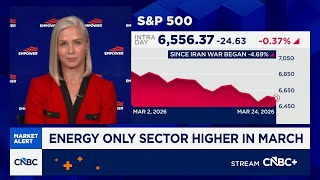
- The market exhibits a persistent inverse correlation between oil prices and equity performance since the Iran war began; stabilization hinges on the reopening of the Strait of Hormuz.
- Beneath the surface, the average S&P 500 member has experienced a ~17% drawdown YTD, indicating a rolling correction through sector rotation rather than a broad index crash.
- Rising ETF share of trading volume (to ~38% in March) is increasing market correlations and reducing dispersion, potentially undermining active management opportunities.
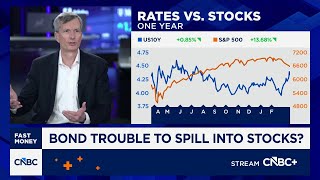
- PIMCO presents a contrarian, stagflationary view: the energy shock will ultimately weigh on global growth, forcing central banks to pivot dovish, making long-dated bonds a key diversification asset.
- Airline industry faces severe margin pressure from high jet fuel prices; fare increases may not fully offset costs, leading to potential demand destruction, with Delta and United seen as relative share-takers.
- Arm CEO announces a strategic pivot to designing and selling its own data center CPUs, backed by Meta and OpenAI, targeting a significantly larger TAM and moving into a higher gross-margin-dollar business.
- Research Affiliates sees a tactical pause but a strategic opportunity in non-US and emerging markets, which should outperform once the Iran war ends and oil flows resume.
- Small caps benefit short-term from energy/materials exposure but face long-term headwinds from higher rates due to weaker balance sheets.
- Crypto (Bitcoin) is noted for its recent resilience despite risk-off sentiment, suggesting sellers may be exhausted; it is posited as a potential inflation-resistant asset if it decouples from risk correlations.
- The bond market is transitioning into a "bond picker's market" with yield being more critical than spread, offering selective opportunities amid dispersion.