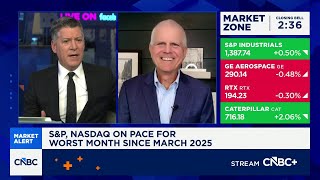
Investors are weighing a lot of different scenarios right now, says Empower's Marta Norton
Speakers
Michael Kantrowitz
— Chief Investment Strategist, Piper Sandler
Marta Norton
— Chief Investment Strategist, Empower
Summary
- Investors are weighing multiple scenarios from geopolitical conflict, ranging from worst-case energy disruptions to mild, transient shocks.
- Prior AI concerns were localized to specific industries of disruption and the MAG-7 stocks, but current issues are more widespread.
- The S&P 500 remains resilient, down less than 5% from highs, partly due to rising earnings compressing valuations.
- Michael Kantrowitz identifies persistent inflation anxiety and interest rates as key market drivers, with oil prices influencing both bonds and equities.
- He notes a 6-7% multiple compression in the market, effectively offsetting earnings gains, but this could reverse if oil prices decline.
- Marta Norton aligns with the Fed's view that oil price spikes can be looked through historically, with inflation expected to normalize by 2027 per Fed projections.
- Kantrowitz is less concerned about the economy handling higher oil prices but more concerned about inflation weighing on equity multiples.
- Market movements are currently driven by oil and interest rates, with conditions priced appropriately but subject to change.
- Uncertainty remains around the duration and impact of geopolitical conflict on energy infrastructure and supply chains.
- The Fed's latest economic projections revised growth higher and labor unchanged, suggesting confidence in managing transient inflation spikes.