Ideas
Yergin references a "nightmare scenario" involving a recession and financial market impact if the war drags on. The combination of war, soaring energy costs, and potential stagflation creates a textbook environment for safe-haven assets. Gold acts as a hedge against both geopolitical instability and the inflationary pressure of an energy shock. LONG Gold as a macro hedge. High real interest rates if the Fed hikes to combat inflation could cap Gold's upside.
20% of world oil and LNG is currently "bottled up" in the Gulf. The Strait of Hormuz is effectively closed ("no traffic really going through"). Storage in the region is full, forcing production cuts in UAE, Kuwait, and Iraq. While Middle East supply is stranded, global demand remains. This creates a massive premium for oil that *can* reach the market. US domestic producers (Permian/shale) have secure logistics to export terminals not affected by the Hormuz closure. They benefit from the price spike without the operational risk of their assets being in a war zone. LONG US-based production and the commodity itself. A sudden ceasefire or aggressive release of the Strategic Petroleum Reserve (SPR) by President Trump could dampen prices quickly.
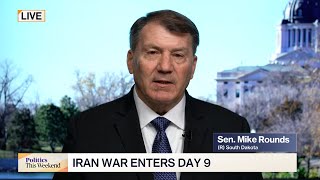
Senator Rounds confirms the US is using F-22s, F-35s, and B-52s for offensive strikes. Nancy Youssef notes that Iran is using cheap drones to drain expensive US/Gulf interceptor stockpiles. The asymmetry of cost (million-dollar interceptors vs. cheap drones) means the burn rate for munitions is incredibly high. Replenishment contracts for Patriot missiles (RTX) and maintenance/usage of air platforms (LMT, NOC) will be prioritized in emergency spending bills. LONG the prime defense contractors supplying the munitions and platforms currently active in the theater. Political pushback on defense spending or a rapid de-escalation of the conflict.
"Shipping companies in general are not comfortable sending ships through the Straits of Hormuz." Ships are trapped inside, and those outside are refusing to enter. This is a classic dislocation trade. While Gulf volume is down, the *efficiency* of the global fleet has collapsed. Buyers must source oil from further away (e.g., US to Asia, West Africa to Europe), increasing ton-miles. With many tankers trapped or refusing to sail, the supply of *available* tankers for safe routes plummets, causing freight rates on non-Gulf routes to skyrocket. LONG tanker companies with fleets positioned outside the Persian Gulf. If the Strait reopens quickly, the risk premium evaporates and rates crash.
Jet fuel costs are rising in lockstep with oil ($90+). Analysts are discussing "stagflation" and a fragile labor market. Airlines face a double whammy: their primary input cost (fuel) is exploding exactly when consumer discretionary spending power is threatened by inflation and economic uncertainty. Margins will be crushed. SHORT the airline sector. Government intervention to subsidize fuel or a rapid drop in oil prices.
This Bloomberg Markets video, published March 08, 2026,
features Daniel Yergin, Mike Rounds, Jacob Larsen, Christina Ruffini
discussing GLD, USO, OXY, XLE, DVN, LMT, NOC, GD, RTX, EURN, FRO, STNG, UAL, AAL, JETS.
5 trade ideas extracted by AI with direction and confidence scoring.
Speakers:
Daniel Yergin,
Mike Rounds,
Jacob Larsen,
Christina Ruffini
· Tickers:
GLD,
USO,
OXY,
XLE,
DVN,
LMT,
NOC,
GD,
RTX,
EURN,
FRO,
STNG,
UAL,
AAL,
JETS