Marsh CEO John Doyle on the Iran cease fire and elevated cyber risk
Speakers
John Doyle
— President and CEO, Marsh (Marsh & McLennan Companies)
Summary
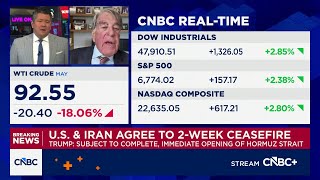
- The recently announced two-week ceasefire in the Strait of Hormuz is welcome news for shipowners, but the immediate issue is the safety/security of crews and assets, not insurance availability.
- As geopolitical tensions de-escalate, shipping traffic will resume, and the partnership between the U.S. government (DFC) and private insurers is viewed positively to bring more capital and solutions to the marine insurance market.
- CEOs have pivoted from a defensive posture (1-2 years ago) to playing offense amid persistent complexity and volatility, which the speaker calls the most complex operating environment in his 40-year career.
- Key strategic levers for growth identified by CEOs are Mergers & Acquisitions (M&A) and deploying Artificial Intelligence (AI) in the workplace.
- Scale is an advantage: large companies and very small, nimble companies are deploying AI aggressively, while mid-sized companies may lag and become M&A targets.
- Most CEOs report getting a "decent" return on AI investments so far, but believe it's still early with returns not yet particularly strong.
- The current environment is described as "risk-on," with geopolitical conflicts (e.g., Iran) creating significant concern for multinationals with people and assets on the ground.
- Cyber risk is singled out as a particularly elevated and underrated threat due to growing geopolitical conflicts worldwide.
- AI presents a dual-edged sword for cyber risk: it offers new tools for defense but also creates new avenues for disruptive attacks on the global economy.
Ideas
The speaker explicitly stated he worries about elevated cyber risk due to growing geopolitical conflicts and that AI will create opportunities for those looking to cause economic disruption. Geopolitical conflict increases state-sponsored and hacktivist cyber activity, directly raising threat levels for all corporations. This drives demand for cyber insurance and risk advisory services. The insurance sector (particularly firms with cyber risk expertise) is in a "WATCH" position because elevated and underappreciated risk landscapes typically lead to increased client engagement, policy demand, and potential pricing power for insurers and brokers. A rapid de-escalation of global conflicts could reduce the perceived immediacy of the cyber threat, slowing demand acceleration.
Up Next

This CNBC video, published April 08, 2026, features John Doyle discussing XLF. 1 trade idea extracted by AI with direction and confidence scoring.
Speakers: John Doyle · Tickers: XLF