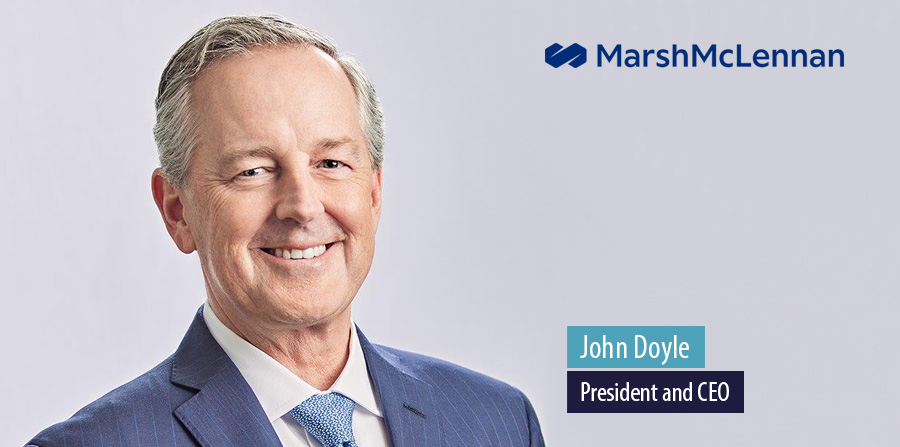
Doyle states that "insurance rates have moved up quite a bit as you would expect." Marsh (MMC), Aon (AON), and Willis Towers Watson (WTW) are insurance *brokers*, not carriers. They earn commissions based on a percentage of the premiums written. When risk perception spikes and rates harden (go up), brokers earn higher revenue on the same volume of business without taking on the underwriting risk of the payouts (which falls on the carriers). Long Insurance Brokers. They benefit from the "poly crisis" volatility and inflation in premiums. If economic activity (transaction volume) collapses entirely due to the war, higher rates might not offset the loss of total deal flow.
Doyle states that "insurance rates have moved up quite a bit as you would expect." Marsh (MMC), Aon (AON), and Willis Towers Watson (WTW) are insurance *brokers*, not carriers. They earn commissions based on a percentage of the premiums written. When risk perception spikes and rates harden (go up), brokers earn higher revenue on the same volume of business without taking on the underwriting risk of the payouts (which falls on the carriers). Long Insurance Brokers. They benefit from the "poly crisis" volatility and inflation in premiums. If economic activity (transaction volume) collapses entirely due to the war, higher rates might not offset the loss of total deal flow.
Doyle states that "insurance rates have moved up quite a bit as you would expect." Marsh (MMC), Aon (AON), and Willis Towers Watson (WTW) are insurance *brokers*, not carriers. They earn commissions based on a percentage of the premiums written. When risk perception spikes and rates harden (go up), brokers earn higher revenue on the same volume of business without taking on the underwriting risk of the payouts (which falls on the carriers). Long Insurance Brokers. They benefit from the "poly crisis" volatility and inflation in premiums. If economic activity (transaction volume) collapses entirely due to the war, higher rates might not offset the loss of total deal flow.
Doyle states that "insurance rates have moved up quite a bit as you would expect." Marsh (MMC), Aon (AON), and Willis Towers Watson (WTW) are insurance *brokers*, not carriers. They earn commissions based on a percentage of the premiums written. When risk perception spikes and rates harden (go up), brokers earn higher revenue on the same volume of business without taking on the underwriting risk of the payouts (which falls on the carriers). Long Insurance Brokers. They benefit from the "poly crisis" volatility and inflation in premiums. If economic activity (transaction volume) collapses entirely due to the war, higher rates might not offset the loss of total deal flow.
Doyle confirms that "ships aren't moving through the strait at the moment" and the interviewer notes this impacts "20,000,000 barrels a day, a fifth of the world's oil supply." The Strait of Hormuz is the world's most critical oil chokepoint. If transit has ceased due to war, 20% of global supply is effectively offline. Basic supply/demand mechanics dictate that when supply is violently constricted while demand remains constant, commodity prices must spike to ration remaining inventory. Long Oil via USO to capture the immediate supply shock premium. Rapid de-escalation or US military successfully enforcing a safe corridor sooner than expected.
Doyle confirms that "ships aren't moving through the strait at the moment" and the interviewer notes this impacts "20,000,000 barrels a day, a fifth of the world's oil supply." The Strait of Hormuz is the world's most critical oil chokepoint. If transit has ceased due to war, 20% of global supply is effectively offline. Basic supply/demand mechanics dictate that when supply is violently constricted while demand remains constant, commodity prices must spike to ration remaining inventory. Long Oil via USO to capture the immediate supply shock premium. Rapid de-escalation or US military successfully enforcing a safe corridor sooner than expected.
Doyle states that "insurance rates have moved up quite a bit as you would expect." Marsh (MMC), Aon (AON), and Willis Towers Watson (WTW) are insurance *brokers*, not carriers. They earn commissions based on a percentage of the premiums written. When risk perception spikes and rates harden (go up), brokers earn higher revenue on the same volume of business without taking on the underwriting risk of the payouts (which falls on the carriers). Long Insurance Brokers. They benefit from the "poly crisis" volatility and inflation in premiums. If economic activity (transaction volume) collapses entirely due to the war, higher rates might not offset the loss of total deal flow.
Doyle states that "insurance rates have moved up quite a bit as you would expect." Marsh (MMC), Aon (AON), and Willis Towers Watson (WTW) are insurance *brokers*, not carriers. They earn commissions based on a percentage of the premiums written. When risk perception spikes and rates harden (go up), brokers earn higher revenue on the same volume of business without taking on the underwriting risk of the payouts (which falls on the carriers). Long Insurance Brokers. They benefit from the "poly crisis" volatility and inflation in premiums. If economic activity (transaction volume) collapses entirely due to the war, higher rates might not offset the loss of total deal flow.