Oil Price Puts Pressure on Canadian Dollar | Presented by CME Group
Speakers
Bloomberg Narrator
— Reporter
Summary
- Canada's status as a major oil exporter without a strategic petroleum reserve (SPR) leaves the Canadian dollar ("loonie") fully exposed to crude price swings, with no government stockpile to buffer volatility.
- Currently, this exposure is working in Canada's favor: Middle East disruptions are keeping oil prices above $90/barrel, and the higher export revenues flow directly into the country's terms of trade, undiluted by SPR drawdowns.
- The historical correlation between oil prices and the CAD is strongest and most reliable during geopolitical supply shocks, when crude market dynamics dominate.
- However, the oil-CAD link has weakened over time and is no longer a trade to put on "autopilot." Other factors like interest rate differentials and U.S. economic growth now compete for influence over the currency.
- The decoupling observed in 2025 serves as clear evidence that the relationship is not consistently reliable.
- The correlation still offers a useful trading signal, but only selectively when geopolitics are the dominant driver of crude prices.
Ideas
The speaker explicitly states that the "loonie takes the full force of whatever is happening in crude markets," and that the historical oil-CAD correlation "holds up during geopolitical supply shocks." However, they also state the link "has weakened over time" and "you can't trade it on autopilot anymore." Canada is a major oil exporter without a strategic petroleum reserve to buffer price shocks. This creates a direct, undiluted link between crude prices and Canada's export revenues/terms of trade, which influences the currency. This causal chain is most dependable when price moves are driven by geopolitical supply disruptions. WATCH because the relationship is context-dependent. It presents a clear, high-signal setup worth monitoring specifically during periods where crude is dominated by geopolitical supply shocks, but it is not a persistent, standalone driver. The thesis breaks if other factors, such as central bank interest rate differentials or relative U.S. vs. Canadian economic growth, become the dominant drivers of currency markets, as they did in 2025.
Up Next

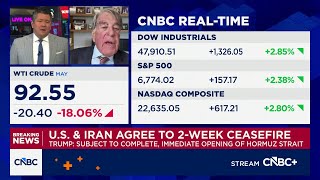



This Bloomberg Markets video, published April 08, 2026, discussing CAD. 1 trade idea extracted by AI with direction and confidence scoring.