Could the Iran War Cause a New Oil Crisis? | FT’s Chief Economics Commentator Martin Wolf
Speakers
Jack Farley
— Host, Monetary Matters
Martin Wolf
— Chief Economics Commentator, Financial Times
Summary
- A prolonged closure of the Strait of Hormuz (3+ months) due to a Gulf war is the ultimate nightmare scenario for the global economy, potentially driving oil prices above $150 per barrel.
- The US is uniquely insulated from a Middle East energy shock because the shale revolution has made it a net exporter of oil and gas; the US economy would actually see a net wealth increase from higher global energy prices.
- Europe and China remain highly vulnerable to fossil fuel supply shocks, accelerating their strategic imperative to transition to renewable energy, nuclear power, and massive battery storage systems.
- European heavy industries, specifically steel and petrochemicals, face a structural and permanent decline in competitiveness due to structurally higher primary energy costs compared to the US and the Middle East.
- Global nuclear proliferation is likely to accelerate as weak nations observe that countries without nuclear weapons (like Ukraine) are attacked, while those with them are deterred.
Ideas
"If it lasts for a month or two or three... the prices could get to $150 plus for a long time... The United States of course because of the shale oil and gas revolution... is self-sufficient in oil and gas. So actually as a country it's going to be richer as a result of the war if the oil price and gas prices go up." A Middle East conflict that disrupts the Strait of Hormuz will cause a massive global supply shock. Because US energy producers operate outside this conflict zone and have abundant domestic reserves, they will capture the massive upside of $150+ oil without suffering the physical disruptions or geopolitical risks of Middle Eastern producers. LONG US-based energy producers and broad US energy sector ETFs, as they are the direct beneficiaries of a geopolitical risk premium and structural US energy independence. The conflict de-escalates quickly, or the US government imposes severe windfall taxes and export bans that cap the upside for domestic producers.
"We all feel actually we must become more energy independent as far as we can and that means going for nuclear energy and renewables... whether we can move to a fully renewable grid effectively... it will require enormous amounts of battery storage and that's a major issue." The geopolitical vulnerability of importing fossil fuels is forcing Europe and China to aggressively build out wind and solar. Because these sources are intermittent, the grid cannot function without utility-scale battery storage. Companies that provide grid-scale energy storage and broad clean energy infrastructure will see massive, state-sponsored demand as a matter of national security. LONG utility-scale battery storage providers and broad clean energy infrastructure funds, as they are the mandatory bottleneck for the global energy transition. High interest rates make capital-intensive renewable and storage projects difficult to finance, potentially slowing the pace of the transition.
"Steel will never be I think truly competitive in Europe again and chemicals particularly petrochemicals... Europe is not a doesn't have a comparative advantage in producing this stuff and it is going to move elsewhere." European heavy industry relies heavily on imported energy. Without cheap Russian gas or abundant domestic fossil fuels, European steelmakers (like ArcelorMittal) and chemical giants (like BASF) face structurally higher input costs than their global peers. This will lead to permanent margin compression, forced capacity shutdowns, and costly relocations. SHORT (or AVOID) European heavy industrials, specifically in the steel and petrochemical sectors, as their core geographic footprint is fundamentally uncompetitive in the new global energy reality. European governments could implement massive, sustained subsidies or strict protectionist tariffs (like the Carbon Border Adjustment Mechanism) that artificially prop up domestic heavy industry margins.
"Highly energy-intensive industries will not be located in Europe. They're going to be located where there are primary energy resources which are much cheaper and those are basically areas with sun and areas with lots and lots of fossil fuels, which is probably means the United States and the Arab world." If European petrochemical production is structurally dead, global market share will shift to regions with cheap, abundant primary energy. US-based chemical manufacturers benefit from the domestic shale gas advantage (cheap natural gas liquids for feedstocks), giving them a massive, sustainable cost advantage over international competitors. LONG US-based petrochemical and energy-intensive industrial companies, as they will capture the market share abandoned by de-industrializing European peers. A global recession could crush overall demand for chemicals and plastics, outweighing the geographic cost advantage.
Up Next


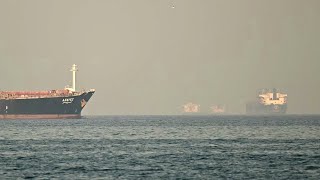


This Monetary Matters video, published March 13, 2026, features Martin Wolf discussing CVX, XLE, XOM, ICLN, BASFY, LYB, DOW. 4 trade ideas extracted by AI with direction and confidence scoring.
Speakers: Martin Wolf · Tickers: CVX, XLE, XOM, ICLN, BASFY, LYB, DOW