'Complete Catastrophe': Economist Says U.S. Losing The War And Going Broke | Steve Hanke
Speakers
David Lin
— Founder & Host, The David Lin Report / ex-Anchor, Kitco News
Steve Hanke
— Professor of Applied Economics, Johns Hopkins University
Summary
- Steve Hanke argues Iran is winning the war against the US/Israel, primarily by maintaining functional control of the Strait of Hormuz, which acts as a strategic choke point causing "tremendous damage" to Western economies.
- He presents contrarian data: Iranian rial has appreciated 6% since the war started; Iranian inflation is down from >80% to 67% per year; and Iran is exporting more oil at higher prices with lower discounts than before the war.
- The US is "insolvent" based on its own financials: $6T in assets vs. $47.78T in liabilities as of Sept 2025, plus $88T+ in off-balance-sheet liabilities for Social Security/Medicare, calling it a "complete catastrophe" that is deteriorating rapidly.
- Oil prices are poised to rise significantly because physical market prices are far above futures/paper market prices; the futures market will be "mugged by reality" and catch up to the physical price.
- He remains long-term bullish on gold, maintaining a cycle top target range of $6,000-$7,000/oz, though acknowledges recent headwinds from higher bond yields (opportunity cost) and a stronger dollar.
- A US ground invasion of Iran would be a disastrous "Hail Mary pass" with almost zero chance of success against ~1 million Iranian troops, likely becoming a "bloodbath."
- Russia is a major beneficiary ("tremendous winner") as it produces and can export oil, fertilizer, and helium—commodities bottlenecked by the Gulf conflict—and may use them as leverage to get sanctions removed.
- He forcefully rejects the historical narrative that WWII ended the Great Depression or that wars are economically stimulative, calling it false and noting the US was already recovering pre-war and boomed post-war.
Ideas
Hanke states the physical market price for oil is "way above" the futures/paper market price, creating a large gap. With Iran controlling the Strait of Hormuz, physical shortages (especially in Asia) will persist. The futures market will eventually be "mugged by reality," causing prices to rise to meet the elevated physical market price. Functionally closing the strait ensures continued supply constraints. The price of oil "is going up" and will remain elevated and volatile. This is a setup for a significant price move, warranting close monitoring. A successful US/Israel military operation that crushes Iran and fully re-opens the Strait of Hormuz, which Hanke views as a very low-probability scenario.
Hanke maintains his gold price target, revised from a point estimate of $6,000/oz to a range of $6,000-$7,000/oz for the cycle top. While acknowledging recent headwinds from rising bond yields (increasing opportunity cost) and a stronger dollar, the long-term bullish thesis remains intact. He is still bullish on gold, expecting it to reach the $6,000-$7,000 range, though the path may be slower than the rapid surge seen a few months prior. A sustained, aggressive rise in real interest rates and continued US dollar strength could further delay or dampen the ascent.
Up Next



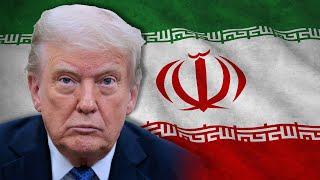

This The David Lin Report video, published March 27, 2026, features Steve Hanke discussing WTI, GOLD. 2 trade ideas extracted by AI with direction and confidence scoring.
Speakers: Steve Hanke · Tickers: WTI, GOLD